


For decades, Africa’s maritime story has largely been written through the lens of a handful of dominant ports, with South Africa’s Durban often regarded as the continent’s benchmark for scale, efficiency, and connectivity.
However, a new narrative is now emerging from the East African coast. Kenya’s twin-port strategy—anchored by the continued modernization of the Port of Mombasa and the strategic rise of the Port of Lamu—is steadily reshaping the continent’s maritime landscape and positioning the country as one of Africa’s most influential gateways.
Recent observations by maritime analyst Terry Hutson in Africa Ports & Ships highlight what industry observers have witnessed over the past several years: Kenya is no longer merely participating in African maritime trade; it is helping define its future.
The ongoing expansion of the Port of Mombasa, including the construction of the new 240-metre Berth 19B, represents far more than an infrastructure project. It is a strategic investment in Kenya’s economic trajectory and East Africa’s trade competitiveness. Once completed, the berth is expected to add approximately 300,000 TEUs in annual handling capacity, strengthening Mombasa’s ability to accommodate growing cargo volumes from Kenya and the wider East and Central African hinterland.
This expansion arrives at a crucial time. Trade volumes across the region continue to rise, driven by population growth, industrialization, regional integration under the East African Community, and surging demand for imports and exports. Without continuous infrastructure upgrades, ports inevitably become bottlenecks rather than facilitators of economic growth.
What makes Mombasa particularly noteworthy is that its growth is not measured solely in physical expansion. The port has increasingly demonstrated tangible improvements in operational efficiency. Achieving vessel productivity rates of over 33 moves per hour and reducing vessel turnaround times to approximately 2.9 days signals a maturing port system capable of competing with some of Africa’s best-performing maritime facilities.
Efficiency is the currency of modern shipping. Shipping lines, logistics providers, and cargo owners care less about a port’s sheer size than about how quickly vessels are serviced, cargo discharged, and containers moved through the supply chain. In this regard, Mombasa’s gains are significant. Every hour saved at berth translates into reduced operational costs, enhanced schedule reliability, and improved competitiveness for regional traders.
Yet Kenya’s maritime ambitions extend well beyond Mombasa.
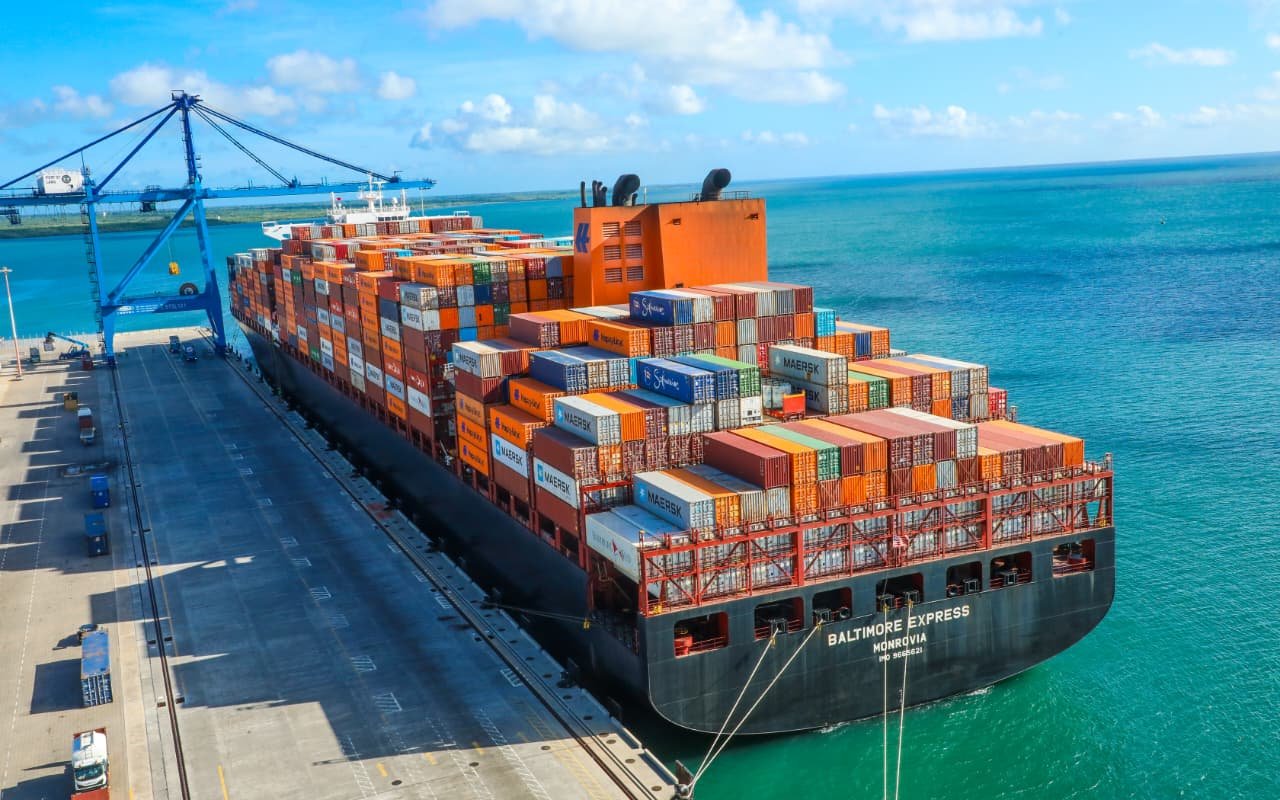
The emergence of the Port of Lamu as a genuine deep-water hub may ultimately prove one of the most transformative developments in African shipping this decade. For years, skeptics questioned whether the massive investments in Lamu would deliver the expected returns. The arrival of the 369-metre MV Baltimore Express in May 2026 may have provided the clearest answer yet.
The vessel’s successful call at Lamu was more than a routine port operation. It was a powerful demonstration of the port’s capacity to handle some of the world’s largest container vessels. As the largest ship ever to dock in East and Central Africa, it underscored Lamu’s unique advantage: deep-water infrastructure designed to accommodate the next generation of ultra-large container ships.
This achievement carries profound implications for regional trade. While many African ports face limitations due to draft restrictions, navigational constraints, or urban congestion, Lamu offers room for expansion and the ability to handle the larger vessels that increasingly dominate global shipping networks. As shipping lines continue deploying bigger ships to maximize economies of scale, ports capable of accommodating them will become ever more valuable.
The genius of Kenya’s maritime strategy lies in the complementary nature of Mombasa and Lamu, rather than in competition between them. Mombasa remains the region’s established gateway—with extensive logistics networks, experienced operators, and strong hinterland connections. Lamu, meanwhile, provides future capacity, deep-water access, and opportunities for new trade corridors.
Together, the two ports form a powerful maritime ecosystem capable of serving diverse market needs while enhancing Kenya’s resilience against future trade disruptions. This dual-port model also strengthens the country’s bargaining position within global shipping alliances and international logistics networks.
Importantly, the benefits of these investments extend beyond ships and cargo. Port development generates employment opportunities, stimulates industrial growth, attracts foreign investment, and supports broader economic transformation. Modern ports become magnets for manufacturing, logistics parks, warehousing, ship services, and maritime training institutions. They create ecosystems where economic value is generated far beyond the quayside.
Kenya’s maritime progress also aligns with the broader vision of the Blue Economy. Efficient ports serve as gateways for fisheries, offshore energy development, marine services, cruise tourism, and maritime innovation. The modernization of port infrastructure therefore contributes directly to national development objectives and regional economic integration.
Nevertheless, sustaining this momentum will require continued investment in supporting infrastructure. Roads, railways, inland container depots, customs modernization, digitalization, and workforce development must evolve alongside port expansion. A world-class port is only as effective as the logistics chain connected to it.
Environmental sustainability will also remain a critical consideration. As global shipping transitions toward greener operations and lower emissions, Kenya’s ports must position themselves to support alternative fuels, energy-efficient operations, and climate-resilient infrastructure.
The message emerging from Mombasa and Lamu is unmistakable. Kenya is steadily building one of Africa’s most dynamic maritime systems. The combination of expanding capacity, improving efficiency, strategic geographic positioning, and long-term planning is creating a platform capable of supporting regional trade growth for decades to come.
Africa’s maritime future is no longer being shaped solely in the south, west, or north of the continent. Increasingly, it is being shaped along the shores of the Western Indian Ocean.
Mombasa is expanding. Lamu is proving its strategic value. Together, they are transforming Kenya into a maritime powerhouse and establishing new benchmarks for port performance, connectivity, and ambition in Africa. The continent’s maritime narrative is being rewritten—and Kenya is holding the pen.