


The recent visit by the Board of Directors of the Uganda National Oil Company (UNOC) to the Port of Mombasa might have appeared, on the surface, to be little more than a routine familiarisation tour. In reality, it represents something far more significant: a powerful reaffirmation that the future of East Africa’s energy security, trade competitiveness, and economic integration will increasingly depend on the efficiency and resilience of shared regional infrastructure.
As Uganda prepares to join the ranks of oil-producing nations, its relationship with Kenya is entering a new and strategic phase. While considerable attention has been directed toward the East African Crude Oil Pipeline (EACOP) through Tanzania, the Port of Mombasa remains indispensable to Uganda’s petroleum supply chain. Every refinery component, drilling input, fuel import, and industrial commodity ultimately depends on efficient maritime gateways. The Port of Mombasa, therefore, continues to serve as Uganda’s principal maritime lifeline.
The significance of the visit—led by UNOC Board Chairman Mathias Katamba—lies not simply in inspecting port facilities, but in acknowledging a deeper truth: regional prosperity will be built on cooperation, not competition.
Mombasa’s Expanding Strategic Value
For decades, the Port of Mombasa has served as East Africa’s premier energy gateway. It supplies petroleum products not only to Kenya but also to Uganda, Rwanda, South Sudan, the eastern Democratic Republic of Congo, and parts of northern Tanzania.
Its importance has grown in lockstep with rising regional demand for fuel, aviation products, liquefied petroleum gas, and industrial chemicals. Every improvement in port efficiency, therefore, generates ripple effects across multiple national economies.
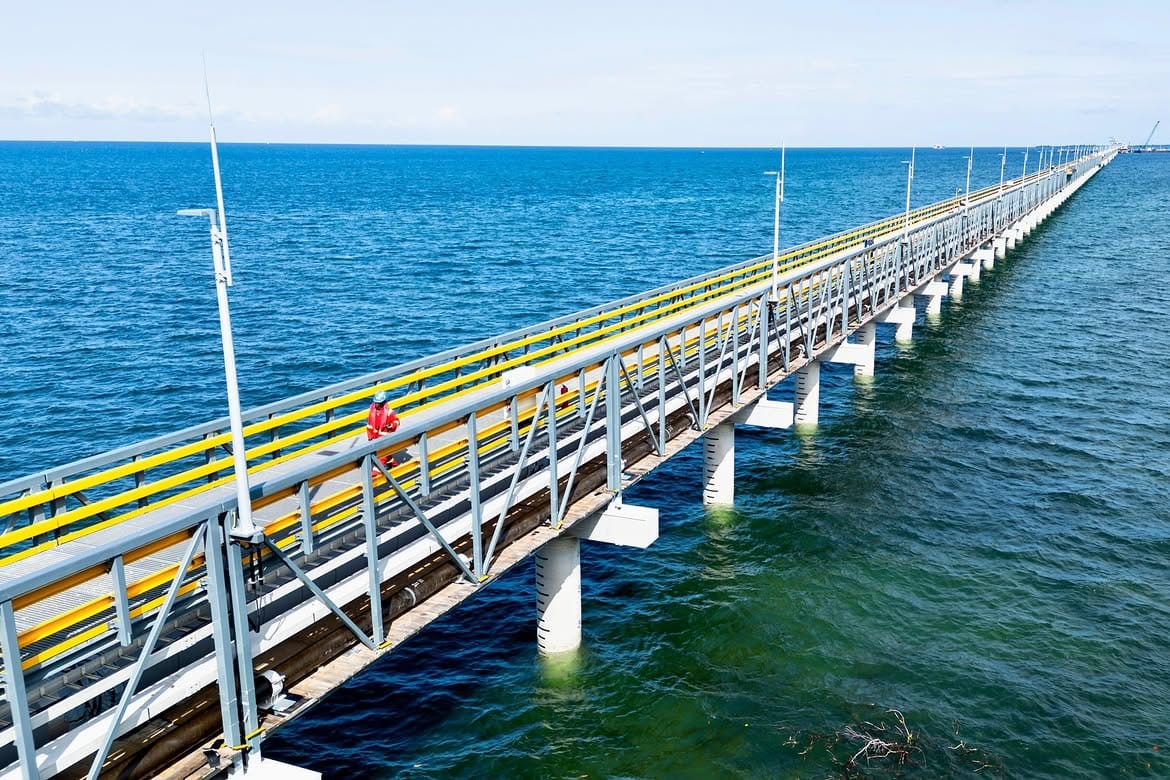
The Kenya Ports Authority’s investment in the new petroleum terminal demonstrates that Mombasa is positioning itself decisively for the next generation of regional energy trade. Equipped with automated control systems and modern marine loading arms capable of handling up to 5,000 cubic metres of petroleum products per hour, the facility represents a major technological leap from conventional petroleum handling systems.
More importantly, its projected handling capacity—between 500,000 and one million metric tonnes annually in its initial phase—provides much-needed flexibility as regional fuel demand continues its upward trajectory.
These are not merely engineering achievements. They are strategic investments in East Africa’s economic resilience.
Energy Security Is Regional Security
The events of recent years—from disruptions in the Red Sea to volatility in global oil markets—have exposed the vulnerability of international energy supply chains with painful clarity.
Countries can no longer view petroleum logistics purely through a national lens.
Energy security today depends on resilient regional infrastructure capable of maintaining uninterrupted supplies despite geopolitical shocks. This is precisely why Uganda’s engagement with Kenya’s port infrastructure matters.
An efficient Port of Mombasa means reduced demurrage costs, faster vessel turnaround, improved inventory management, and more predictable fuel supplies for the entire region. Every day saved in unloading petroleum cargo translates into lower costs for businesses, transport operators, manufacturers, and ultimately ordinary consumers. Infrastructure efficiency is increasingly becoming an economic policy instrument.
Partnership Rather Than Rivalry
There has often been a tendency to portray East African ports as competitors. Mombasa versus Dar es Salaam. Lamu versus Bagamoyo.
Yet such thinking belongs to an earlier era.
Modern supply chains thrive on complementary infrastructure rather than zero-sum competition. Uganda’s engagement with Mombasa reflects this new reality. Regional economies benefit when multiple corridors operate efficiently, providing importers and exporters with flexibility, redundancy, and resilience.
Healthy competition will continue to improve service delivery, but strategic cooperation is what ultimately strengthens regional trade. The East African Community’s success will depend less on whose port grows fastest and more on whether transport corridors function as an integrated logistics network.
Petroleum Logistics Is Becoming Smarter
The new petroleum terminal represents more than expanded storage and loading capacity.
Automation significantly improves operational transparency, product accountability, and environmental safety. Modern marine loading systems minimise product losses while reducing the risk of spills and operational accidents. Digital monitoring enhances inventory management and allows better coordination between shipping lines, pipeline operators, marketers, and regulatory agencies.
As petroleum logistics become increasingly data-driven, ports will evolve from cargo transfer points into sophisticated supply chain management centres. Mombasa is clearly embracing that transformation.
Kenya’s Competitive Advantage
Kenya possesses one of Africa’s strongest maritime advantages. The Port of Mombasa is supported by established customs systems, pipeline infrastructure, inland container depots, road and rail corridors, financial institutions, insurance services, and an experienced maritime workforce.
These complementary assets are difficult to replicate quickly.
However, maintaining this advantage requires continuous investment. Port modernisation cannot be treated as a one-time project. It must remain an ongoing national priority. Infrastructure ages. Technology evolves. Customer expectations rise. Regional competition intensifies.
Continuous innovation is therefore essential.
The Missing Link: Integrated Regional Planning
Physical infrastructure alone will not guarantee regional competitiveness. Kenya and Uganda should now deepen cooperation through integrated planning in several critical areas:
· Harmonisation of petroleum logistics regulations and standards
· Greater digital integration of customs and cargo clearance systems
· Joint emergency preparedness for fuel supply disruptions
· Enhanced information sharing between port, pipeline, and petroleum authorities
· Long-term forecasting of regional energy demand to guide infrastructure investments
Such cooperation would reduce duplication, improve operational efficiency, and strengthen investor confidence.
A Blueprint for the East African Community
The significance of the UNOC delegation extends beyond Kenya and Uganda.
It offers a practical example of how regional institutions should engage one another. Instead of viewing infrastructure as purely national assets, East African countries should increasingly treat strategic facilities as regional public goods serving shared economic interests.
Ports, railways, pipelines, and logistics corridors should form an interconnected network supporting industrialisation across the region. That vision aligns perfectly with the aspirations of the East African Community and the African Continental Free Trade Area (AfCFTA).
Looking Ahead
The familiarisation visit by Uganda National Oil Company officials should not be remembered simply as another diplomatic courtesy call. It should be recognised for what it truly is: an affirmation that East Africa’s energy future will depend on collaboration, trust, and sustained investment in modern logistics infrastructure.
The Port of Mombasa is no longer just Kenya’s principal seaport. It is increasingly becoming the energy gateway for an integrated regional economy.
If Kenya continues investing in world-class port infrastructure while strengthening partnerships with neighbours such as Uganda, Mombasa will remain not only the region’s busiest port but also its most strategic energy hub.
In an era where energy security underpins economic stability, every modern berth, every efficient terminal, and every strengthened regional partnership becomes an investment in East Africa’s shared prosperity.
Uganda’s visit therefore sends a powerful message: the future of regional energy lies not merely in discovering oil, but in building the infrastructure, institutions, and partnerships capable of moving it safely, efficiently, and sustainably across borders.