


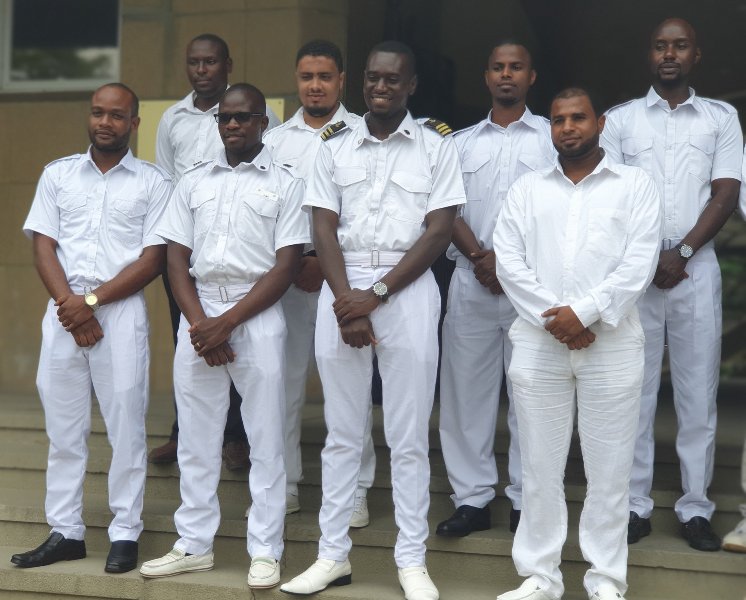
Since 2018, Kenya has signed shipboard training deals with major global lines like MSC, CMA CGM, and Maersk, as well as with several flag states.
One notable thing is that every memorandum of understanding promises the same thing: sea-time for Kenyan cadets. Yet in 2026, the single biggest complaint from Bandari Maritime Academy graduates, Kenya Maritime Authority-approved institutions, and seafarers’ unions remains unchanged: “We have the certificate, but no ship.”
For maritime professionals, this is not just a youth employment issue—it is a credibility issue. Shipowners, manning agents, and flag states watch how a nation manages its cadets, and if Kenya’s system runs on personal connections rather than merit, no reputable company will trust our pipeline. The sea is merit-based, and our cadet system must be too.
To stop drifting and start anchoring progress, Kenya needs three non-negotiable reforms. First, we must audit the deals and count the cadets, not the press releases. Since 2018, the numbers on paper look impressive, including sixteen seafarers deployed under MSC, forty cadets targeted by CMA CGM over five years, ten yearly cadets under the Maersk shipping line, 5,500 claimed opportunities from KSAA, and multiple flag state agreements with Liberia, Panama, Malta, and Jamaica.
However, no one has answered the basic questions that matter to maritime professionals: how many cadets actually completed twelve months of STCW sea-time, how many obtained their Certificates of Competency, which vessels met MLC 2006 standards, and what were the real contract terms? Compliance is proven in logbooks, not speeches.
The Kenya Maritime Authority and the Auditor-General must conduct a public performance audit that publishes deployment numbers, completion rates, vessel vetting reports, and cadet feedback. If a deal underdelivers, we should terminate it because shipowners respect data, not public relations.
Second, we must codify nomination so that merit truly trumps connections. Right now the nomination process is opaque, with Bandari Maritime Academy relying on an alumni database and merit assessment that have never been gazetted into formal criteria, and that gap is where nepotism boards the ship. This creates chaos for manning agents and training institutions while killing motivation for cadets. The policy fix is straightforward: establish gazetted criteria with fifty percent academic score, twenty percent STCW results, fifteen percent medical fitness, and fifteen percent conduct, so top-ranked cadets fill available slots. A central Kenya Maritime Authority portal should handle applications, rankings, and status updates so every cadet can see where they stand.
Affirmative action for women, persons with disabilities, and ASAL counties is valid—Maersk’s 2025 batch had six women out of ten cadets—but we must make it published policy, not optics, and publish the formula. Most importantly, there must be a firewall where the State Department handles negotiations while the Kenya Maritime Authority, Bandari Maritime Academy, and an industry board handle nominations; politicians may sign MoUs, but they should not pick names.
If we want global principals to keep sending ships, we must give them a predictable, merit-based pipeline because no manning agent wants to explain to a captain why Cadet Number Twenty-Seven got the slot over Cadet Number Three.
Third, we must standardize management to cut bureaucracy and protect cadets, because bureaucracy is corruption’s best friend. Cadets currently spend months navigating the Kenya Maritime Authority, medicals, CDC, and agent paperwork, and that delay creates space for so-called facilitation payments. Standardization means creating one contract template that covers duration, stipend, insurance, working hours, repatriation, and a complaint line, applying the same terms whether the partner is MSC, Maersk, or any flag state.
It means imposing a twelve-month cap from graduation to sea-time, so if the Kenya Maritime Authority cannot place a cadet within a year, the institution must report publicly why, and we should tie institutional funding to placement rates. It means assigning a welfare officer to each batch for monthly check-ins and requiring mandatory cadet evaluations of ships and officers, with a blacklist for vessels that fail training standards.
And it means creating a digital one-stop shop that integrates CDC, medical verification, and documentation at the Kenya Maritime Authority, ending the paper-chasing once and for all. Standardization is simply good business: shipowners want cadets who arrive with verified documents, valid medicals, and clear contracts, while cadets want protection and predictability.
Beyond these three reforms, there is an urgent need to establish a Merchant Navy Training Board in Kenya. Such a board would bring together shipowners, manning agents, training institutions, and maritime regulators under one roof to set common standards for recruitment, training, and sea-time placement. Instead of relying on fragmented MoUs negotiated in isolation, a Merchant Navy Training Board would create a unified national framework that matches cadet supply with industry demand, vets partner vessels collectively, and maintains a single, transparent ranking of candidates.
Countries with successful cadet export systems—from the Philippines to India—operate exactly this kind of industry-led coordinating body. Without it, Kenya will continue to sign impressive agreements that deliver disappointing results.
Kenya has no national fleet, which makes us a cadet-exporting nation by necessity, so our leverage is not ships but competent, compliant, and well-managed seafarers.
We do not need another MoU signing ceremony. We need an audit report, a published nomination policy, a standardized cadet management system, and a properly constituted Merchant Navy Training Board. That is what will kill corruption, end nepotism, and make Kenya the preferred source of STCW-compliant cadets in the Indian Ocean.
To my colleagues at the Kenya Maritime Authority, Bandari Maritime Academy, ship agencies, and unions, let us push for this. The next generation of Kenyan officers deserves a fair chance to earn their sea-time, and the global fleet deserves Kenyan officers it can trust. The anchor is policy. The drift is politics. Which will we choose?
The author is a maritime professional based in Mombasa. Views are personal.