


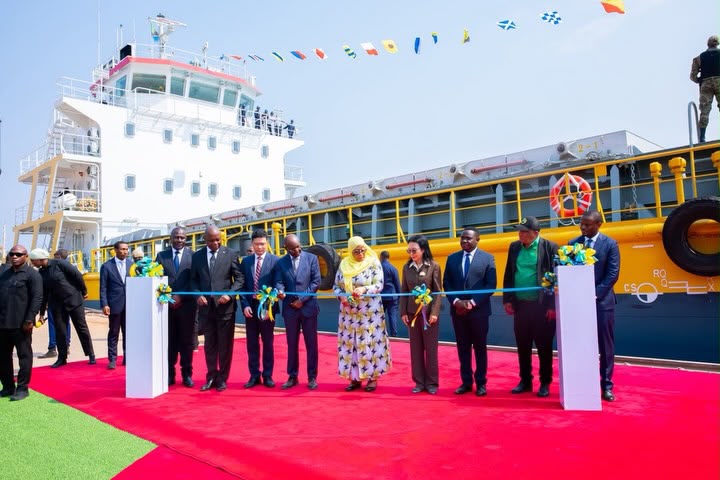
Each of the four 2,000‑deadweight‑ton bulk carriers will serve the Kigoma–Mutoa route between Tanzania and the Democratic Republic of the Congo, creating a reliable maritime bridge across one of Africa’s most economically significant lakes. At a time when regional economies are seeking cost‑effective, sustainable and resilient transport systems, this investment represents a decisive shift toward modern inland shipping.
A Neglected Asset Finally Recognised
For decades, Africa’s inland waterways have remained underutilised despite their immense commercial value. Roads have borne the overwhelming burden of moving cargo, often at high cost and with considerable environmental impact. Tanzania’s latest investment demonstrates that inland water transport deserves a central place in regional logistics planning.
Lake Tanganyika links four countries—Tanzania, the Democratic Republic of the Congo, Burundi, and Zambia through connecting transport corridors. Efficient shipping services on the lake have the potential to reduce transportation costs, stimulate cross‑border commerce, improve food security, and support industrial development across the Great Lakes region.
The movement of bulk commodities, construction materials, agricultural produce, and manufactured goods by water is significantly cheaper than road transport. Reliable shipping also reduces congestion on highways while lowering greenhouse gas emissions. In an era where sustainability has become a global priority, inland shipping offers one of the cleanest transport alternatives available.
A Workforce That Matches the Vessels
Equally significant is the role played by the Dar es Salaam Maritime Training Academy (DMTA) Crew Manning Agency in recruiting and supplying professional crews for all four vessels. This achievement underscores an often‑overlooked truth: maritime infrastructure alone cannot transform an economy without skilled human capital.
Modern vessels require competent seafarers trained to international standards in navigation, engineering, cargo operations, safety management, and environmental protection. Tanzania’s ability to provide qualified crews demonstrates the growing maturity of its maritime education and training ecosystem.
This should serve as an inspiration across Eastern and Central Africa. Investments in maritime academies, simulator technology, cadet training, and certification systems are just as important as investments in ports and ships. The success of any shipping industry ultimately rests upon the competence and professionalism of its workforce.
Public‑Private Partnerships in Action
The collaboration between Gold Voyage Logistics, the Tanzania Shipping Agencies Corporation (TASAC), DMTA, and other stakeholders also illustrates the value of coordinated public‑private partnerships. Maritime development cannot be driven by governments alone. It requires private sector investment, effective regulation, quality training institutions, and supportive public policy working in harmony.
President Samia Suluhu Hassan has consistently demonstrated that infrastructure development is central to Tanzania’s economic transformation agenda. From modern ports along the Indian Ocean to railways, roads, and now inland shipping, Tanzania is steadily building an integrated transport network capable of supporting regional trade under the African Continental Free Trade Area (AfCFTA).
Regional Integration and Lessons for East Africa
The significance of the Kigoma fleet extends beyond Tanzania’s borders. The Democratic Republic of the Congo, one of Africa’s fastest‑growing markets with vast mineral wealth, depends heavily on efficient transport links to regional ports. Improved shipping across Lake Tanganyika strengthens supply chains, facilitates exports and imports, and deepens economic cooperation between neighbouring states.
This development also offers valuable lessons for Kenya and other East African nations. While considerable attention has been devoted to seaports such as Mombasa and Lamu, inland waterways—including Lake Victoria—remain significantly underdeveloped despite their tremendous economic potential. A balanced maritime strategy should encompass both coastal and inland shipping, recognising that lakes are equally important components of regional transport networks.
Furthermore, the commissioning of these vessels highlights the importance of maintaining robust maritime safety oversight. TASAC’s regulatory role will be essential in ensuring that vessel operations comply with international safety standards, environmental regulations, and best practices for inland navigation. Safe shipping remains the cornerstone of sustainable maritime development.
The four new vessels may appear modest compared to ocean‑going fleets, but their strategic impact could be profound. They symbolise confidence in regional commerce, demonstrate the value of investing in maritime capacity, and reaffirm the importance of African‑led solutions to African transport challenges.
As regional integration accelerates, the Great Lakes will increasingly become highways of commerce rather than barriers to trade. Investments such as these strengthen economic resilience, create employment opportunities, support local industries, and enhance connectivity across borders.
A Renaissance Underway
Ultimately, the launch of these vessels is not merely about expanding a shipping fleet. It is about building stronger regional economies, empowering African seafarers, improving logistics efficiency, and demonstrating that inland maritime transport has a pivotal role to play in Africa’s future prosperity.
Tanzania deserves commendation for taking this bold step. If sustained through continued investment, sound regulation, and regional cooperation, Lake Tanganyika could well emerge as one of Africa’s most dynamic inland maritime corridors—propelling economic growth far beyond its shores and setting a benchmark for inland waterway development across the continent.
Andrew Mwangura is a maritime analyst and commentator based in Mombasa, Kenya.