


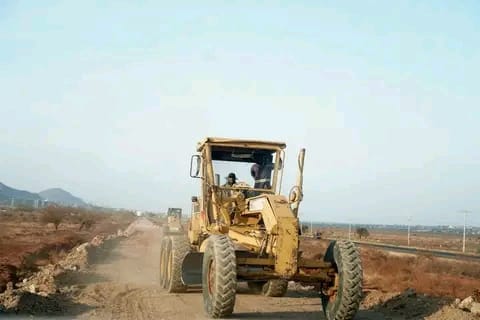
For decades, transport planning in Kenya has understandably focused on roads and, more recently, the Standard Gauge Railway (SGR). Yet the country’s extensive Meter Gauge Railway network still holds immense strategic value, particularly in regions where freight volumes, agricultural production, and cross-border trade require affordable rail connectivity. The Voi–Taveta line is one such corridor whose rehabilitation deserves urgent national attention.
The railway reconnects Taita-Taveta County with the Port of Mombasa through Voi while simultaneously strengthening Kenya’s transport links with neighbouring Tanzania. This positions the corridor not merely as a local development initiative but as a critical component of the East African Community’s regional integration agenda.
Railways remain the backbone of competitive economies
Around the world, countries seeking sustainable economic growth continue to invest heavily in rail transport. Railways move bulk cargo more efficiently, consume less fuel per tonne transported, reduce road congestion, and lower carbon emissions. They also significantly reduce wear and tear on highways caused by heavy trucks.
For Kenya, rehabilitating existing railway infrastructure offers excellent value for money. Rather than allowing strategic corridors to deteriorate, restoring operational efficiency can generate immediate economic returns while complementing investments already made in ports, highways, and logistics centres.
The Voi–Taveta railway fits perfectly within this broader multimodal transport strategy. It provides an important feeder corridor connecting inland economic activities to the Port of Mombasa while offering an alternative route for cross-border commerce.
Unlocking Taita-Taveta’s untapped economic potential
Taita-Taveta County possesses enormous but underutilised economic resources. Agriculture, livestock production, mining, tourism, and cross-border trade all contribute significantly to the county’s economy. However, transport costs have historically limited the competitiveness of many local producers.
The rehabilitation of the railway has the potential to transform this reality.
Farmers producing horticultural crops, livestock products, and food commodities will gain access to cheaper and more reliable transport. Reduced logistics costs improve farm profitability while expanding access to domestic and regional markets.
Likewise, traders operating in towns such as Mwatate, Bura, and Taveta stand to benefit from faster cargo movement, lower freight charges, and improved supply chain reliability. These efficiencies can stimulate investment, encourage enterprise development, and attract new businesses along the railway corridor.
Tourism stands to become a major beneficiary
Perhaps one of the most exciting opportunities lies within the tourism sector.
Taita-Taveta is home to some of Africa’s most iconic wildlife destinations, including Tsavo East and Tsavo West National Parks. These parks remain among Kenya’s largest conservation areas and attract visitors from around the world.
Improved rail connectivity can fundamentally reshape how tourists experience the region.
Rail tourism has experienced renewed popularity globally, offering comfortable, environmentally friendly, and scenic travel experiences. The Voi–Taveta railway could support the development of specialised rail safari packages that combine wildlife viewing with cultural tourism, historical attractions, and community-based tourism initiatives.
Hotels, lodges, restaurants, tour operators, and community conservancies would all benefit from increased visitor numbers. The multiplier effect on local employment could be substantial.
Strengthening Kenya–Tanzania trade
The railway’s strategic importance extends beyond Kenya’s borders.
Taveta serves as one of Kenya’s busiest border crossings with Tanzania. Cross-border trade between the two countries continues to expand under the East African Community framework and the African Continental Free Trade Area (AfCFTA).
Efficient rail transport will reduce transaction costs for exporters and importers while improving supply chain resilience. Businesses on both sides of the border will enjoy greater predictability in cargo movement, encouraging increased commercial activity.
Over time, the corridor could evolve into an important regional logistics link connecting northern Tanzania with Kenya’s maritime gateway at Mombasa.
Connecting Africa’s two strategic trade corridors
Perhaps the greatest long-term significance of the Voi–Taveta railway lies in its regional strategic value. Once rehabilitated, the line will serve as a vital land bridge linking East Africa’s Northern Corridor—anchored by the Port of Mombasa—with the Central Corridor, which connects the Port of Dar es Salaam to the Great Lakes region. This creates an important inter-corridor connection between Kenya and Tanzania, enhancing transport resilience, expanding routing options, and providing alternative logistics pathways for regional trade.
More importantly, the railway will strengthen the economic connection between the Indian Ocean and the Great Lakes region, facilitating the efficient movement of cargo destined for Uganda, Rwanda, Burundi, eastern Democratic Republic of the Congo, and northern Tanzania. As intra-African trade accelerates under the African Continental Free Trade Area (AfCFTA), this corridor can emerge as a strategic gateway that enhances regional supply chains, lowers logistics costs, and improves trade competitiveness across Eastern and Central Africa.
Rather than functioning as a standalone railway, the Voi–Taveta line should therefore be viewed as a critical component of an integrated multimodal transport network that links ports, railways, highways, border posts, and inland logistics hubs. In doing so, it reinforces Kenya’s position as a regional logistics and maritime gateway while advancing the broader vision of seamless regional economic integration.
Creating jobs beyond construction
Infrastructure projects often generate attention during construction but deliver their greatest value long after completion.
The Voi–Taveta railway is expected to create employment opportunities across multiple sectors.
Rail operations will require skilled personnel in engineering, maintenance, signalling, operations, and logistics. Increased economic activity will generate demand for transport services, warehousing, hospitality, retail businesses, and tourism enterprises.
Small and medium-sized enterprises located along the corridor are also likely to experience increased demand as passenger and freight traffic grows.
Importantly, these jobs offer opportunities for local youth, reducing unemployment while strengthening household incomes across the county.
A catalyst for sustainable development
One of the strongest arguments in favour of railway investment is sustainability.
Transport accounts for a significant proportion of greenhouse gas emissions globally. Moving freight from road to rail reduces fuel consumption, lowers emissions, and improves environmental performance.
The rehabilitation of existing railway infrastructure also represents responsible asset management. Rather than abandoning previously developed transport networks, governments maximise returns on earlier public investments while avoiding the much higher costs associated with constructing entirely new corridors.
This approach aligns well with Kenya’s commitments to sustainable infrastructure development and climate resilience.
The challenge ahead: ensuring commercial viability
The long-term success of the Voi–Taveta railway will depend upon maintaining reliable services, competitive freight tariffs, and seamless integration with road transport, ports, and border facilities.
Kenya Railways must ensure efficient operations while working closely with county governments, logistics companies, tourism stakeholders, and private investors to maximise utilisation of the corridor.
Equally important is maintaining the railway to prevent a return to the cycle of deterioration that affected many sections of the Meter Gauge Railway network over previous decades.
Looking beyond rehabilitation
The Voi–Taveta project should be viewed as the beginning rather than the end of railway revitalisation.
Kenya possesses an extensive Meter Gauge Railway network capable of supporting regional commerce, agricultural development, and industrial growth if properly modernised and integrated into national transport planning.
Rehabilitating strategic branch lines complements—not competes with—the Standard Gauge Railway. Together, the two systems can form a comprehensive multimodal transport network serving diverse freight and passenger needs across the country.
Conclusion
The rehabilitation of the Voi–Taveta Meter Gauge Railway is ultimately an investment in people as much as infrastructure. It promises to reconnect communities, stimulate commerce, strengthen regional integration, and expand economic opportunity across Taita-Taveta County.
By linking the Northern Corridor with the Central Corridor and creating a seamless transport bridge between the Indian Ocean and the Great Lakes region, the railway assumes strategic importance far beyond its 129-kilometre length. It has the potential to reshape regional logistics, support the African Continental Free Trade Area, and reinforce Kenya’s role as the principal maritime and logistics gateway for Eastern and Central Africa.
If supported by sound operational management, complementary investments, and strong public-private partnerships, this railway can become a model for how strategic transport infrastructure drives inclusive economic development.
Kenya’s future competitiveness will depend not only on building new infrastructure but also on restoring, modernising, and fully utilising the assets it already possesses. The Voi–Taveta railway is a timely reminder that sometimes the most transformative journeys begin by bringing historic pathways back to life.