


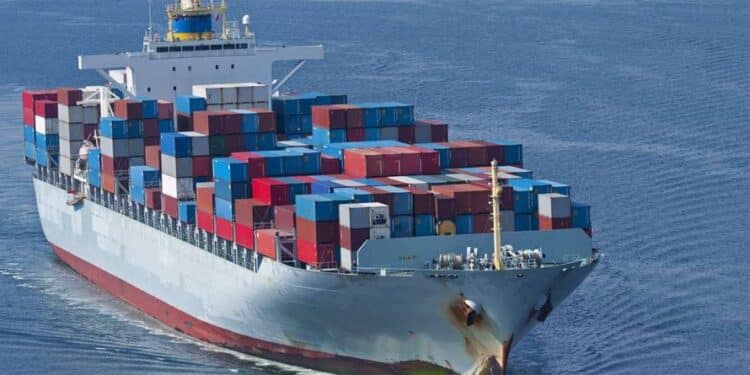
Tanzania intends to relocate the Dar es Salaam Maritime Institute (DMI) to make way for a new ship dock at the Port of Dar es Salaam.
The decision represents a confident and strategic shift in the country’s maritime development. It signals a growing recognition across coastal Africa that future economic competitiveness hinges not only on cargo volumes but also on the strength of the maritime infrastructure and services that sustain global shipping.
For decades, the Port of Dar es Salaam has stood as one of the most vital trade gateways along the western Indian Ocean. It handles the majority of Tanzania’s international cargo and serves as a critical logistical artery for several landlocked nations—including Zambia, Rwanda, Burundi, and parts of the Democratic Republic of the Congo.
Expanding the port to include a modern ship docking and repair facility is a forward-looking move, designed to elevate it from a conventional cargo terminal into a full-service maritime hub capable of supporting the broader shipping industry.
Across the continent, the absence of major ship repair and maintenance facilities has remained one of the most persistent gaps in Africa’s maritime sector. Vessels trading along African routes are often forced to sail to Europe, the Middle East, or Asia for routine technical servicing. This has long deprived coastal economies of valuable industrial opportunities—from marine engineering and spare parts supply to a host of ancillary technical services. With its new docking facility, Tanzania is positioning itself to capture a significant share of this lucrative value chain.
Still, such an ambitious project demands a fundamental reconfiguration of the port area. The land currently occupied by the Dar es Salaam Maritime Institute lies adjacent to the harbor and is considered strategically vital for the proposed dockyard. In response, the government has ordered the relocation of the institute to a 13-acre site in Kimbiji, within the Kigamboni District—a rapidly developing corridor along Dar es Salaam’s southeastern coast, increasingly viewed as the city’s next frontier for urban and institutional expansion.
This relocation presents both challenges and opportunities. For years, DMI has been a cornerstone of maritime education, training seafarers, marine engineers, port operators, and maritime administrators not only for Tanzania but for the wider East African region. Any disruption to its operations must be managed with care to ensure that academic programs, training schedules, and institutional capacity remain intact during the transition.
Yet if executed with foresight, the move could yield substantial long-term benefits. A 13-acre site offers the opportunity to build a modern, purpose-built maritime campus—complete with advanced navigation simulators, marine engineering laboratories, technical workshops, and student accommodation. Such a facility would significantly expand the institute’s capacity while aligning its curriculum more closely with international standards.
Equally important is the potential synergy between maritime education and industrial development. A state-of-the-art dock at the Port of Dar es Salaam would provide an invaluable real-world training ground for maritime students. Through structured partnerships between the dockyard and the relocated institute, students could gain hands-on experience in ship maintenance, marine engineering, and port technical services. This kind of integration between academic institutions and industrial facilities is a hallmark of successful maritime nations.
Regionally, Tanzania’s dockyard initiative reflects growing competition among East African ports. While the Port of Mombasa has long dominated regional maritime trade, Dar es Salaam has steadily strengthened its position through modernization, improved logistics, and expanding trade corridors. The addition of a ship repair facility would further enhance Tanzania’s competitiveness, attracting vessels seeking technical services along the East African seaboard.
In the broader context of the blue economy, this development underscores the importance of long-term maritime planning. Ports are more than cargo gateways—they are complex industrial ecosystems that generate employment, foster technical skills, and drive economic diversification. Ship repair facilities, in particular, create highly specialized jobs—from marine engineering to industrial fabrication and logistics.
Ultimately, the relocation of the Dar es Salaam Maritime Institute to Kimbiji should not be viewed merely as a displacement necessitated by port expansion. Rather, it should be understood as part of a larger maritime transformation strategy. If the new campus is developed as a Centre of excellence and the Port of Dar es Salaam evolves into a regional ship repair hub, Tanzania will have successfully aligned infrastructure development with human capital growth.
Striking that balance is essential. Ports, docks, and shipyards may form the physical backbone of maritime power, but it is well-trained maritime professionals who keep the system running. Expanding port infrastructure while at the same time investing in maritime education stands to strengthen Tanzania’s blue economy a great deal.