


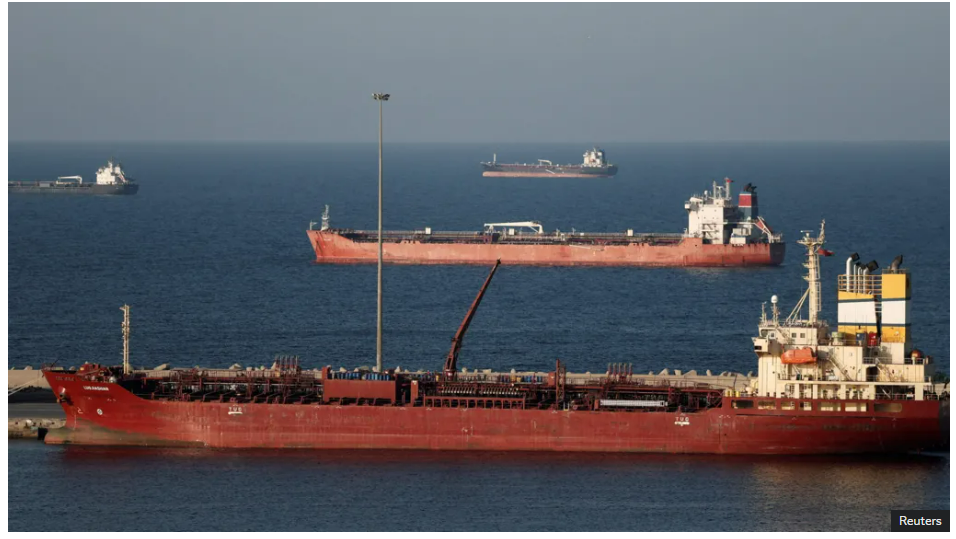
with a stark reminder of its fragility. For Kenya, a nation whose economic engine is intricately linked to the ebb and flow of international trade, this geopolitical flashpoint is not a distant concern but an immediate reality.
As major shipping lines begin to reroute vessels from this volatile chokepoint to the longer passage around the Cape of Good Hope, the country finds itself at a strategic crossroads, facing a complex mix of potential short-term gain and significant long-term risk.
The most immediate opportunity lies directly in Kenya’s maritime backyard. With the Red Sea and Persian Gulf becoming increasingly treacherous, the alternative sea route around Southern Africa is experiencing a resurgence. This redrawing of the global shipping map positions Kenya’s ports, particularly the deep-water facilities in Mombasa and the nascent Lamu port, as potentially vital midway halts.
For vessels that have travelled thousands of extra nautical miles, the need for refueling, or bunkering, becomes critical. Similarly, the demand for ship chandling—the supply of provisions, spares, and stores for the crew and vessel—would surge. This presents a tangible economic upside. A spike in vessel traffic could translate directly into increased revenue for local companies offering these specialized services, and that creates a ripple effect of job creation and economic stimulation in the coastal regions.
In the short to medium term, the Port of Mombasa could reinvent itself not just as a gateway for regional cargo, but as a crucial pit-stop on a major global maritime highway.
Yet, to focus solely on these potential gains would be to ignore the far more profound and perilous challenges that lurk beneath the surface. Kenya’s vulnerability is starkly exposed by its heavy reliance on imported petroleum, the vast majority of which transits through the Strait of Hormuz. Any sustained disruption to this flow would send shockwaves through the entire economy.
The most immediate and painful consequence would be a surge in fuel prices, which is a major inconvenience and a shock to the markets. Higher fuel costs inflate the price of transportation, rippling outwards to increase the cost of food, raw materials, and manufactured goods. This imported inflation would erode household purchasing power and could undo the delicate progress made in containing the cost of living.
Furthermore, the challenges extend beyond the energy sector. A prolonged crisis that destabilizes global trade patterns could dampen demand for Kenyan exports. The country’s farmers and exporters, who have worked tirelessly to find markets for tea, coffee, horticulture, and textiles, could face reduced orders and stiffer competition.
At the same time, the geopolitical focus on the crisis could derail or delay crucial bilateral trade talks with key partners, stalling the diversification of Kenya’s export markets precisely when it is needed most. The nation therefore faces a paradox: its ports might see more ships, but the goods they carry—and the cost of moving them—could become a new burden on the Kenyan people.
This precarious situation demands a pragmatic and multi-pronged strategy that moves beyond mere crisis management. The government cannot control global geopolitics, but it can fortify the nation’s economic defenses.
First and foremost, there is an urgent need to diversify fuel supply agreements. Over-reliance on a single, volatile region is a strategic weakness. Kenya must aggressively pursue long-term procurement contracts with suppliers from other parts of the world, such as West Africa or the Americas, to create a more resilient and flexible energy import portfolio.
Secondly, the concept of a Strategic Petroleum Reserve must move from a policy talking point to a funded reality. For too long, the idea of maintaining an emergency stockpile of crude oil or refined products has languished. The current crisis demonstrates that such a reserve is not a luxury but a necessity.
It acts as a buffer against sudden supply shocks, giving the government time to negotiate alternative supplies without subjecting the economy to the whiplash of panic-driven price hikes. It is an insurance policy against global instability, and the premium is well worth the cost.
Most critically, the disruption in the Strait of Hormuz delivers a powerful, unequivocal message about the urgency of Kenya’s energy transition. The vulnerability exposed by this crisis is the most compelling argument yet for accelerating the shift to indigenous renewable energy sources. Kenya is blessed with abundant geothermal, wind, and solar potential.
By aggressively investing in grid modernization and renewable capacity, the nation can steadily decouple its economic growth from the volatile global petroleum market. Every kilowatt of electricity generated from Olkaria’s steam or the wind farms in the North is a step towards true energy sovereignty. It is a direct hedge against the kind of geopolitical turmoil we are witnessing today.
In essence, the disruption in the Strait of Hormuz is a stress test for the Kenyan economy. It reveals both the opportunities of our geography and the dangers of our dependencies. Capitalizing on the increased maritime traffic to boost local services, while simultaneously using the crisis as a catalyst to diversify our energy sources and secure our fuel supply, is sure to mitigate the war impact for Kenya.