


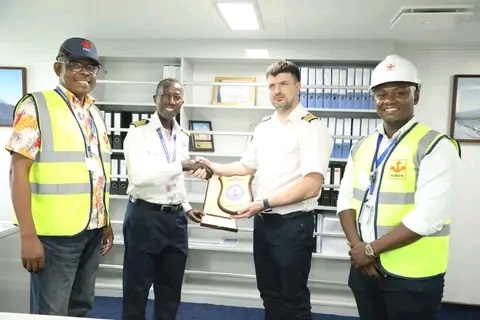
Mombasa Port recently received the maiden call of the pure car carrier MV Global Fuji.
The vessel which was carrying 579 motor vehicles is powered primarily by liquefied natural gas (LNG).
This visit is significant. For one, this vessel’s arrival marks the convergence of global shipping trends with local port ambition. It is a clear, resonant signal that East Africa’s principal gateway is entering a new era—one defined by environmental accountability, technological transition, and strategic maritime relevance.
At a time when the international maritime industry faces mounting pressure to decarbonize, the presence of an LNG-powered vessel in Mombasa is notable.
It reflects the growing influence of the International Maritime Organization’s regulatory framework, which has set progressively stringent targets for reducing greenhouse gas emissions from shipping. These targets are no longer abstract policy aspirations; they are actively reshaping fleet investments, fuel choices, and port infrastructure priorities worldwide.
The Kenya Ports Authority (KPA), through its Green Port Policy, appears keenly aware of this shifting landscape. The symbolic presentation of a First Call Certificate by Capt. Moses Muthama, on behalf of CEO Capt William Ruto, underscores an institutional recognition that environmental stewardship is now inseparable from port competitiveness.
Ports that fail to adapt risk obsolescence, bypassed by cleaner, more efficient shipping networks that increasingly define global trade routes.
Nevertheless, symbolism must be matched by substance. LNG propulsion—while significantly reducing sulphur oxides, nitrogen oxides, and carbon emissions compared to conventional marine fuels—is ultimately a transitional solution. Cleaner, yes, but not clean enough to meet the long-term goal of net-zero emissions.
The real question is whether Mombasa is positioning itself merely as a passive recipient of cleaner vessels, or as an active enabler of the broader energy transition in maritime transport.
Capt Oleksandr Gusyev’s candid observation about the challenges of LNG refueling infrastructure should not be overlooked. It highlights a structural gap that could either hinder or accelerate Mombasa’s green ambitions, depending on how decisively it is addressed. Without adequate bunkering facilities, LNG-powered vessels may continue to call out of necessity rather than preference, limiting the port’s ability to become a regional hub for green shipping.
This is where strategic foresight becomes critical. Developing LNG bunkering capacity at Mombasa would not only support cleaner vessels but also position Kenya as a leader in sustainable maritime logistics along the Western Indian Ocean seaboard. Such investment would align seamlessly with broader national and continental blue economy strategies, which emphasize sustainable growth, environmental protection, and innovation.
Globally, leading ports have already begun this transition. From Northern Europe to parts of Asia, LNG bunkering infrastructure is being integrated into port ecosystems, often alongside parallel investments in alternative fuels such as methanol, ammonia, and hydrogen.
Those ports understand that the future of shipping will not be defined by a single fuel, but by a flexible, multi-fuel approach that accommodates evolving technologies and regulatory demands.
For Mombasa, the stakes are especially high. As Kenya’s primary maritime gateway and a critical node for landlocked neighbors in East and Central Africa, the port’s operational standards have far-reaching implications. Its ability to handle next-generation vessels—LNG-powered or otherwise—will directly influence regional trade efficiency, cost structures, and environmental impact.
The arrival of MV Global Fuji also highlights the evolving dynamics of the automotive logistics sector. Pure car carriers are increasingly at the forefront of the green transition, driven by pressure from automakers seeking to decarbonize their supply chains. This trend will likely intensify as electric vehicle production scales up globally, further aligning maritime transport with sustainability objectives.
In this context, Mombasa’s readiness to accommodate cleaner car carriers is a strategic advantage. It signals to global manufacturers and logistics providers that the port is not only capable but also willing to support greener supply chains. Over time, this could translate into increased cargo volumes, stronger partnerships, and enhanced competitiveness.
Yet the transition to green shipping is not without challenges. Infrastructure investments are capital-intensive, regulatory frameworks are evolving, and technological uncertainties persist. For a developing economy like Kenya, balancing these demands with broader development priorities requires careful planning and stakeholder collaboration.
Public-private partnerships will be essential. The scale of investment needed to develop LNG bunkering facilities, upgrade port infrastructure, and enhance operational efficiency cannot be borne by the public sector alone. Engaging shipping lines, energy companies, and international development partners will be crucial to mobilizing the necessary resources and expertise.
Equally important is capacity building. The shift to cleaner fuels and advanced vessel technologies demands a workforce equipped with new skills—from marine engineers to port operators. Training programs, knowledge exchange, and international collaboration will be key to ensuring that Kenya’s maritime workforce remains competitive in a rapidly changing industry.
Environmental considerations must also extend beyond vessel emissions. Green port development encompasses energy-efficient cargo handling equipment, waste management systems, and the integration of renewable energy into port operations. These measures, while less visible than LNG-powered ships, are equally critical to reducing the overall environmental footprint.
The broader policy environment will also shape this transition. National maritime policies, energy strategies, and environmental regulations must align to create a coherent framework that supports sustainable port development—addressing regulatory bottlenecks, incentivizing green investments, and ensuring consistent enforcement of environmental standards.
In many ways, the arrival of MV Global Fuji is a microcosm of the global maritime transition. It encapsulates the opportunities and challenges of moving toward a more sustainable future—where economic growth and environmental responsibility are not mutually exclusive, but mutually reinforcing.
For Kenya, and for the Port of Mombasa, the message is clear. The future of maritime trade will be shaped by those who adapt early, invest wisely, and think strategically. LNG may be a stepping stone, but the journey toward true sustainability is far from complete.
What matters now is momentum. The symbolism of this maiden call must translate into tangible action—investment in infrastructure, policy alignment, and a commitment to innovation. Only then can Mombasa truly position itself as a green port of the future: not just a gateway for goods, but a model for sustainable maritime development in Africa.
In the end, the question is not whether the transition to greener shipping will happen—it already is. The question is whether Mombasa will lead, follow, or be left behind. The arrival of MV Global Fuji suggests the port is ready to lead. The challenge now is to prove it.