


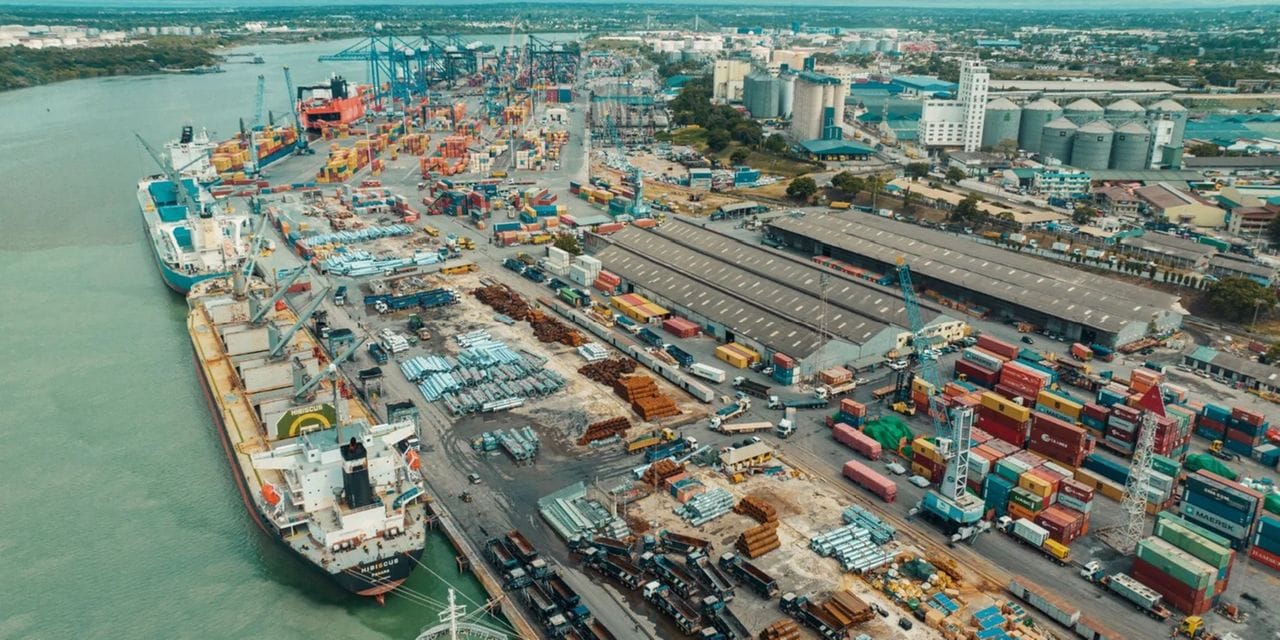
DP World’s transformation of Tanzania’s premier port proves that regional competition is a catalyst for progress, not a cause for alarm.
The remarkable operational gains recorded at Tanzania’s Port of Dar es Salaam following DP World’s entry should be met not with apprehension or denial, but with respect and rigorous analysis. They showcase what is possible when strategic investment, modern management, and political will converge to create a globally competitive asset.
Consider the numbers. Slashing vessel turnaround time from over 300 hours to under 28 hours is no ordinary feat. In container shipping, time is the currency of profitability. Every idle hour inflates costs, disrupts schedules, and drives up freight rates. A reduction of more than 90 percent fundamentally reshapes how shipping lines evaluate a port’s viability.
This is not an isolated metric. The successful berthing of the 240-metre M/V RAMHAN—the largest Pure Car and Truck Carrier ever to dock in Dar es Salaam—signals Tanzania’s readiness for the larger, more sophisticated vessels now dominating global trade. Combined with modern roll-on/roll-off capabilities, expanded cargo handling, and digital systems, these improvements mark the dawn of a new era of operational maturity for the port.
This transformation did not happen by accident.
It was the result of a consequential policy decision: awarding DP World a long-term concession to modernise and operate key terminals. The agreement sparked intense political debate, with critics raising concerns over sovereignty and transparency, while proponents argued that private capital and global expertise were essential for competitiveness.
Nearly two years on, the operational results suggest that gamble is paying dividends.
This is not an endorsement of privatisation for its own sake. Rather, it is a case study in how well-structured public-private partnerships—underpinned by clear regulatory oversight and accountability—can unlock efficiencies that public institutions often struggle to achieve. Infrastructure alone does not guarantee competitiveness; management, technology, and operational discipline are equally decisive.
For Kenya, the lessons are immediate and profound.
Mombasa has undergone an impressive transformation over the past decade. Investments in new berths, modern terminals, dredging, road and rail links (including the Standard Gauge Railway), and digital platforms have boosted efficiency, with container traffic surpassing two million TEUs annually. Yet the competitive landscape is shifting rapidly.
Dar es Salaam is modernising at pace. Djibouti is consolidating its hold on the Horn of Africa. Lamu is emerging as a deep-water hub. Mozambique is expanding Beira and Nacala. Across the continent, governments recognise that efficient ports are strategic economic assets capable of attracting investment and reshaping trade patterns.
This intensifying competition should be welcomed. It is a catalyst for innovation, compelling ports to reduce bureaucracy, embrace technology, and improve service. The ultimate beneficiaries are traders, manufacturers, and consumers across East and Central Africa.
Crucially, this is not a zero-sum contest. Dar es Salaam and Mombasa serve different hinterlands and corridors—the Central and Northern Corridors, respectively. They are complementary arteries supporting continental integration under the African Continental Free Trade Area (AfCFTA). As regional trade expands, there is ample room for multiple world-class ports to thrive.
Nevertheless, Kenya cannot afford complacency.
Its maritime competitiveness will depend on sustained investment in automation, AI, cargo visibility, predictive maintenance, green technologies, and customs modernisation. Shipping lines evaluate ports not on history, but on measurable metrics: turnaround time, berth productivity, crane efficiency, and dwell time.
Equally vital is the development of maritime human capital. Modern ports require highly skilled professionals to operate sophisticated equipment and manage automated terminals. Investment in education, certification, and workforce development must accompany infrastructure expansion. A port is only as competitive as its people.
Regional cooperation must also remain central to East Africa’s maritime future. Rather than destructive rivalry, Kenya and Tanzania should pursue collaboration in customs harmonisation, security, environmental protection, and digital trade facilitation. Efficient ports, linked by efficient corridors, will strengthen the region’s collective competitiveness.
DP World’s investment in Dar es Salaam sends a broader message to African governments: global investors are ready to commit substantial capital where there is policy certainty, regulatory stability, and strategic vision. Attracting such investment requires transparent governance and institutional credibility.
Ultimately, the transformation of Dar es Salaam is not just a Tanzanian success story. It is evidence that African ports can compete with the world’s best when operational excellence, innovation, and effective partnerships match infrastructure investment.
For Kenya, the appropriate response is neither anxiety nor defensiveness. It is renewed determination. Mombasa remains one of Africa’s great gateways, and Lamu is carving its own role as a transshipment hub. Together, they offer strategic advantages few countries possess. But preserving that edge will require continuous innovation, bold reforms, and an unwavering commitment to efficiency.
The tide of regional competition is rising. Kenya should not fear it.
It should lead it.