


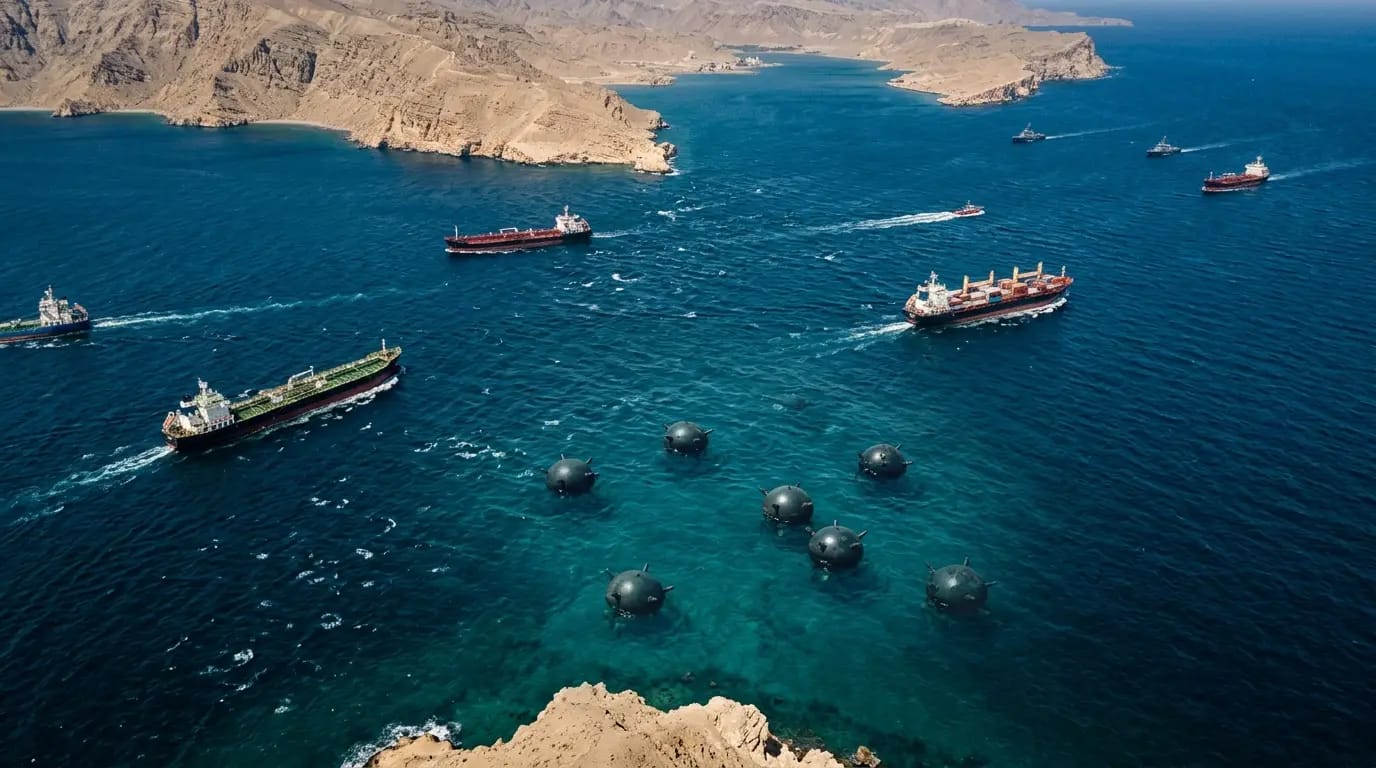
The latest developments in the Middle East maritime theater are more than a regional security concern—they represent a profound disruption to the very architecture of global trade. What is unfolding across the Arabian Gulf and the Red Sea is a stark reminder that the world’s supply chains remain dangerously exposed to geopolitical shocks. The closure of vital corridors, heightened military tensions, and the cascading operational responses of global shipping lines are collectively reshaping how cargo moves, how much it costs, and how long it takes to reach its destination.
At the heart of this disruption lies the effective paralysis of one of the world’s most critical chokepoints: the Strait of Hormuz. The suspension of vessel transit through this narrow passage is not a minor inconvenience—it is a systemic shock. Historically, this corridor has handled a significant share of global oil and container traffic. Its closure has forced shipping lines into a posture of caution, diversion, and in some cases, outright withdrawal. The result is a fragmentation of established maritime routes, with vessels either held in safe anchorages or rerouted through longer, costlier alternatives.
The numbers alone tell a compelling story. Vessel traffic through the Strait of Hormuz has dropped sharply compared to the previous year, even as transits around the Cape of Good Hope have surged. This diversion comes with serious consequences: longer voyages mean higher fuel consumption, increased emissions, and extended delivery timelines. For cargo owners, this translates into delayed inventories and rising costs. For shipping lines, it introduces operational inefficiencies that ripple across their entire networks.
Yet what is most striking is not just the disruption itself, but the industry’s response. Major carriers have moved swiftly to impose a complex web of surcharges—war risk premiums, emergency fuel surcharges, contingency fees, and diversion costs. These are not marginal adjustments. In many cases, they amount to thousands of dollars per container, fundamentally altering the economics of trade. The cumulative effect is a sharp escalation in freight rates, particularly on routes connected to the Red Sea and the Gulf.
This escalation is not occurring in isolation. It is compounded by operational constraints at ports across the region. While some hubs in the United Arab Emirates and Oman continue to function with relative normalcy, others face limitations ranging from reduced pilot availability to suspended energy operations. The patchwork nature of port functionality introduces further uncertainty, forcing shipping lines to adopt highly flexible—but also highly unpredictable—routing strategies.
In this environment, the concept of a fixed shipping schedule has become almost obsolete. Vessels are diverted mid-voyage, cargo is discharged at alternative ports, and inland transport solutions are increasingly used to bridge the gaps. The emergence of multimodal “land bridge” solutions—where containers are moved by road or rail between ports—reflects an industry grappling with disruption through improvisation. While these solutions offer a degree of continuity, they come at a cost, both financially and logistically.
For East Africa, and Kenya in particular, the implications are significant. The imposition of emergency fuel surcharges on shipments to and from the region signals that the effects of Middle East instability are not confined to its immediate geography. Ports such as Mombasa are deeply integrated into global trade networks that pass through the Red Sea and the Gulf. Any disruption along these corridors inevitably reverberates along the East African coast.
This raises a critical question: how resilient are our supply chains? The current crisis exposes a structural vulnerability that has long been overlooked. Global trade has become highly optimized for efficiency, but not for resilience. The reliance on a handful of strategic chokepoints means that any disruption—whether due to conflict, piracy, or natural disaster—can have disproportionate consequences.
The response from shipping lines, while necessary, also underscores a deeper issue. The transfer of risk and cost to cargo owners reflects a broader trend in the industry. In times of crisis, the burden is often shifted downstream, ultimately reaching consumers. Higher freight rates translate into higher prices for goods, contributing to inflationary pressures in economies already grappling with economic uncertainty.
There is also a strategic dimension to consider. The ongoing disruptions may accelerate a reconfiguration of global trade routes. The increased use of alternative corridors, including routes around Africa, could become more entrenched if instability persists. Similarly, investments in regional transshipment hubs and inland logistics infrastructure may gain urgency as countries seek to reduce their dependence on vulnerable maritime chokepoints.
However, these adjustments are not without trade-offs. Longer routes increase transit times and environmental impact, while alternative logistics solutions often lack the scale and efficiency of established maritime corridors. The challenge, therefore, is not simply to adapt, but to do so in a way that balances resilience, efficiency, and sustainability.
What is clear is that the current situation is not a temporary aberration. The combination of geopolitical tension, security risks, and economic pressures suggests that volatility in the Middle East maritime domain may persist. For industry stakeholders, this requires a shift in mindset—from reactive crisis management to proactive risk mitigation.
Governments, too, have a role to play. Strengthening regional cooperation, investing in port infrastructure, and enhancing maritime security are critical steps in building more resilient supply chains. For countries like Kenya, this means not only safeguarding the efficiency of our ports but also positioning ourselves as reliable nodes in an increasingly uncertain global network.
Ultimately, the unfolding crisis in the Middle East is a stark reminder of the interconnectedness of global trade. What happens in the Gulf does not stay in the Gulf; it reverberates across oceans and continents, affecting economies far removed from the epicenter of conflict. The challenge for the maritime industry—and for policymakers—is to navigate this uncertainty with foresight and adaptability.
The cost of inaction is too high. As freight rates climb and supply chains strain under pressure, the need for a more resilient and diversified global trade system becomes ever more urgent. The current disruptions may well be a turning point—a moment that compels the industry to rethink its assumptions and to build a future that is not only efficient, but also robust in the face of uncertainty.