


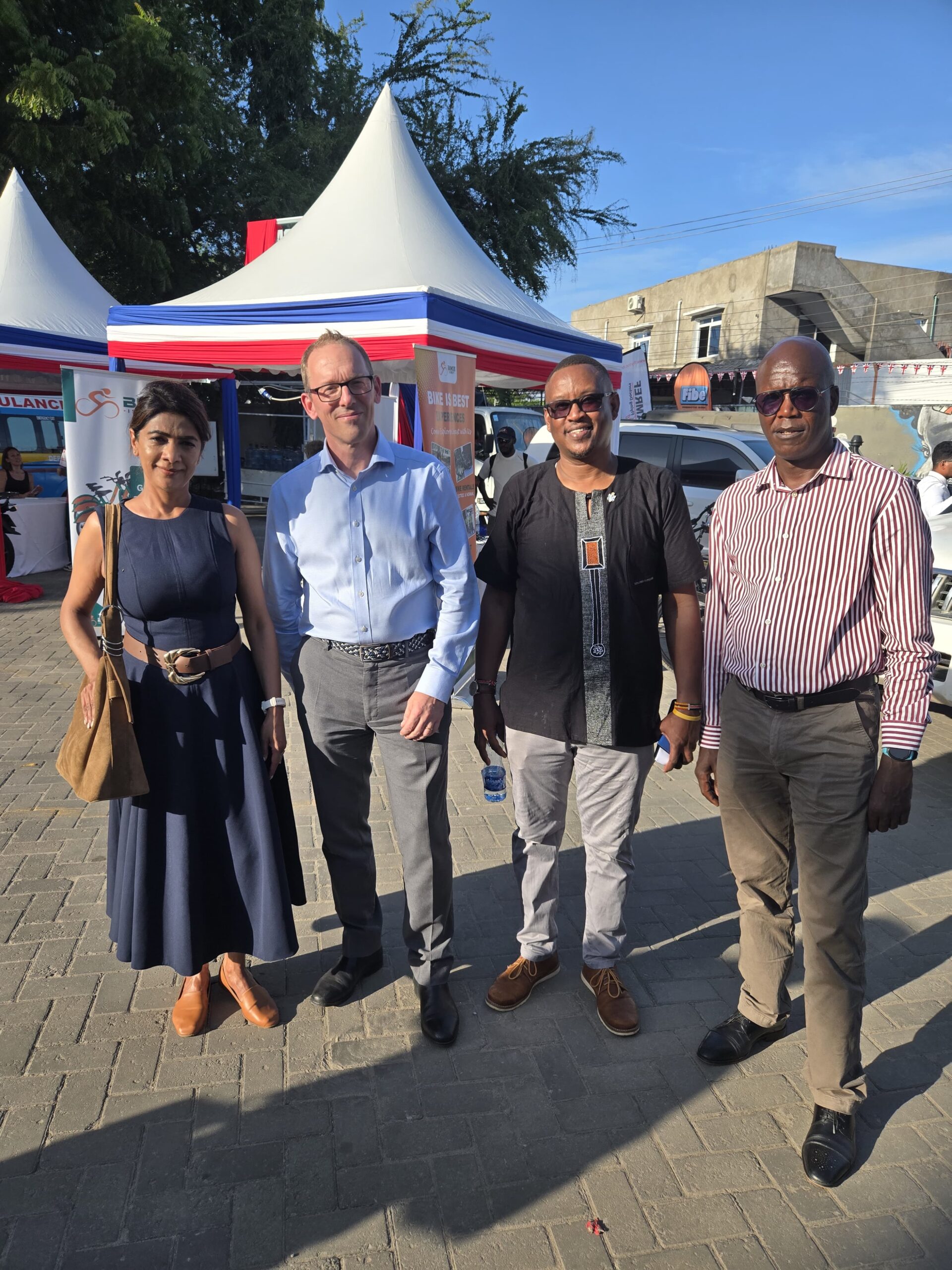
On 13 October 2026, British High Commissioner to Kenya, His Excellency Matt Baugh OBE, stepped into Tononoka Social Hall in Mombasa for the British High Commission’s first Open House outside Nairobi. From 3pm to 6pm, residents, businesspeople, students and officials mingled with UK diplomats working on trade, investment, security, consular services, visas and the blue economy. Earlier that day, Baugh sat down with Mombasa Governor Abdulswamad Shariff Nassir. Their conversation ranged across jobs, trade, the blue economy, security and opportunities for coastal youth. Governor Nassir presented local coastal handicrafts and diplomatic gifts linked to Zuber Bakhrani and Akamba Handicraft—small, tangible symbols of a relationship that both sides insist is about people as much as policy.
This was not a ceremonial fly-in. It was a deliberate move to take the High Commission “on the road,” as Baugh put it, beyond the capital’s formal circuits. In doing so, it revealed both the enduring logic of the UK-Kenya relationship and the subtle pressures reshaping it.
Mombasa Is Not a Peripheral Stop
The port handles roughly 95 per cent of Kenya’s imports and serves as a critical gateway for landlocked neighbours. Britain has invested around £40 million in recent years to improve cargo-handling capacity. Turnaround times have fallen from about eight days to one, and revenue has risen by 140 per cent. These are not abstract statistics; they determine the cost of goods across East Africa and the competitiveness of Kenyan exports. Baugh’s emphasis on the port, maritime security and the blue economy was therefore practical, not rhetorical. When Deputy Governor Francis Thoya spoke of cooperation with the Kenya Coast Guard and Navy, he was pointing to the same strategic geography that has long drawn British attention—trade lanes, counter-terrorism, and the stability required for tourism and investment.
The Open House Format Mattered
By bringing the full suite of High Commission services—scholarships, visas, investment advice, conservation programmes—into a public hall rather than a closed-door briefing, the UK signalled a preference for accessibility over exclusivity. Baugh framed the relationship in human terms: decades of Kenyans and Britons studying, working, investing and marrying together. Governor Nassir reciprocated by recalling his own early exposure through the British Council in Mombasa and by highlighting concrete UK-supported projects—drainage works that have eased flooding around Star of the Sea and Baraki, infrastructure near Changamwe, and a feasibility study for a special economic zone conducted with TradeMark Africa. These are the granular outcomes that turn diplomatic language into local legitimacy.
The Deeper Significance
Yet the deeper significance lies in what the visit reveals about the current phase of the bilateral relationship. Kenya and the UK launched a Strategic Partnership covering trade, climate, security and innovation. The target of doubling trade is ambitious. Achieving it requires moving beyond Nairobi-centric diplomacy. Coastal youth unemployment, the need for skills that match emerging blue-economy opportunities, and the demand for efficient logistics all sit at the intersection of British commercial interest and Kenyan development priorities. Baugh’s background—Ambassador to Somalia, Director for Migration and Conflict, earlier roles in stabilisation and Africa policy—equips him to navigate the security dimensions that remain inseparable from economic ones. His public comments on Kenya’s Ebola preparedness and the importance of credible 2027 elections underscored that stability is the foundation on which trade and investment rest.
Critics of such outreach sometimes dismiss it as soft-power theatre. That would be a misreading. An Open House that draws large local attendance, pairs the High Commissioner with the county governor, and places blue-economy and youth opportunity at the centre is an attempt to embed the partnership in places where results are measured in jobs and reduced logistics costs rather than communiqués. The handicrafts presented by Nassir were more than polite protocol; they located the exchange in the lived economy of coastal artisans and cooperatives such as Akamba Handicraft—exactly the kind of small-scale enterprise that benefits when trade facilitation and skills programmes succeed.
Delivery Is the Test
The test, of course, is delivery. Port efficiency gains must continue. Youth programmes must translate into measurable employment. Security cooperation must remain effective without becoming overbearing. And the Strategic Partnership must demonstrate that “doubling trade” is more than an aspiration. Baugh’s decision to begin his coastal engagement with an open, multi-sector event suggests he understands that legitimacy in Kenya is built from the ground up as much as from State House downward.
Mombasa has always been a crossroads—of cultures, of commerce, of strategic interest. By bringing the High Commission into Tononoka Social Hall and placing job creation, the blue economy and coastal youth at the heart of the conversation, Matt Baugh has reminded both countries that the most durable partnerships are those that travel beyond the capital and speak the language of practical opportunity. The gifts of local craft were a fitting close to the formal meeting. The real work of turning openness into shared prosperity is only beginning.