


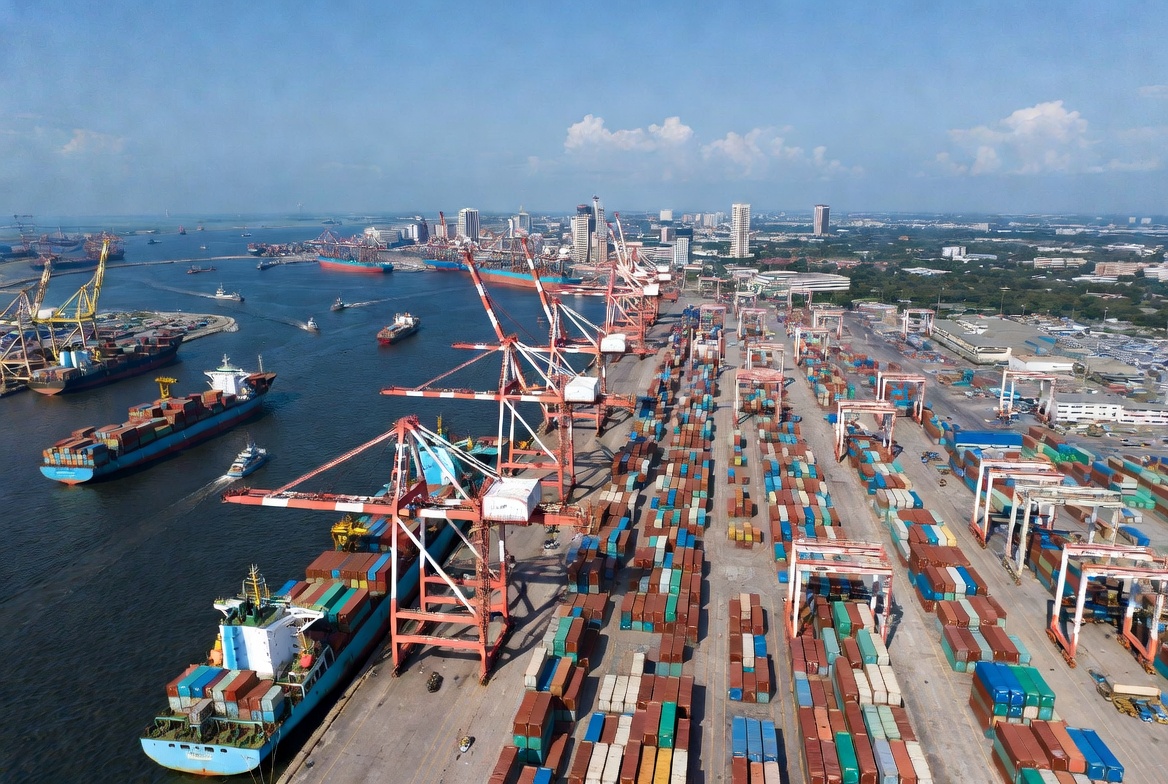
Port workers across Nigeria are once again warning of a possible nationwide shutdown. The immediate trigger is both familiar and consequential: terminal operators have failed to begin negotiations on a new National Joint Industrial Council (NJIC) agreement covering dockworkers’ welfare and remuneration. The previous agreement expired at the end of May 2026, with revised rates expected from 1 June. Nearly five months later, talks have yet to start.
The Dockworkers Branch of the Maritime Workers’ Union of Nigeria (MWUN), led by Comrade Bolaji Agboola, has made clear that patience is exhausted. Leadership can no longer easily contain rank-and-file frustration, and disruption of port operations has been threatened if engagement does not begin urgently. The union has called on the Federal Government, through the Nigerian Maritime Administration and Safety Agency (NIMASA), to compel the parties to the table.
This is not a peripheral labour dispute. Nigeria’s seaports handle the overwhelming majority of the country’s external trade—more than 90 percent of trade volume by some official accounts. Cargo throughput is rising: 129.3 million metric tonnes in 2025, with strong container growth, a notable surge in export containers in recent quarters, and Lekki Port emerging as a significant contributor. Ports generate substantial government revenue, support downstream logistics, manufacturing, retail, and agriculture, and underpin ambitions for a larger blue economy and a $1 trillion national economy. Interruptions at the docks quickly become national costs: demurrage, delayed imports of intermediate goods and consumer products, missed export windows, higher prices, and damaged reliability for shipping lines that already weigh Nigerian ports carefully when allocating vessels.
The current standoff follows a pattern. Maritime industrial relations in Nigeria have repeatedly featured late or stalled collective bargaining, unpaid or delayed entitlements, and last-minute threats of action that force government mediation. Similar tensions have arisen over stevedoring compliance, tally clerks, onboard security, and salary arrears. Each episode extracts a price in uncertainty. Terminal operators face rising labour costs in a competitive environment and may calculate that delay shifts pressure. Workers, facing inflation and the real erosion of purchasing power, see delayed reviews as disregard for their livelihoods and dignity. When agreements have fixed review dates, beginning talks only after expiry—or not at all—is a structural failure, not an administrative oversight.
The operational stakes are immediate. Dockworkers are central to cargo handling. Even a short, coordinated stoppage can cascade: vessels wait, berths clog, trucks idle, factories face shortages, and exporters miss sailings. Longer disruption multiplies losses across the supply chain. Importers, exporters, freight forwarders, haulage firms, and ultimately consumers absorb the cost. In an economy still working to improve its ease of doing business and attract investment, repeated near-shutdowns signal unreliability.
Yet the dispute also reveals a deeper institutional problem. Collective bargaining is supposed to provide predictability. When it is treated as a crisis-management tool rather than a routine process timed to agreement cycles, industrial peace becomes fragile. Early engagement does not guarantee consensus, but it reduces the risk that grievances harden into operational threats. NIMASA and the Ministry of Marine and Blue Economy have legitimate roles in facilitating dialogue and ensuring statutory frameworks are respected. Government intervention should aim at prompt, good-faith negotiations rather than repeated last-minute firefighting. Sustainable solutions require clarity on proposed rates, the economic realities facing terminals, and the legitimate expectations of workers whose labour keeps cargo moving.
Nigeria’s ports sit at the intersection of national development goals—trade facilitation under AfCFTA, non-oil export growth, revenue mobilisation, and blue-economy ambitions—and day-to-day industrial relations. Infrastructure upgrades, digital systems, and capacity expansion matter enormously. So does a workforce whose conditions are reviewed on time and whose grievances are addressed through structured processes rather than ultimatums. Treating labour relations as an afterthought to infrastructure and revenue targets is a false economy. The cost of delayed bargaining is paid in disrupted trade, higher logistics costs, and eroded confidence.
The immediate test is whether terminal operators and MWUN will commence meaningful negotiations before the threatened disruption materialises, and whether NIMASA and federal authorities will facilitate that engagement effectively. The larger test is whether the industry will institutionalise timely collective bargaining as a core element of operational risk management. Ports that cannot reliably move cargo because industrial relations are chronically reactive will struggle to support a growing, more competitive Nigerian economy. Continuity of trade requires both modern infrastructure and stable, predictable industrial relations. One without the other is incomplete. The current warning should concentrate minds on both.