


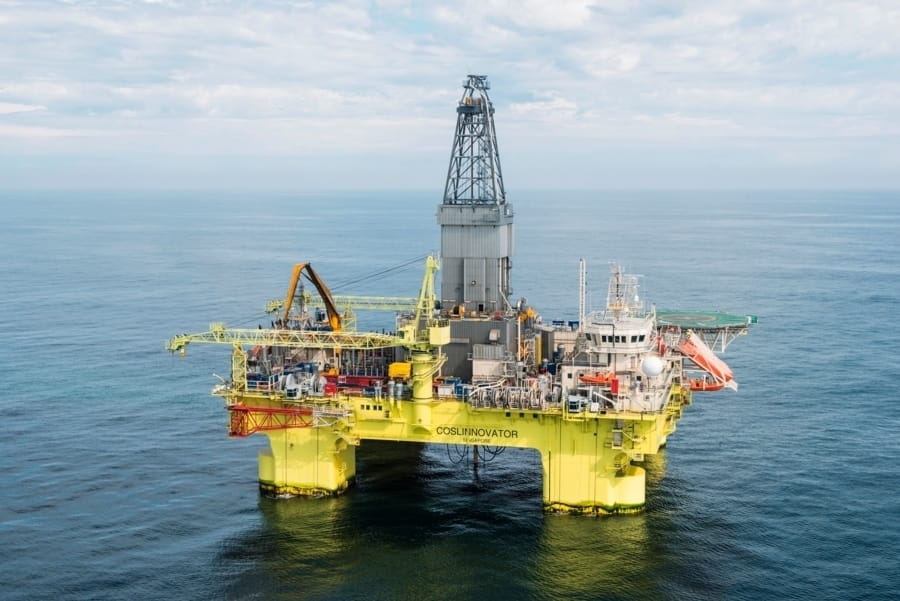
In November 2026, Kenya signed a KSh 69.2 billion (approximately $692 million) agreement with Greek energy company AMACO Energy SA and ARISE Integrated Industrial Platforms to build a liquefied natural gas (LNG) power project called HERCULES at Dongo Kundu, Mombasa, serving the 500-acre Coast Integrated Industrial Park. It starts with 250 MW of generation capacity, with ambitions to expand to 1 GW, using floating power barges and GE Vernova gas turbines, operating independently of Kenya’s national grid and dedicated to powering heavy industry, logistics operations, and AI data centres within the park.
The story sounds like a standard narrative of African industrialisation: a special economic zone, dedicated power, data centres, jobs (1,500 during construction, 550–650 permanent during operations).
But one detail leaves the entire narrative suspended in mid-air: Kenya has no commercial-scale natural gas production, no LNG import terminal, and AMACO has not disclosed any gas supplier.
LNG must come from somewhere. Currently, no one is publicly saying where.
This Is Not Kenya’s First Attempt
The idea of an LNG import terminal in Mombasa dates back to 2011. Kenyan energy officials announced plans for a 260,000-tonne-per-year regasification terminal, privately operated, to supply gas for power generation. In 2014, Kenya reached an agreement with Qatar’s Qatargas for 1 million tonnes of LNG per year to supply a proposed 700 MW Mombasa gas plant. In February 2015, the agreement was suspended. In April 2016, the gas plant plan was abandoned over concerns about insufficient demand.
The project has risen and fallen several times since. In 2021, KenGen commissioned US consultancy K&M to conduct a gas-to-power feasibility study. By 2024, the original proposal was judged to be in abeyance. That same year, AMACO proposed a new Mombasa LNG-to-power and gas delivery system development, including 6.2 million tonnes per year of regasification capacity and a 1,500 MW power plant.
HERCULES is the latest chapter in this long sequence of failures. What makes it different is that it does not need to connect to the national grid, does not need to serve ordinary consumers, and only needs to serve tenants within an industrial park developed by ARISE IIP. This is a narrower, more controllable demand scenario. But it still does not solve the most fundamental problem: where the gas comes from.
The Tanzanian Contrast: Those Who Own the Resource
AMACO’s LinkedIn post draws a sharp contrast: Tanzania is already producing natural gas. Gas from Songo Songo and Mnazi Bay is used for power generation and industrial applications, while Tanzania is advancing a $42 billion LNG export project in Lindi.
Tanzania’s confidence rests on numbers: proven natural gas reserves of 57.54 trillion cubic feet. TPDC Managing Director Charles Sangweni stated explicitly at an investment forum in June 2026 that Tanzania’s goal is to “play a larger role in regional and international gas markets.” In October 2026, the Tanzanian government awarded four new exploration blocks to state oil company TPDC, while Vice President Ndejembi instructed regulators to develop a strategic plan ensuring Tanzanians “participate fully in major oil and gas projects.”
But even Tanzania’s $42 billion LNG project is dominated by Equinor and Shell, with most output destined for export and only a portion supplying the domestic market. Tanzania’s model is: resources at home, capital and technology abroad, export orientation prioritised over domestic industrialisation.
Kenya’s model is more extreme: no resources, no infrastructure, only demand. HERCULES is essentially an off-grid data centre power solution fed by imported LNG. Its commercial viability does not depend on whether Kenya can develop a gas industry, but on international LNG prices, shipping costs, and whether data centre tenants are willing to pay for “reliable but expensive” power.
The Illusion of “Importing an Energy Industry”
The core question in AMACO’s post—”Are we building an energy industry or importing one?”—deserves serious consideration, but the answer may be more complex than the post implies.
An energy industry is not just power generation. It encompasses upstream exploration and production, midstream liquefaction and shipping, downstream regasification and distribution, and the engineering, manufacturing, operations, and regulatory capabilities that run through all of it. Tanzania at least possesses upstream resources and partial midstream infrastructure planning. What Kenya possesses under the HERCULES framework is a floating power barge and demand aggregation from an industrial park.
Importing LNG does not automatically create domestic capability. The LNG supply chain is highly specialised: liquefaction plants, dedicated carriers, regasification terminals or floating storage and regasification units (FSRUs), high-pressure pipelines. Each link requires billions of dollars of investment and years of construction. Kenya currently has none of them. How regasification will be accomplished under AMACO’s plan, how LNG will be transferred from ship to power barge, and whether onshore receiving facilities are needed—these technical details have not been disclosed.
Data centre demand is real, but it is the reason for demand, not the answer to supply. Mombasa has seven submarine cables, one of the core selling points for attracting data centre tenants to the ARISE IIP industrial park. AI and hyperscale computing require 24/7 stable power, and Kenya’s national grid reliability (despite an 81% renewable share) still faces pressure during peak hours and drought years. Off-grid dedicated power does have a market. But the cost of dedicated power must be acceptable to tenants, and the cost structure of imported LNG generation—fuel cost + regasification + barge operations + capital recovery—is fully exposed to international spot and long-term contract price volatility, with no domestic gas price as an anchor in Kenya.
Kenya’s renewable advantage is being bypassed. Kenya has over 1 GW of installed geothermal capacity, which contributed 40.91% of domestic generation in the 2025/26 financial year. Geothermal is baseload power, unaffected by weather. If the goal is reliable power for an industrial park, geothermal + storage + grid reinforcement would be a path that leverages existing advantages. HERCULES’ choice of an off-grid LNG solution is less an energy strategy than an engineering choice driven by project finance structure and developer preference.
Three Questions That Need Asking
Before HERCULES moves from memorandum of understanding to actual construction, three questions are more fundamental than “where does the gas come from”:
First, who bears the fuel price risk? If AMACO signs fixed-tariff contracts with industrial park tenants, AMACO bears LNG price volatility risk; if floating, tenants bear it. No public information describes the contract structure. Without a domestic gas price as a buffer, the price risk of imported LNG is structural.
Second, where is the regasification infrastructure? Floating power barges burn gaseous natural gas, while LNG is liquid. Regasification is needed in between. Does AMACO plan to deploy an FSRU, or rely on some form of ship-to-ship transfer and temporary regasification? Gem.wiki records show AMACO’s 2024 proposal included 6.2 million tonnes per year of regasification capacity, but HERCULES’ public materials do not mention arrangements for this link.
Third, have data centre tenants signed? AMACO CEO Theodoropoulos estimated in September that heavy industry baseload would be about 75 MW, with initial data centre tenants at about 75–100 MW. But no data centre operator has been publicly confirmed as a client. Without anchor customers, the project’s revenue base is an assumption, not a contract.
An Honest Assessment
HERCULES is not a scam. It has a real developer, real government backing, and a real demand scenario (Mombasa’s industrial and digital infrastructure genuinely needs more reliable power). Floating power barges are mature technology globally, and GE Vernova’s involvement adds technical credibility.
But it is not the starting point of an “energy industry” either.
It is an imported-LNG off-grid power project driven by industrial park demand, whose economics depend on three undisclosed conditions: a fuel supply contract, a regasification solution, and anchor customers. If these three conditions materialise on reasonable commercial terms, HERCULES can be a viable dedicated power solution, powering Kenya’s data centre and heavy industry ambitions.
If they do not—if LNG prices soar over the project’s lifecycle, if regasification costs prove higher than expected, if data centre tenants choose to locate elsewhere—then HERCULES will become yet another shelved energy vision on the Mombasa coast, joining those of 2011, 2014, and 2016.
Tanzania has the resource but is still waiting for a final investment decision on its $42 billion LNG project. Kenya has no resource but is cutting a ribbon on a $692 million imported LNG project. The two countries’ gas paths differ, but they share the same lesson: owning resources does not equal owning an industry, and importing fuel even less equals building one.
An energy industry takes time, capital, technical accumulation, and institutional capability. It cannot be imported. It can be kick-started by imported fuel, but only if there is a clear, public, scrutinizable path from import to domestic capability. What HERCULES currently demonstrates is only the import half.
The author is an independent analyst commenting on East African energy and infrastructure. This OpEd reflects the author’s views and does not represent any institution.