


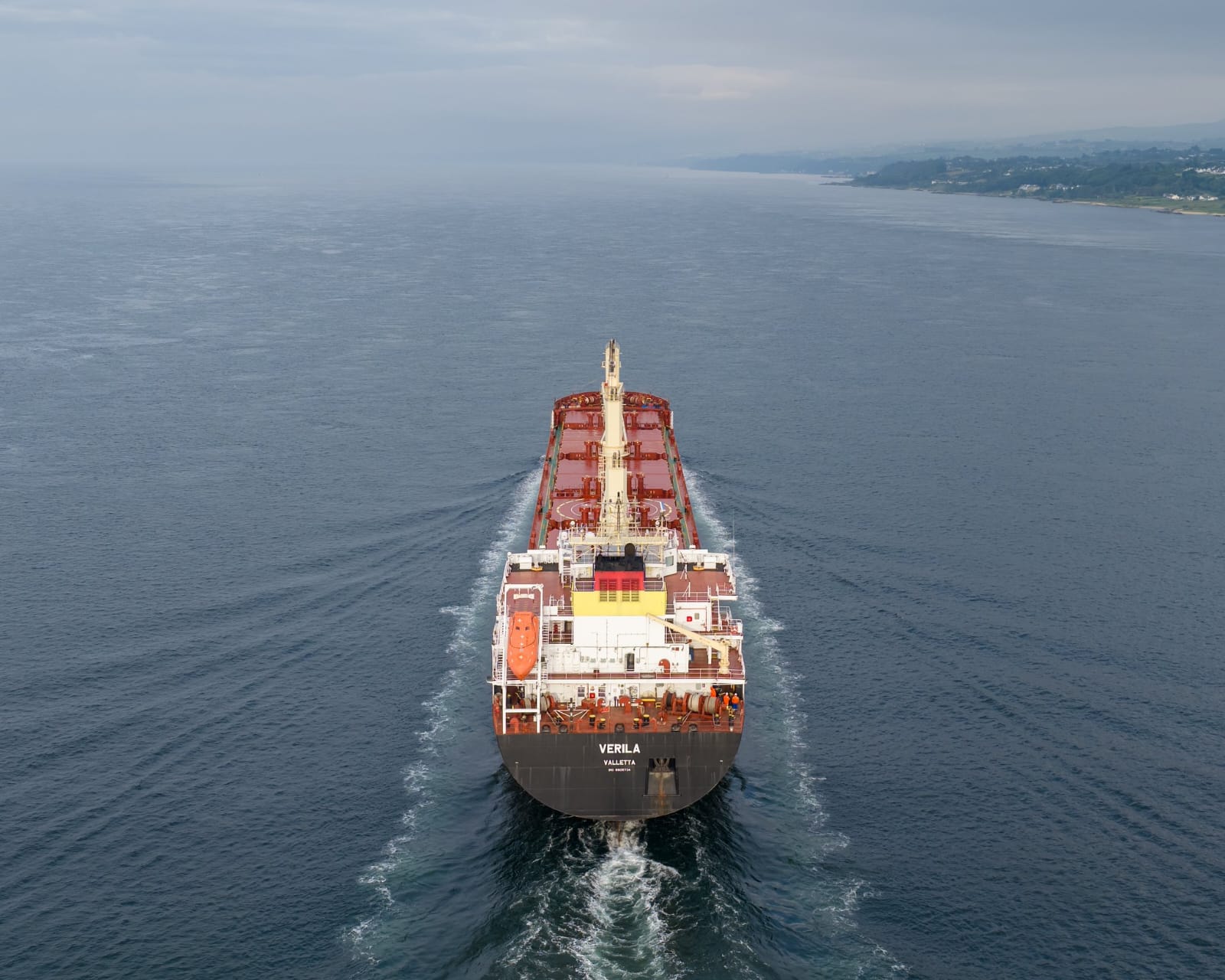
In global maritime commerce, profitability is not a function of asset ownership but of asset utilization. Idle time—whether in port, at anchor, or sailing in ballast—represents the primary destroyer of economic value. This editorial argues that successful shipowners across liner, dry bulk, and tanker segments systematically minimize non-revenue-generating time through schedule discipline, vessel scaling, route optimization, and cost engineering. Drawing on operational metrics and segment-specific constraints, the analysis demonstrates that utilization is the singular lever separating profitable operators from failing ones. The conclusion offers a forward-looking critique of technological and regulatory pressures that will separate winners from losers in the coming decade.
1. Motion as the Only Metric That Matters
A vessel at berth generates no revenue but continues to accrue costs: crew wages, insurance premiums, maintenance amortization, capital depreciation, and opportunity cost. In the unforgiving calculus of maritime economics, a ship is either a cash engine or a liability. There is no middle state.
Successful shipowners therefore treat utilization as the primary performance indicator. This manifests in four operational imperatives: maintaining tight port-to-port schedules, minimizing ballast legs to near zero, matching vessel size precisely to trade route constraints, and exercising ruthless cost control. Failure in any one dimension erodes margins; failure in multiple dimensions sinks enterprises.
2. The tyranny of schedule reliability
Container and general cargo liner operations are governed by a deterministic relationship:
Tp + Ts = Fs × Ns
(Tp = port time, Ts = sea time, Fs = sailing frequency, Ns = fleet size)
This identity is not merely descriptive but prescriptive. For a given frequency, any increase in port or sea time demands additional vessels—capital expenditures that destroy return on equity. Conversely, schedule reliability commands premium freight rates because exporters, importers, and global supply chains pay for predictability.
Aggressive critique: When port congestion, labor strikes, or inefficiencies extend turnaround times, shipowners are not merely justified in imposing port surcharges; they are economically compelled to do so. A vessel held idle for one week on a 24-day rotation reduces annual revenue capacity by approximately 14%. Industry tolerance for port-side dysfunction has been dangerously passive. The remedy is contractual: liquidated damages for delays exceeding agreed thresholds, enforced through collective action via alliances.
Academic insight: Reliability functions as an economic moat (cf. Moats and Competitive Advantage, 2023). Operators investing in larger neo-Panamax vessels and digital twin technologies—predictive ETAs, AI-driven stowage optimization, real-time telemetry—achieve demonstrably higher asset turnover ratios. Smaller players lacking scale are advised to exit deep-sea trades entirely and specialize in regional feeder services, where port proximity mitigates schedule risk.
3. The tonne–mile as the basic unit of demand
Bulk carriers operate without fixed schedules but under the same utilization imperative. Annual voyage counts vary: three to six on ultra-long hauls (e.g., Guinea to China) versus ten to fifteen for Handysize and Supramax vessels in regional trades. The key drivers are distance, port turnaround efficiency, cruising speed, and ballast leg proportion.
The tonne-mile—one ton of cargo moved one nautical mile—is the true measure of maritime demand. Longer voyages spread fixed costs (port dues, canal tolls, loading/discharging) over greater distances, lowering average unit cost. However, this benefit materializes only when vessels sail full.
Aggressive critique: Ballast legs are not operational necessities; they are failures of commercial intelligence. Owners who accept 30–40% ballast ratios are effectively subsidizing competitors. Triangular voyages, backhaul contracting, and opportunistic spot cargo capture can reduce empty sailing to under 15% in most regional trades. The industry’s tolerance for ballast as “normal” is a confession of commercial mediocrity.
Academic insight: Larger vessels (Capesize, Newcastlemax) deliver superior economies of scale per tonne-mile but are constrained by port depth and handling infrastructure. Smaller geared vessels retain a comparative advantage in shallow-draft, multi-port itineraries (e.g., East Africa, Southeast Asia). Optimal fleet strategy requires dynamic asset allocation: deploy scale on predictable long-haul routes and flexibility on volatile regional trades. Geopolitical disruptions (Red Sea rerouting, Panama Canal restrictions) temporarily inflate tonne-miles and freight rates but create long-term inefficiencies that punish undisciplined operators.
4. Pumping Rate as the Binding Constraint
Tanker economics scale more aggressively than any other segment. Handysize and MR product carriers operate alongside VLCCs and ULCCs that move millions of barrels per voyage. Success is determined by cargo handling speed: discharge rates exceeding 10,000 m³/hr on VLCCs, constrained by pump capacity, manifold connections, shore infrastructure, and stripping phase duration.
Aggressive critique: Port limitations—draft restrictions, pipeline back pressure, environmental compliance delays, and terminal equipment inadequacy—are not exogenous shocks. They are foreseeable operational risks that owners fail to contractually mitigate. Modern terminals with high-capitude infrastructure provide a decisive competitive advantage. Owners who accept second-tier ports without penalty clauses deserve the margin erosion they receive.
Academic insight: Tankers exemplify the capital intensity–utilization trade-off. VLCCs achieve minimum unit cost on predictable long-haul crude routes (e.g., Middle East to Asia) but suffer severe diseconomies when deviated. Product and chemical tankers, by contrast, generate value through route flexibility and multi-parcel optimization. The next decade will separate operators based on two factors: readiness for alternative fuels (methanol, ammonia) and the quality of terminal partnerships that enable rapid, safe cargo operations.
5. Four pillars of profitable utilization
Across all segments, profitability reduces to four interdependent pillars:
a) Utilization: Maximize sea time-to-port time ratio. Target ballast ratios below 15%.
b) Scale: Exploit economies of scale only where port infrastructure and cargo volume support them. Scale without fit is inefficiency.
c) Efficiency: Fuel constitutes >50% of voyage costs. Speed optimization (slow-steaming during rate troughs) and route planning (weather, current, congestion avoidance) are non-negotiable.
d) Risk Management: Geopolitics, canal disruptions, and freight volatility are certain. The only uncertainty is whether the operator has hedged, diversified, and positioned accordingly.
6. New outlook
The industry moves 80–90% of world trade by volume and remains the backbone of globalization. It is also chronically cyclical, structurally fragmented, and exposed to external shocks that would bankrupt operators in less resilient sectors. Recent crises—COVID-19, Suez groundings, Red Sea attacks—have forced longer routes and higher costs but temporarily inflated freight rates.
The winners of the coming decade will be those who abandon reactive management entirely. Technology (AI route optimization, autonomous engine control, predictive maintenance), decarbonization (methanol, ammonia, wind-assist retrofits), and data-driven decision-making are not optional upgrades. They are survival requirements.
Regulatory pressures—CII, EEXI, FuelEU Maritime—will accelerate the obsolescence of inefficient tonnage. Port congestion, labor shortages, and potential trade fragmentation will punish undisciplined operators. The opportunity is enormous for agile, data-driven owners who treat vessels as revenue-generating assets in constant motion, not static balance-sheet entries.
Conclusion
In shipping, as in finance, cash flow obeys velocity. Idle assets do not merely fail to generate returns; they actively destroy capital through continuous cost accumulation. The industry’s persistent tolerance for ballast legs, port inefficiency, and schedule laxity is not a structural inevitability but a collective failure of commercial discipline. Operators who refuse to maximize utilization will be rendered obsolete—not by regulation or competition, but by their own immobility.
Motion creates value. Stasis sinks fortunes. Choose accordingly.