


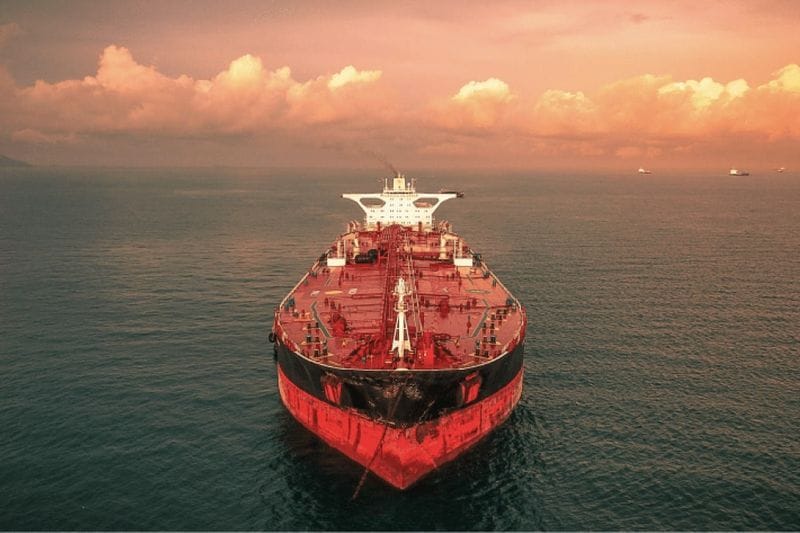
Mediterranean Shipping Company (MSC) has crossed 1,000-ship threshold marking major milestone and defining stage in the evolution of global liner shipping.
In an industry historically shaped by cycles, alliances, and consolidation, MSC’s rise represents a new kind of scale, driven by bold timing, family stewardship, and an unapologetically aggressive expansion strategy.
The delivery of the MSC Migsan, which pushed the fleet into four digits, signals not just operational dominance but a reordering of power across global trade networks.
MSC was founded in 1970 by Gianluigi Aponte, and it has since transformed from a modest shipping venture into the world’s largest container carrier, surpassing Maersk and leaving traditional rivals scrambling to recalibrate.
That MSC’s fleet is now 57 percent larger than its nearest competitor is not merely a reflection of ambition; it is evidence of a calculated gamble that paid off at precisely the right moment.
The timing of MSC’s expansion—accelerating during and after 2020—coincided with an unprecedented boom in container shipping, when pandemic-induced disruptions drove freight rates to historic highs and generated windfall profits for carriers.
Where others exercised caution, MSC leaned into the chaos. It acquired second-hand tonnage at scale, locked in newbuild orders, and expanded its operational footprint while competitors hesitated or focused on balance sheet repair. This counter-cyclical boldness allowed MSC to capture market share at a pace rarely seen in maritime history.
Today, its 7.3 million TEU capacity rivals the combined fleets of Hapag-Lloyd, Ocean Network Express, Evergreen Marine, and HMM—a staggering comparison that underscores the scale of its dominance.
Yet scale alone does not define MSC’s achievement. The company’s structure as a privately held, family-run enterprise has enabled a level of decisiveness and long-term thinking that publicly listed rivals often struggle to match. The recent handover of leadership from Gianluigi Aponte to his children, Diego and Alexa, reinforces the continuity of this approach.
In an era when corporate governance is frequently shaped by quarterly earnings pressures, MSC’s generational transition suggests a strategic horizon measured in decades rather than quarters.
This continuity matters because the shipping industry is entering a new phase—one defined not by explosive growth but by normalization, regulation, and technological transformation.
Freight rates have retreated from their pandemic peaks, capacity is expanding across the sector, and environmental rules are tightening. In such an environment, the very scale that propelled MSC to the top could become both its greatest strength and its most significant vulnerability.
On one hand, a fleet of 1,000 ships provides unparalleled flexibility. MSC can deploy capacity across trade lanes with precision, absorb shocks, and maintain service reliability even in volatile conditions. Its size gives it negotiating power with ports, terminals, and logistics providers, reinforcing its influence across the entire supply chain.
For emerging markets, particularly in Africa, this scale can translate into improved connectivity, more frequent sailings, and potentially lower costs—if managed responsibly.
On the other hand, such dominance raises critical questions about market balance. The container shipping industry has long grappled with concerns over consolidation and competition.
MSC’s rapid expansion, especially following its decision to operate more independently after the dissolution of the 2M alliance with Maersk, signals a shift toward a more unilateral model of influence. While alliances once served as a stabilizing force, MSC’s scale now allows it to shape market dynamics on its own terms.
This concentration of capacity in a single operator carries implications for freight rates, service reliability, and the bargaining power of shippers. Smaller carriers may find it increasingly difficult to compete, potentially accelerating further consolidation. For regulators and policymakers—especially in regions heavily dependent on maritime trade—the question is not whether MSC’s growth is impressive (it clearly is), but whether the global system can sustain such asymmetry without unintended consequences.
Equally critical is the environmental dimension. The shipping industry faces mounting pressure to decarbonize, with targets set by the International Maritime Organization demanding significant reductions in greenhouse gas emissions. For MSC, a fleet of this magnitude presents both a challenge and an opportunity. Retrofitting, transitioning to alternative fuels, and investing in green technologies at scale will require enormous capital and coordination. Yet if MSC succeeds, it could set industry benchmarks and accelerate the shift toward more sustainable shipping.
The company’s parallel strength in the cruise sector adds another layer of complexity. Diversification across shipping segments can provide resilience, but it also exposes MSC to a broader range of risks—from fluctuating tourism demand to regulatory scrutiny. Balancing these dynamics while maintaining operational excellence across 1,000 vessels will test even the most seasoned leadership.
Ultimately, MSC’s milestone is not just about ships; it is about strategy, timing, and vision. It reflects a willingness to act decisively when others hesitate, to invest when uncertainty prevails, and to think generationally in an industry often driven by short-term cycles.
The handover from Gianluigi Aponte to his children marks the beginning of a new chapter—one that will determine whether MSC can translate its scale into sustained leadership in a more complex and demanding global environment.
For Africa and other developing regions, MSC’s rise offers both opportunity and caution. Greater connectivity and investment can drive trade and economic growth, but reliance on a single dominant player carries risks that must be managed through robust policy frameworks and regional cooperation.
As the dust settles on this historic achievement, one thing is clear: MSC has redefined what is possible in container shipping. The challenge now is not to reach new heights, but to sustain them responsibly. In an industry where fortunes can change with the tides, the true test of MSC’s legacy will be not the number of ships it operates, but the stability, fairness, and sustainability it brings to the global maritime system.