


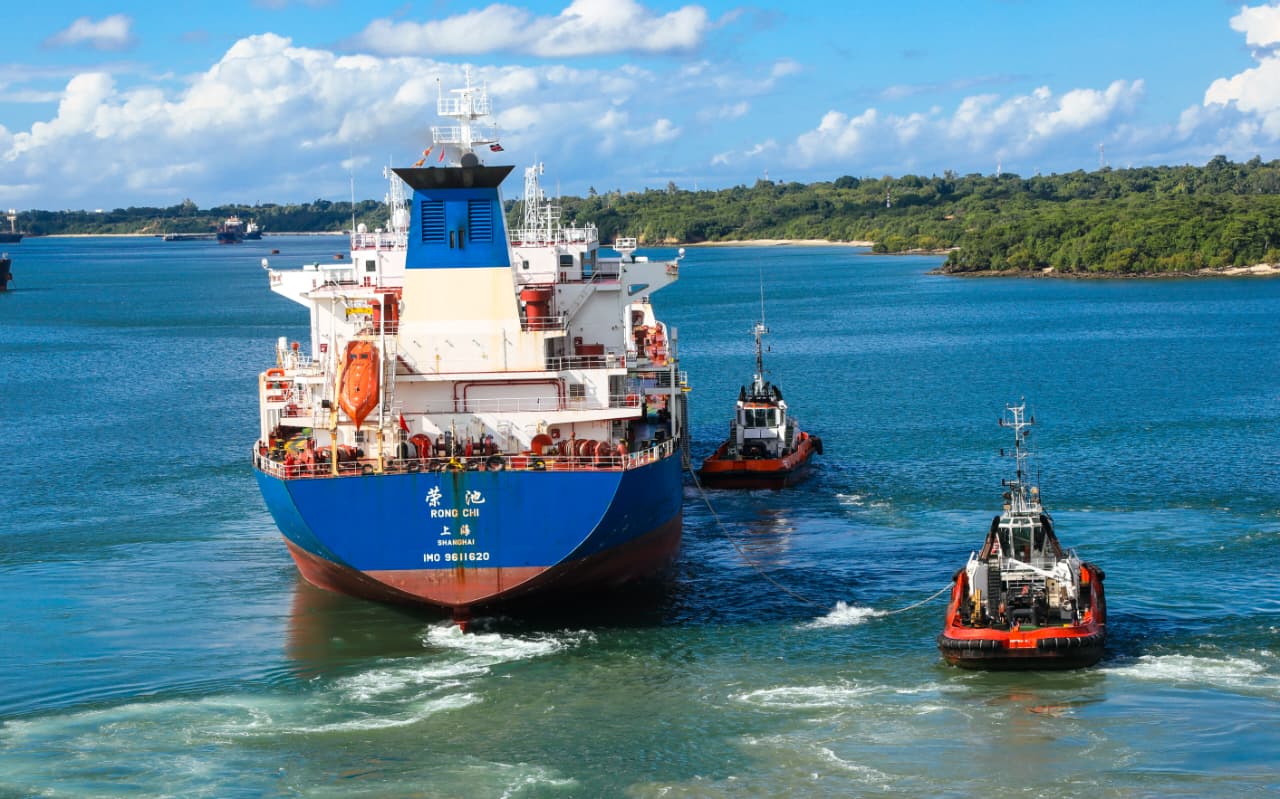
For generations, the Port of Mombasa has served as Kenya’s gateway to the world—the pulsating economic heart of the Northern Corridor. Each day, thousands of containers, trucks, and cargo vessels pass through this historic harbor, linking East Africa to global markets. Yet, as trade volumes surge, the port’s efficiency is no longer defined solely by the speed of quayside operations. Increasingly, its competitiveness hinges on what happens beyond the gates.
It is against this backdrop that the ongoing road infrastructure projects around the Port of Mombasa merit recognition as one of the most consequential public investments in Kenya’s maritime and logistics sector. These are not merely roadworks; they represent the foundational arteries of a transport network designed to sustain Kenya’s ambition of becoming the pre-eminent maritime and logistics hub in Eastern and Central Africa.
The expansion and modernisation of port access roads, the upgrading of the Kipevu Road corridor, enhanced connectivity to the Standard Gauge Railway freight facilities, and the integration of the Dongo Kundu Bypass into the regional grid are collectively transforming cargo movement through the Port of Mombasa. Complemented by new port gates, intelligent traffic management systems, and dedicated truck circulation routes, these investments are dismantling bottlenecks that have constrained port efficiency for decades.
A standout element of this transformation is the 1.8-kilometre port road infrastructure project, competitively awarded to the lowest responsive bidder—a testament to prudent stewardship of public resources and value for taxpayers’ money. Beyond road construction, the contractor is relocating power transmission lines, water pipelines, and ICT fibre-optic cables within the project corridor, ensuring that essential utilities are modernised in tandem with transport infrastructure. This integrated approach minimises future disruptions, bolsters the resilience of critical services, and aligns with international best practice. Above all, the project aims to decongest the port by improving traffic flow, accelerating cargo evacuation, and eliminating long-standing delays that have slowed freight movement through Kenya’s busiest seaport. The ripple effects will be felt not only by port users and logistics operators but also by businesses, consumers, and regional economies that depend on Mombasa as their principal maritime gateway.
This intervention could not have come at a more opportune time. The Port of Mombasa has consistently recorded impressive cargo throughput growth, serving Kenya and six neighbouring countries. As shipping lines deploy larger vessels and regional trade under the African Continental Free Trade Area gathers momentum, the demand for faster cargo evacuation will only intensify.
Ports are ultimately judged not by how swiftly ships are unloaded, but by how efficiently cargo reaches its final destination. A modern container terminal loses much of its competitive edge if trucks remain snarled in congestion for hours after loading. Efficient road infrastructure is therefore as critical as modern cranes, deeper berths, and digital customs systems.
The Kenya Ports Authority (KPA) deserves commendation for recognising that port competitiveness extends far beyond the waterfront. Investments in Berth 19B, terminal rehabilitation, cargo-handling equipment modernisation, and container capacity expansion are now being matched by equally strategic investments in landside transport infrastructure.
The ongoing Kipevu Road upgrade is particularly significant. As a principal cargo corridor linking the port to inland routes, its expansion will improve truck movement, reduce transit times, and enhance road safety. This artery connects the port to industrial zones, inland container depots, and national highways that distribute goods across Kenya and the wider East African region.
Equally transformative is the Dongo Kundu Bypass. For decades, freight movement through Mombasa has been constrained by urban congestion and dependence on the Likoni Ferry crossing for southern connections. The bypass offers an alternative logistics corridor, easing pressure on the city’s road network while unlocking new opportunities for industrial development within the Dongo Kundu Special Economic Zone. It is not merely a transport project but a catalyst for investment, manufacturing, and job creation.
Integration with the Standard Gauge Railway further strengthens Kenya’s multimodal transport strategy. Modern ports thrive when road, rail, and maritime networks complement one another. Seamless cargo transfers between ships, trains, and trucks reduce logistics costs, enhance reliability, and improve supply chain resilience.
The economic dividends of these projects will reach far beyond Mombasa. Uganda, Rwanda, Burundi, South Sudan, and eastern Democratic Republic of the Congo all depend on efficient corridors through the Port of Mombasa. Every improvement in road connectivity lowers the cost of regional trade, deepens economic integration, and reinforces Kenya’s position as the preferred gateway to the hinterland.
Local communities will also reap rewards. Better-designed road networks, dedicated truck lanes, improved drainage, enhanced pedestrian facilities, and modern traffic management systems will boost safety while alleviating congestion that has long plagued residents and businesses in and around the city.
Environmental gains are equally notable. Reduced traffic delays translate into lower fuel consumption, fewer vehicle emissions, and more efficient freight movement. Modern infrastructure supports sustainable logistics and advances Kenya’s commitments to greener transport systems.
Perhaps most importantly, these investments send a powerful signal to international investors and global shipping lines: infrastructure is a tangible expression of national confidence. Countries that invest ahead of demand position themselves to seize future opportunities rather than merely react to emerging challenges. Kenya is demonstrating that it grasps this fundamental principle.
As competition intensifies among African ports—from Dar es Salaam to Durban, and from Djibouti to Lamu—the Port of Mombasa must continuously innovate and expand. Sustaining regional leadership demands more than additional berth capacity; it requires an integrated logistics ecosystem in which every component functions in harmony.
The ongoing road infrastructure projects are laying precisely that foundation. They complement the KPA’s broader modernisation programme while advancing the Government’s Vision 2030, the Bottom-Up Economic Transformation Agenda, and the national Blue Economy Strategy.
Infrastructure is often judged by its physical scale, but its true value lies in the opportunities it unlocks. Every upgraded kilometre around the Port of Mombasa represents faster trade, lower transport costs, greater investor confidence, improved regional connectivity, and thousands of jobs across the logistics value chain.
Future generations may not recall the individual contracts or engineering milestones. What they will remember is that Kenya chose to invest boldly in its maritime destiny at a pivotal moment in history.
The cranes rising above Kilindini Harbour symbolise maritime commerce, but it is the roads stretching beyond the port that will carry Kenya’s economic aspirations into the future. By modernising these vital corridors today, Kenya is ensuring that the Port of Mombasa remains not only the nation’s gateway to the sea but also the engine of prosperity for East Africa for decades to come.
Andrew Mwangura is a Mombasa-based public intellectual and maritime affairs analyst.