


For too long, conversations about port competitiveness have centred almost exclusively on expanding berths, dredging channels, and acquiring larger cargo-handling equipment. These investments remain indispensable, yet they no longer define what makes a port world-class. The distinguishing feature of modern ports is no longer concrete and steel—it is intelligence. The world’s leading maritime gateways are increasingly differentiated by their capacity to collect, analyse, and act upon real-time operational data. In this regard, the Kenya Ports Authority (KPA) has taken a decisive and timely step forward.
The Port of Mombasa occupies a uniquely strategic position. It serves not only Kenya but also the economies of Uganda, Rwanda, South Sudan, Burundi, the eastern Democratic Republic of Congo, and parts of northern Tanzania. It is the maritime gateway to a market of well over 300 million people. Every vessel that enters Kilindini Harbour carries profound implications for regional trade, food security, industrial production, and economic growth.
As cargo throughput and vessel traffic continue to rise, so too does operational complexity. Larger vessels, tighter shipping schedules, and increasingly integrated supply chains demand far greater precision in vessel movement planning. The margin for error has become exceptionally narrow. A single navigational incident can disrupt trade flows, increase insurance premiums, delay cargo deliveries, and erode confidence in an entire port system.
This is precisely why the operationalisation of the VTMIS is so strategically significant.
By integrating advanced radar surveillance, Automatic Identification System (AIS) tracking, marine communications, meteorological monitoring, oil spill detection, and digital port management into a unified operational platform, the VTMIS fundamentally transforms how marine traffic is managed. Instead of reacting to events, port authorities can now anticipate risks, coordinate vessel movements proactively, and optimise the use of marine resources in real time.
This capability translates into measurable economic value. Reduced vessel waiting times lower fuel consumption and operating costs for shipping lines. Faster pilotage and berth allocation improve vessel turnaround times. Enhanced navigational safety reduces the likelihood of costly accidents. Greater predictability strengthens the confidence of international carriers and logistics providers. Collectively, these efficiencies enhance the competitiveness of the Northern Corridor and lower the cost of trade across the region.
The implications extend well beyond port operations. Kenya has positioned the Blue Economy as a central pillar of its long-term economic transformation. Yet the Blue Economy cannot flourish without resilient maritime infrastructure and modern governance systems. Smart ports are the backbone of successful maritime economies because they connect shipping, logistics, fisheries, offshore energy, customs administration, and environmental management into an integrated ecosystem.
The VTMIS should therefore be viewed not as an isolated project but as a foundational component of Kenya’s broader maritime digital transformation agenda.
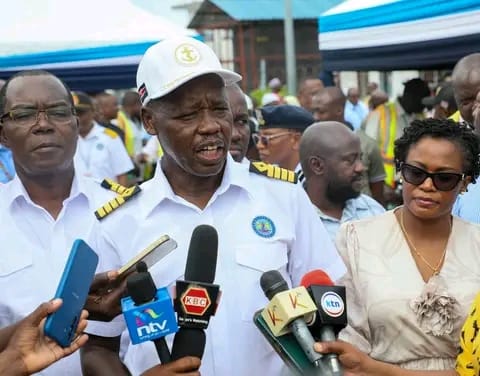
Chief Executive Officer Capt. William K. Ruto deserves recognition for maintaining the Authority’s commitment to modernisation despite the increasing operational demands placed on the Port of Mombasa. His emphasis on investing in both technology and human capital reflects an understanding that institutional capability is every bit as important as physical infrastructure.
The specialised training of KPA personnel in vessel traffic services, radar operations, pilotage support, port management information systems, and internationally recognised International Association of Marine Aids to Navigation and Lighthouse Authorities (IALA) certification demonstrates strategic foresight. Sophisticated technology without skilled professionals quickly becomes underutilised. By investing in internationally competent personnel, KPA is building institutional resilience that will sustain operational excellence for years to come.
The security dimension is equally compelling.
The Western Indian Ocean remains one of the world’s most strategically sensitive maritime regions. Though incidents of Somali piracy have declined compared with their peak, recent attacks have demonstrated that the threat has not disappeared. Maritime terrorism, trafficking, illegal migration, smuggling, and illegal, unreported, and unregulated (IUU) fishing continue to challenge coastal states.
Enhanced maritime domain awareness is therefore not merely an operational necessity but a national security imperative. A modern VTMIS significantly improves Kenya’s ability to monitor vessel movements within its territorial waters, identify anomalies, coordinate responses with security agencies, and strengthen the protection of critical maritime infrastructure. It also reinforces Kenya’s contribution to regional maritime security initiatives across the Western Indian Ocean.
Environmental governance represents another strategic dividend. As climate change intensifies and international environmental standards become more stringent, ports must be capable of detecting and responding rapidly to marine pollution incidents. The integration of oil spill detection and meteorological monitoring enhances preparedness, protects fragile marine ecosystems, and strengthens compliance with international maritime environmental obligations.
Yet Kenya should regard this achievement as the beginning rather than the culmination of its digital maritime transformation.
The next phase should include artificial intelligence-assisted vessel traffic prediction, predictive maintenance of port infrastructure, cybersecurity frameworks for maritime systems, digital twins for port planning, blockchain-enabled cargo documentation, integrated Port Community Systems, autonomous inspection technologies, and seamless interoperability with customs, immigration, and logistics platforms. These technologies are already reshaping leading ports in Europe, Asia, and the Middle East. Kenya cannot afford to lag behind.
Equally important is regional integration. The Port of Mombasa should spearhead the development of interoperable digital maritime systems linking ports across the East African coast. Harmonised vessel reporting, shared maritime information platforms, and coordinated traffic management would strengthen the competitiveness of the entire region while supporting implementation of the African Continental Free Trade Area (AfCFTA).
The successful deployment of the VTMIS also highlights an often-overlooked reality: digital infrastructure is now as strategically important as physical infrastructure. Nations that invest in maritime intelligence systems will increasingly outperform those relying solely on conventional port expansion. Efficiency, transparency, safety, and predictability have become decisive competitive advantages in global shipping.
As international shipping accelerates its transition toward automation, decarbonisation, and digital navigation, Kenya has an opportunity to establish itself as Africa’s leading smart maritime nation. Realising that ambition will require sustained investment, robust regulatory frameworks, strong public-private partnerships, and continuous workforce development.
The Kenya Ports Authority has now laid an important foundation. The challenge ahead is to build upon it with equal determination.
The VTMIS is more than a technological upgrade. It is an investment in national competitiveness, regional connectivity, maritime security, and sustainable economic growth. It strengthens the Port of Mombasa’s standing as the gateway to East and Central Africa while advancing Kenya’s aspiration to become a globally competitive maritime nation.
In maritime affairs, technology is no longer a luxury; it is strategic infrastructure. By embracing intelligent port management today, Kenya is preparing its maritime future for the demands of tomorrow. That is a policy direction worthy of recognition—and one that should be sustained with unwavering commitment.
Andrew Mwangura is a maritime analyst.