


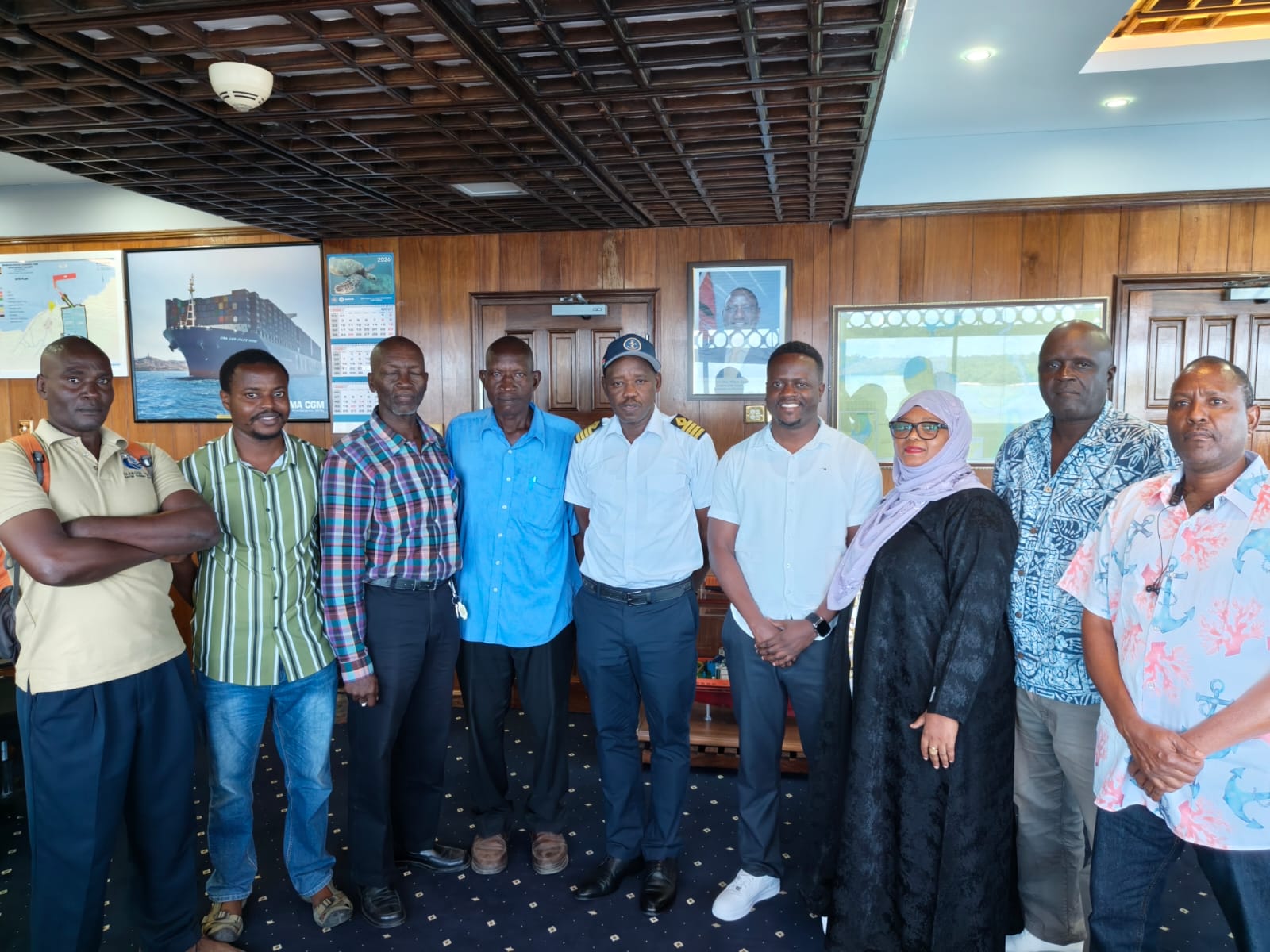
The recent engagement between the Joint Seafarers Committee and Kenya Ports Authority (KPA) Managing Director Capt. William Ruto was more than a polite courtesy call. It was a rare and necessary alignment of seafarer representation with the leadership of the institution that anchors Kenya’s most strategic economic asset: the Port of Mombasa and its broader network of coastal and inland facilities. The discussions, centred on capacity building, seafarer empowerment, and sectoral unity, are not soft themes. They go to the heart of whether Kenya can convert its geography, growing blue-economy ambitions, and expanding port infrastructure into meaningful opportunity for its own people.
Kenya’s maritime sector sits at a pivotal moment. The Port of Mombasa remains the gateway for much of East and Central Africa, with cargo volumes growing under sustained modernization, automation, and berth expansion. Capt. Ruto, a Class 1 Master Mariner with over three decades in the industry and a long KPA career rising from cadet to harbour master, has prioritized operational efficiency and regional competitiveness. His leadership has coincided with visible gains in service delivery and recognition from international operators.
Yet ports alone do not make a maritime nation. The people who crew the ships, pilot the vessels, and staff the supporting ecosystem determine whether the blue economy delivers broad-based prosperity or remains an enclave of infrastructure and foreign capital.
Kenyan seafarers face well-documented structural barriers. While training institutions produce graduates, sea-time opportunities remain scarce because Kenya lacks a substantial national merchant fleet and dedicated training vessels. Certification processes, including for Seafarers’ Identity Documents, have historically suffered delays. Consequently, the number of active Kenyan seafarers lags far behind the tens of thousands targeted in policy discussions—a stark contrast to countries like the Philippines, which has turned seafaring into a major remittance engine. Welfare challenges—from contract enforcement and delayed wages to mental health support and protection against exploitation—persist despite the Maritime Labour Convention framework and domestic measures like the Seafarers Wages Council. Representation has often been fragmented, diluting advocacy power.
The formation and activity of a Joint Seafarers Committee therefore carries particular weight. Recent moves by seafarer organisations to coordinate rather than compete reflect a maturing recognition that divided voices achieve little. When that joint platform sits across the table from the KPA Managing Director, the conversation can move from parallel complaints to practical collaboration. Capacity building is not merely more classroom courses; it requires structured pathways for onboard experience, alignment of curricula with industry demand, and investment in qualified instructors. Empowerment means translating training into contracts, ensuring fair terms, and creating feedback loops so that seafarers’ lived experience informs policy. Unity is the precondition for both.
Capt. Ruto’s participation signals institutional openness. While KPA’s mandate centres on ports, its influence on the wider maritime ecosystem is considerable. Efficient, competitive ports attract more vessels and cargo; more traffic creates demand for local pilots, tug crews, and shore-side professionals. Stronger local content policies and cadet placement partnerships can open doors for Kenyan officers and ratings. Extending the Authority’s stated priority on stakeholder engagement to organised seafarers is therefore both logical and overdue.
The meeting, however, must not become an isolated feel-good event. Follow-through will determine its value. Concrete next steps should include joint working groups on cadet placement and sea-time access, mapping of skills gaps against projected demand from regional trade and green shipping transitions, and clearer mechanisms for seafarer input into port-related labour and safety standards. Kenya’s blue-economy strategy and youth employment goals will remain incomplete if the seafaring community stays marginal. A stronger, united, and empowered seafaring workforce is not a welfare afterthought; it is a competitiveness requirement. Every Kenyan officer or rating who gains international experience carries skills, networks, and hard-currency earnings back into the national economy while raising the country’s reputation in global shipping circles.
Challenges remain real. Political and legal questions around institutional leadership, resource constraints on training infrastructure, and the slow pace of national fleet development cannot be wished away by one productive meeting. Yet the tone of this engagement—constructive, focused on capacity, empowerment, and unity—offers a better foundation than the fragmented advocacy and mutual suspicion that have sometimes characterised the sector. Capt. Ruto’s background as a professional mariner gives him a credibility with seafarers that pure administrators may lack. The Joint Seafarers Committee’s willingness to engage constructively gives the Authority a partner rather than a perpetual critic.
Kenya’s maritime future will be built not only on deeper berths and automated gates, but on whether the country can produce, place, and protect its own seafarers at scale. The conversation that took place is a step in that direction. Sustained collaboration between the Joint Seafarers Committee and KPA leadership can help turn rhetoric about an empowered seafaring community into measurable progress. The opportunity is clear. The test will be whether both sides convert goodwill into durable mechanisms that expand opportunity, raise standards, and keep Kenyan talent at the centre of the country’s maritime story.