


In early October 2026, New Delhi will host the third edition of Sagarmanthan: The Great Oceans Dialogue. Organised by India’s Ministry of Ports, Shipping and Waterways in partnership with the Observer Research Foundation, the three-day summit (7–9 October) has positioned itself as South Asia’s premier maritime thought-leadership platform and India’s most ambitious assertion of centrality in the blue economy and ocean governance.
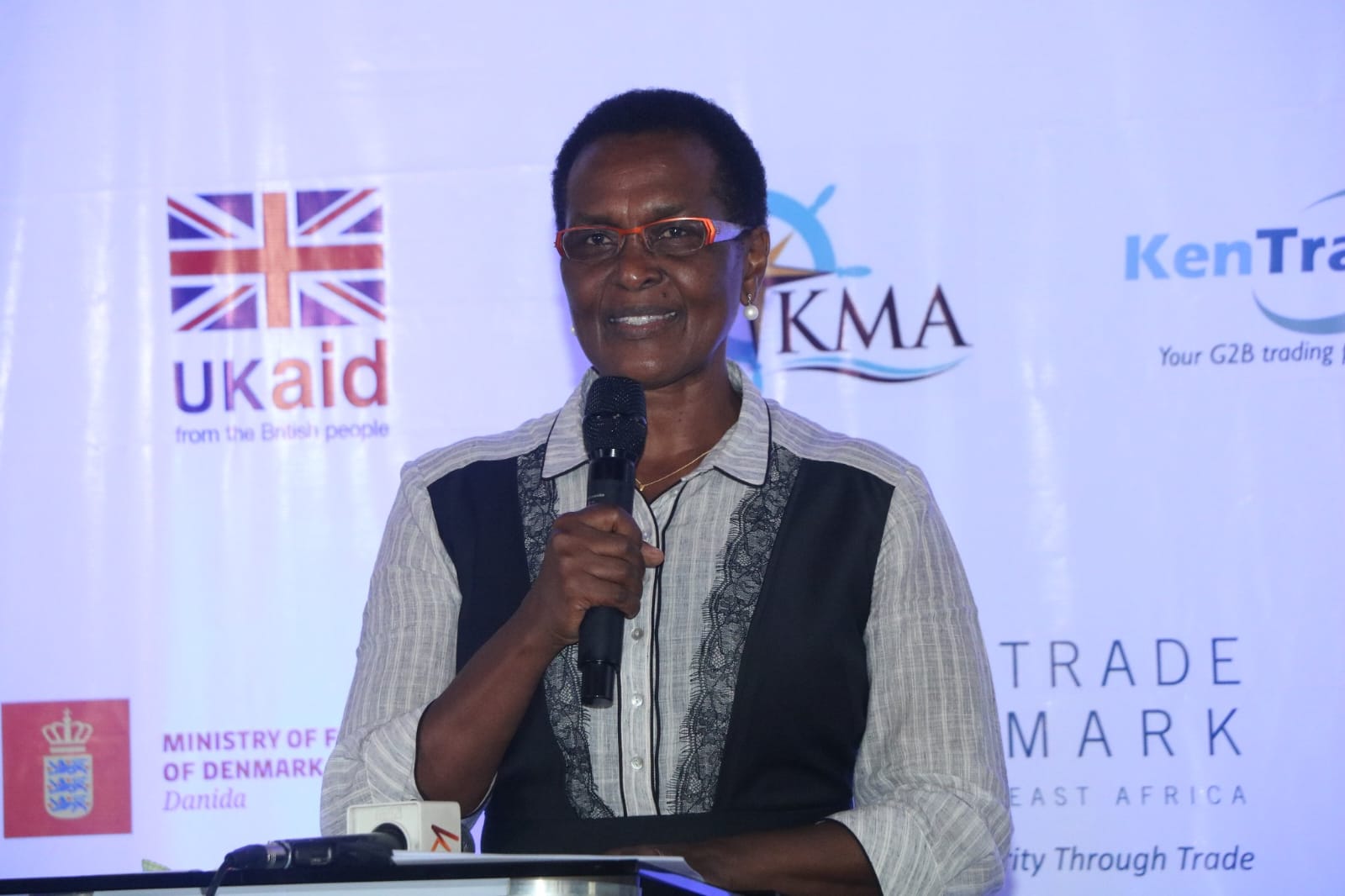
Among the announced participants is Ambassador Nancy Karigithu, Co-Founder and Secretary General of the Professional African Technical Network Advisory (PATNA) Initiative, and Kenya’s Special Envoy and Advisor for Maritime and Blue Economy. Her career embodies both the promise and the unfinished business of gender inclusion in the maritime sector.
Her presence, therefore, is more than symbolic. It is a diagnostic of where global ocean diplomacy stands—and a signpost for where it must go.
Oceans as Battleground and Bloodstream
Sagarmanthan 2026 frames the oceans with appropriate urgency: they are no longer merely the backdrop to globalisation but its battleground and bloodstream. Trade, energy, food, critical minerals and data cables all depend on increasingly contested, climate-stressed and geopolitically fragile waters. The five thematic pillars announced for the dialogue—Steady Straits (safeguarding flows), Blue Breakthroughs (greening ships and shipbuilding), Complex Seas (trade, connectivity and turbulence), Ocean Societies (communities, cultures and livelihoods), and The Heart of the Deal (linking harbour cities to hinterlands)—reflect a comprehensive attempt to move beyond rhetoric toward resilience design.
India’s hosting of successive editions (Mumbai in 2024 and 2025, now New Delhi) aligns with the SAGAR doctrine and the country’s ambition to become a global maritime hub. The scale claimed for 2026—participation from dozens of countries, scores of speakers and numerous sessions—underscores New Delhi’s determination to convene, rather than merely attend, the conversation.
Yet the real test of such summits is not the number of flags in the room, but whether the people who truly understand the human, legal and operational texture of the oceans are given space to shape outcomes. This is where Karigithu’s participation matters.
A Career Forged in the Depths of Maritime Reality
Ambassador Nancy Karigithu brings nearly four decades of experience that few can match. She was the first Director General of the Kenya Maritime Authority, the founding Principal Secretary for Shipping and Maritime Affairs, and later Kenya’s Ambassador and Special Envoy for Shipping and the Blue Economy in the Executive Office of the President. Her expertise has been sought on the boards of the World Maritime University and the IMO International Maritime Law Institute. She has chaired the IMO Technical Cooperation Committee and been a leading advocate for seafarer welfare and women’s participation through WOMESA (Association for Women in the Maritime Sector in Eastern & Southern Africa).
In 2023, she was Kenya’s candidate for Secretary-General of the International Maritime Organization—the first African woman nominated for the post. She did not win, but the candidacy itself was a profound statement: the global maritime regulatory body had never been led by a woman or an African, despite the disproportionate stakes coastal developing states and small island developing states hold in ocean health, shipping safety and blue-economy opportunity.
Her current role as Co-Founder and Secretary General of PATNA further positions her as a vital bridge between African technical expertise and global maritime policy. The hashtag #WomeninMaritime attached to the announcement of her Sagarmanthan participation is therefore not ornamental. It is a deliberate and necessary signal.
The Structural Deficit That Persists
The maritime industry remains one of the most gender-imbalanced sectors in the global economy. Women constitute a tiny fraction of seafarers and remain under-represented in senior regulatory, technical and leadership roles. This is not merely a fairness issue. It is a competence and resilience issue. Coastal communities—often the first to feel the impacts of climate change, overfishing, pollution and disrupted trade—are disproportionately dependent on women’s labour and knowledge. Yet policy tables frequently lack the voices that understand those lived realities.
Karigithu’s career trajectory—from legal officer at the Kenya Ports Authority to national regulator to presidential envoy—demonstrates that technical excellence and institutional leadership are not gendered attributes. Her repeated emphasis on seafarer welfare, capacity-building in Africa, and the human element of shipping aligns precisely with Sagarmanthan’s “Ocean Societies” pillar, which recognises that beneath the statistics of trade volumes lie people whose safety, training and dignity determine whether maritime systems function.
India–Africa Maritime Convergence
There is also a clear geopolitical logic to her invitation. India has steadily expanded maritime engagement with Africa through capacity-building, port partnerships, and the broader Indo-Pacific framing. Kenya, with its strategic Indian Ocean coastline and growing blue-economy ambitions, is a natural partner. Having a senior Kenyan voice with deep institutional memory of both national reform and international rule-making at the table strengthens the Global South dimension of the dialogue. It reduces the risk that Sagarmanthan becomes primarily a conversation among traditional maritime powers and large shipping nations.
Beyond Optics: The Test of Substance
OpEds that celebrate the presence of a distinguished woman risk becoming mere applause. The real measure will be whether Karigithu and other women leaders are given substantive roles in shaping the outcomes of the five pillars—particularly those dealing with greening the fleet, community livelihoods, and the governance of complex seas. Token panels are easy. Integrating gender-disaggregated data, seafarer welfare standards, and inclusive blue-economy metrics into the policy recommendations that emerge is harder and far more valuable.
Sagarmanthan’s organisers have an opportunity to set a precedent: that the third edition is not only larger but more representative of the actual stakeholders of the ocean. The oceans will not be secured by declarations alone. They will be secured by governance systems that draw on the full range of expertise—technical, legal, operational and lived—available to the international community.
Ambassador Nancy Karigithu’s participation is a necessary and welcome step. The question that will define the success of Sagarmanthan 2026 is whether the dialogue treats such participation as the beginning of a structural correction or a concluding photo opportunity. The seas, after all, do not care about symbolism. They respond only to the quality of the decisions made about them.