


For decades, Mombasa has lived with a profound paradox.
It commands one of Africa’s most strategically vital maritime corridors, hosts Kenya’s principal seaport, and serves as the natural gateway to the vast markets of East and Central Africa. Yet, despite this undeniable geographic advantage, the city—and the wider Coast region—has consistently failed to capture the full industrial and economic value that such a position should logically generate.
That contradiction may finally be approaching a turning point.
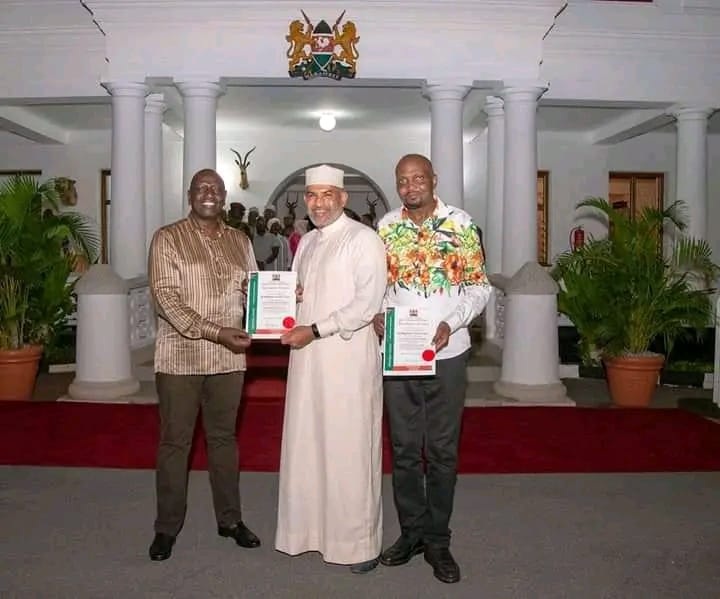
The reported agreement between businessman Suleiman Shahbal’s Gulf Group of Companies and global logistics titan DP World—involving an investment of more than Sh12 billion ($100 million) in a Special Economic Zone (SEZ) in Jomvu—could become one of the most consequential industrial developments on the Kenyan Coast in years.
The proposed 535-acre SEZ is projected to create 7,972 direct jobs, with 67 companies already expressing interest in participating in the development. The project is designed to attract a diverse mix of manufacturers, exporters, logistics firms, technology companies, and other industrial investors.
These headline figures are encouraging.
But the real significance of this project is not the Sh12 billion price tag. The true prize is whether Kenya can leverage this investment to fundamentally reshape the economic architecture of the Coast—transitioning it from a region that primarily handles, moves, and consumes goods into one that manufactures, processes, adds value, and exports them.
That is the ultimate test.
From a Port Economy to a Production Economy
Historically, Mombasa has been viewed primarily through the lens of its port: Ships arrive, containers are discharged, cargo is cleared, trucks move goods inland, and importers distribute products across Kenya and the broader East African region.
While this model generates employment and economic activity, it suffers from a fundamental limitation: the bulk of the value in international trade is created elsewhere. The higher-value activities—manufacturing, processing, packaging, assembly, product development, and export-oriented services—frequently bypass the port city. Consequently, Mombasa can handle enormous cargo volumes without capturing a proportionate share of the economic value embedded within that cargo.
This must change.
The proposed SEZ offers a blueprint for a new model, one where the port becomes not merely a point of entry and exit, but the cornerstone of an integrated maritime-industrial ecosystem.
This is precisely the logic that has propelled successful port cities around the world. A modern maritime gateway should seamlessly connect ships to terminals, terminals to logistics centres, logistics centres to industrial parks, industrial parks to manufacturers, and manufacturers to global markets.
The port must be viewed not as an isolated infrastructure asset, but as the critical first link in a much larger, value-generating supply chain. Mombasa needs to evolve into that supply-chain city.
The Timing Could Hardly Be Better
This investment arrives at a moment of significant momentum for the Port of Mombasa. According to the Kenya Ports Authority, the port handled a record 45.45 million metric tons of cargo in 2025, up from 40.99 million tons in 2024. Container traffic rose to 2.11 million TEUs, while transit cargo surged to 15.88 million tonns, up from 13.29 million tons.
These numbers tell a crucial story: Mombasa is not serving Kenya alone. Its economic hinterland extends deep into Uganda, Rwanda, the eastern Democratic Republic of Congo, South Sudan, Tanzania, and beyond.
As regional trade expands, the question is no longer whether Mombasa will handle more cargo. The more pressing question is: What will Kenya do with that cargo before it leaves the country?
If a container arrives carrying raw materials and leaves carrying finished products manufactured in Kenya, the economic value generated is dramatically different. If agricultural commodities are processed, packaged, and branded before export, Kenya captures a greater share of the profits. If machinery and components are imported for local assembly, entirely new industries emerge. If regional exporters use Mombasa as a hub to consolidate, process, and re-export goods, the city transforms into a true commercial powerhouse.
The Jomvu SEZ represents a pivotal opportunity to answer that question with ambition, foresight, and a clear industrial strategy. The infrastructure is being built; the partners are at the table. Now, Kenya must ensure that this moment catalyzes the lasting industrial revolution the Coast has long awaited.