


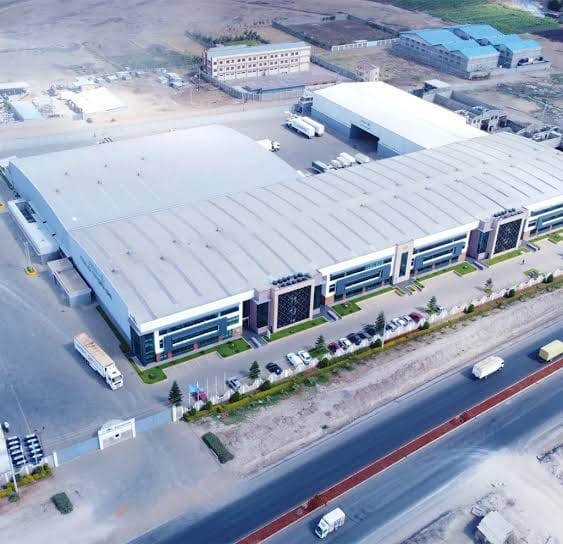
In the high-stakes world of East African logistics, a single empty container can bring an entire supply chain to a grinding halt. Southern Shipping Services Ltd (SSSL), an Alpha Group company, captures this reality with striking clarity in its operational messaging: “Every dry or reefer container has a journey, and how it is handled at the SSSL Integrated depot makes all the difference for the region.”
SSSL details its empty dry and reefer container operations at Alpha Logistics Park in Mombasa (Bonje) and Alpha Business Park in Nairobi. The company walks through the full cycle—gate-in, surveys, major inspections, documentation, maintenance, remedial works, cleaning, stacking, storage, collection for exports, repatriation to port, and gate-out—all coordinated by a configured system for smooth, safe, and timely handling. These services extend to clip-on and under-mount gensets plus regional transportation. The emphasis is on integrity, safety, quality, efficiency, sustainability, quicker turnarounds, and reliability.
This is more than corporate messaging. It speaks directly to a structural vulnerability that has repeatedly disrupted trade through the Port of Mombasa, the primary gateway for Kenya and its landlocked neighbours, including Uganda, Rwanda, Burundi, the Democratic Republic of Congo, and South Sudan.
The Persistent Empty-Container Bottleneck
Empty containers are the circulatory system of global trade. Once unloaded, they must return efficiently to depots for inspection, repair, cleaning, and repositioning for the next cycle. When this process breaks down, trucks become temporary storage, demurrage and detention charges mount, vessel turnarounds slow, and costs cascade to importers, exporters, and ultimately, consumers.
Recent years have exposed the fragility of this system at Mombasa. Industry reports have documented severe congestion, with empty-container depots operating near or beyond capacity, hundreds of trucks immobilized, and vessels waiting at anchorage. Stakeholders—including the Kenya International Freight and Warehousing Association (KIFWA), the Kenya Ship Agents Association (KSAA), and transporters—have repeatedly flagged shortages of depot space, slow repatriation by shipping lines, and knock-on effects that idle equipment and inflate logistics costs.
These are not isolated incidents. They reflect chronic capacity constraints, imbalances between import and export volumes, limited off-dock storage, and coordination gaps among ports, shipping lines, agents, and inland operators. The result is higher trade costs that undermine East Africa’s competitiveness precisely when the region needs efficient corridors to support manufacturing, agriculture, pharmaceuticals, and cold-chain growth.
What Integrated Depots Actually Deliver
SSSL’s model addresses several of these pain points head-on. Alpha Logistics Park in Mombasa spans roughly 100,000 sqm and includes dedicated zones for cold-chain reefer operations, project/camp management, and transit storage. Combined with its facilities in Nairobi, the network provides both port-proximate and inland capacity.
Key operational strengths highlighted in SSSL’s operational communication and company materials include:
· End-to-end process control under one coordinated system, rather than fragmented handoffs.
· Specialized handling for both dry and temperature-sensitive reefer containers, which is critical for food, pharmaceuticals, and perishables.
· Integrated support services—such as genset rental, monitoring, certified cleaning, repairs, and maintenance—that keep equipment operational and ready.
· A focus on turnaround speed, safety, and quality, reducing the risk of damage, contamination, or delays that compound demurrage exposure.
In a region where cold-chain integrity can determine whether agricultural exports reach premium markets or pharmaceuticals maintain efficacy, reliable reefer depot capacity is not a luxury—it is a necessity. SSSL’s long experience working with major shipping lines, coupled with certifications such as ISO 22000 and BRC for related warehousing operations, positions it as more than a storage yard. It functions as a critical reliability node in the broader supply chain.
Beyond One Operator: Systemic Implications
The value of such facilities extends beyond any single company’s commercial success. Efficient empty-container depots reduce pressure on port terminals, free up trucks for productive work, lower the incidence of punitive charges, and improve vessel productivity. They support the Northern Corridor’s role as a regional artery and complement investments in the Standard Gauge Railway and inland container depots.
Yet private capacity alone cannot solve structural problems. Persistent congestion signals the need for better alignment among public authorities (Kenya Ports Authority, Kenya Revenue Authority), shipping lines (responsible for container assets and nominated depots), and private operators. Temporary measures, such as additional land allocation for storage or prioritized empty evacuations, have been proposed during past crises. However, longer-term solutions require sustained investment in depot infrastructure, digital coordination systems, and transparent capacity planning.
Sustainability also belongs in the conversation. Quicker turnarounds and well-maintained equipment reduce unnecessary truck movements and energy waste. As operators expand facilities—SSSL itself has advanced multi-temperature warehouse projects near Mombasa—design choices that prioritise energy efficiency and lower emissions will matter increasingly to both clients and regulators.
A Call for Scale and Coordination
East Africa’s trade volumes continue to grow. Container throughput at Mombasa has risen in recent years, reflecting both regional demand and the port’s role in transhipment and transit cargo. Without matching growth in efficient, specialised handling capacity for empties—especially reefers—the bottlenecks will recur, eroding the benefits of larger vessels, better rail links, and expanding manufacturing.
Operators like SSSL demonstrate that private investment in integrated, process-driven depots can deliver measurable improvements in reliability and speed. The message is operationally precise and strategically sound: every hour and every container matters. Scaling that approach across the ecosystem—through additional capacity, better data sharing, and clearer accountability for empty repositioning—would strengthen the entire Northern Corridor.
Trade facilitation is rarely glamorous. It lives in gate processes, survey protocols, stacking plans, and genset readiness. But those unglamorous details determine whether goods move competitively or sit idle while costs accumulate. In that sense, the quiet efficiency of a well-run container depot is one of the most practical forms of economic infrastructure East Africa can build.