


The arrival of the MV Grande Egitto at the Port of Mombasa this Thursday is not merely a logistical event; it is a watershed moment for East African maritime trade. As the month-old vessel offloaded 1,297 motor vehicle units on her maiden voyage, she did more than just deliver cargo. She delivered a vision of the future—one where economic expansion and environmental stewardship sail in the same direction.
For decades, the narrative surrounding African ports has been dominated by congestion, inefficiency, and the environmental degradation associated with old, polluting vessels. The MV Grande Egitto, operated by the Grimaldi Group, disrupts this narrative. As a Roll-on/Roll-off (RORO) vessel, she represents the newest addition to a modern fleet, but it is her “green” pedigree that makes her arrival in Kenya truly significant.
A Blueprint for Green Logistics
The maritime industry is under immense pressure to decarbonize. The MV Grande Egitto answers this call with a technological arsenal that should make competitors envious. With a length overall of 220 metres, this is a vessel designed for scale, yet it claims a reduction in fuel consumption of up to 50 per cent compared to previous-generation carriers.
This efficiency is not magic; it is engineering. The vessel boasts approximately 2,500 square metres of solar panels, an air-lubrication system that reduces hull friction, and an innovative gate rudder. These features, combined with silicone-based hull coatings and intelligent energy management, allow the ship to achieve zero emissions during berthing. In a world where port cities often suffer from the heavy exhaust of idling ships, the ability to “cold iron” or shut down engines while maintaining operations is a game-changer for Mombasa’s air quality.
Catalyzing the Regional Hub Status
The economic implications of this delivery are equally profound. The 1,297 units discharged are destined for both the local Kenyan market and the wider regional hinterland. This reinforces Mombasa’s strategic pivot from a national port to a regional automotive logistics hub.
KPA (Kenya Ports Authority) Chief Executive Officer Captain William Ruto was precise in his assessment: the arrival reflects the port’s growing capacity to accommodate modern, environmentally efficient ships. By welcoming the Grande Egitto, Mombasa is signaling to global shipping lines that it possesses the infrastructure and operational efficiency to handle the next generation of global tonnage. The fact that the vessel’s sister ship, the Grande Shanghai, called at the port just two months prior suggests a pattern: Grimaldi is testing the waters, and thus far, Mombasa is passing with flying colors.
Operational Excellence and Strategic Partnership
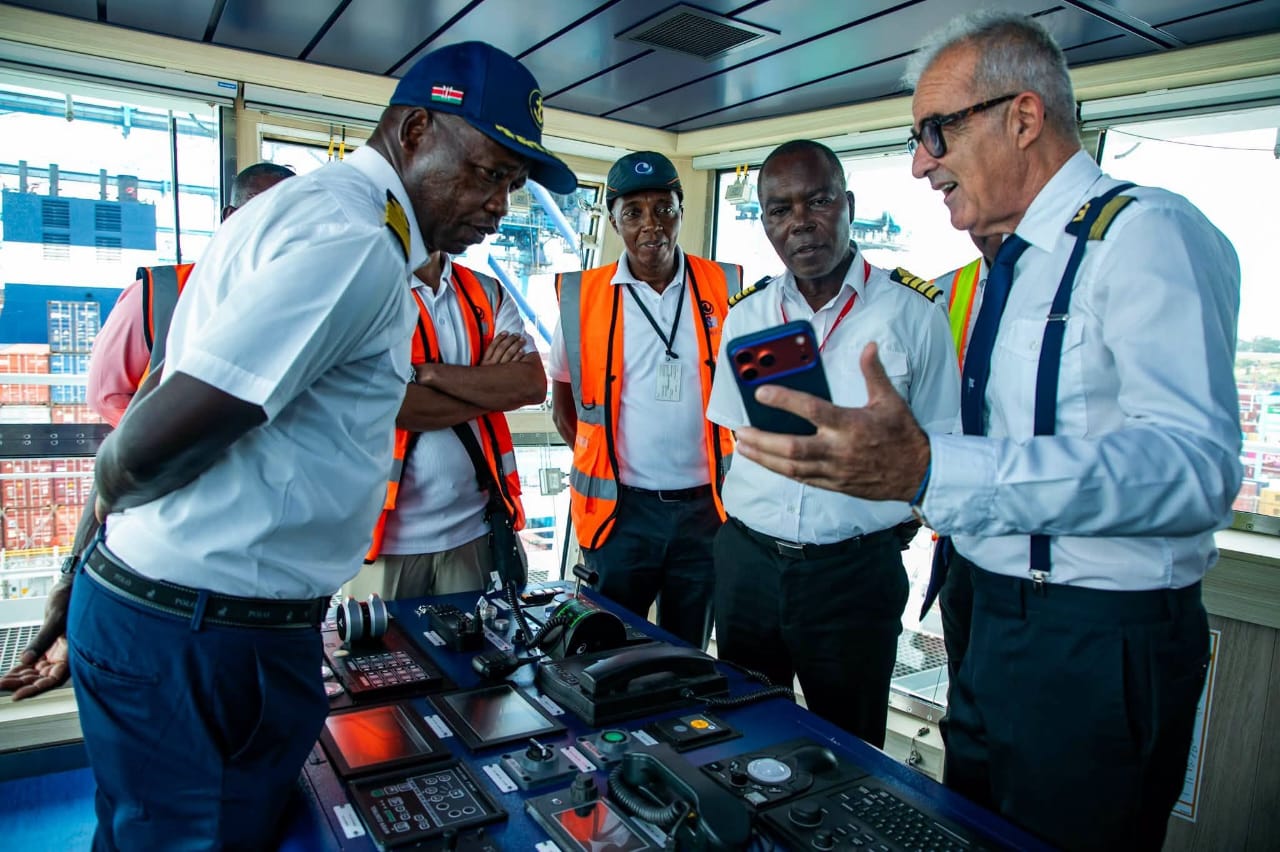
The operational side of the equation was not lost on the vessel’s master, Captain Luigi Mazzitelli, who praised KPA staff for their efficiency, expecting a record-time discharge. This synergy between international operators and local authorities is vital. The local agent, Nisomar Group, aptly described these vessels as “the largest and most modern fuel-efficient and carbon-neutral PCC vessels in the world.”
This partnership highlights a crucial point: attracting high-value, modern fleet vessels requires more than just deep water; it requires a commitment to speed and reliability. The presentation of a maiden-call certificate by Captain Ruto to Captain Mazzitelli is a ceremonial gesture, but it symbolizes a deepening relationship between Kenya and Italy’s Grimaldi Group.
The Road Ahead
While the MV Grande Egitto is a triumph of modern engineering, its arrival should serve as a challenge to the region. To fully capitalize on this “green” shift, Kenya must ensure that its landside logistics—from the port to the dealer lots—are equally efficient. Furthermore, there is an opportunity for knowledge transfer; as vessels like the Grande Egitto become the norm, there is potential for local shipbuilding and maintenance industries to emerge in support of these advanced technologies.
The MV Grande Egitto is a symbol of what is possible when environmental technology meets commercial ambition. As she sails away from Mombasa, leaving behind 1,297 vehicles and a trail of reduced emissions, she leaves a clear message: the future of maritime trade is here, and it is green, efficient, and increasingly anchored in Mombasa.