


The decision by ministers from more than 20 countries under the Maritime Organisation for Eastern, Southern and Northern Africa (MOESNA) to locate the main campus of the Maritime University for Eastern, Southern and Northern Africa (MUESNA) in Tanzania is more than a routine institutional choice. It is a pragmatic recognition that the region’s maritime future depends on pooling complementary national strengths rather than competing for prestige. Tanzania’s coastal infrastructure and seafaring base, Kenya’s training institutions and industry linkages, and Botswana’s land-linked logistics perspective together form a coherent foundation for a hub-and-spoke model that could finally address chronic skills gaps in African shipping.
Africa moves the bulk of its international trade by sea, yet remains heavily dependent on foreign-owned vessels, crews and expertise. The World Maritime University feasibility work underpinning MUESNA highlighted a stark imbalance: the broader region has hundreds of higher-education institutions but only a handful of recognised maritime education and training centres. That shortage constrains seafarer employment, port efficiency, regulatory capacity, safety standards and the ability to capture more value from the blue economy. A purely national response has proven insufficient; expensive simulators, specialised faculty, sea-time opportunities and internationally recognised curricula are difficult for any single country to sustain at scale. MUESNA’s design—headquarters and core campus in Tanzania coordinated with specialised centres elsewhere—directly targets that fragmentation.
Tanzania’s selection rests on tangible assets. It possesses an established maritime industry, a long Indian Ocean coastline, significant port infrastructure (notably Dar es Salaam), access to both coastal and inland waterways, an existing seafarer population and training institutions such as the Dar es Salaam Maritime Institute. These elements provide the practical training environment and industry partnerships essential for producing officers, engineers and ratings who meet international standards. Quantified financial and in-kind commitments further strengthened its case in the multi-criteria evaluation that also considered Kenya and Botswana.
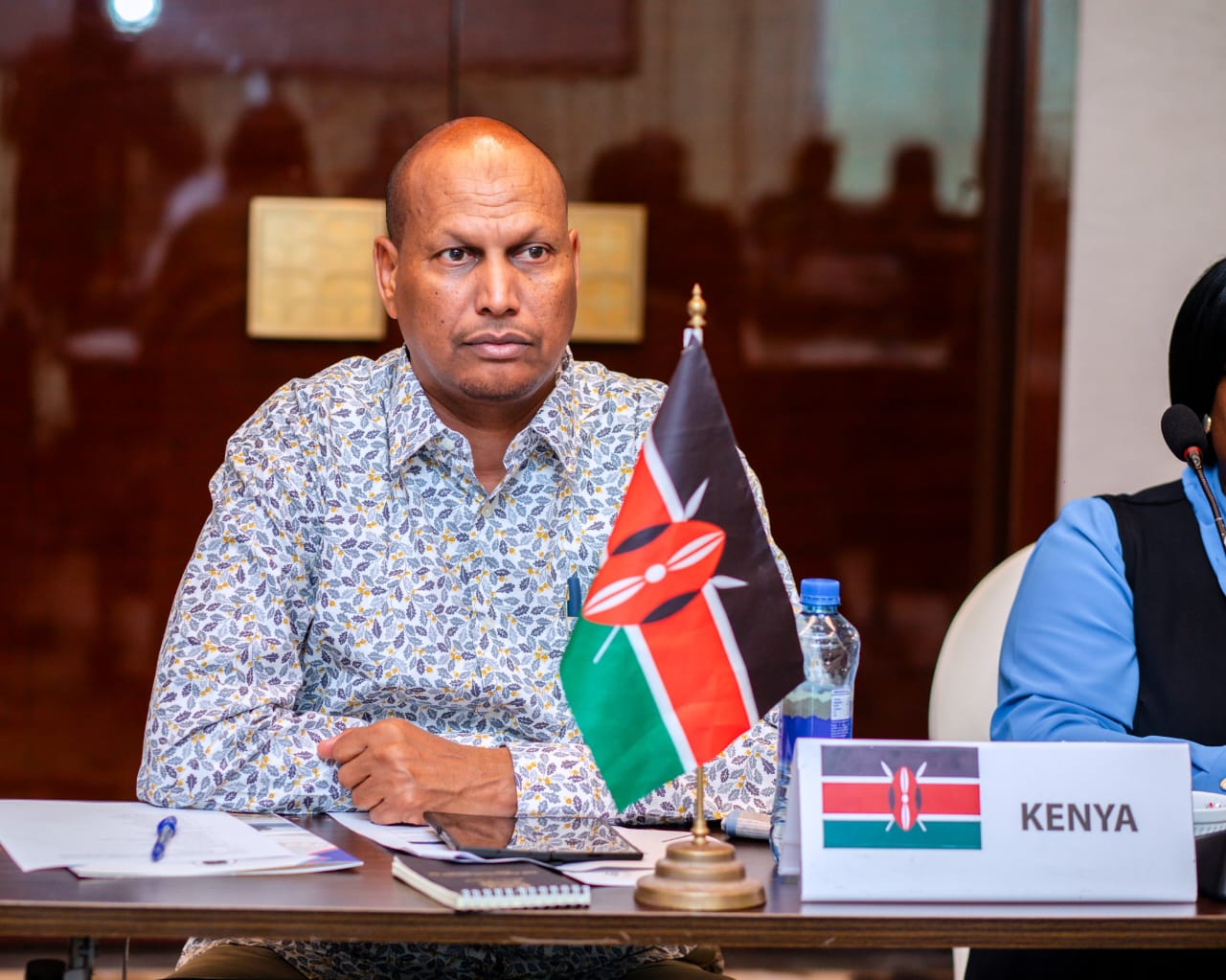
Kenya’s contribution is equally strategic, even though it withdrew its bid to host the main campus. It brings extensive maritime training capacity, strong linkages to global shipping lines, and demonstrated success in placing seafarers abroad. Its institutions and industry networks can anchor specialised programmes, research collaboration and sea-time pathways. Botswana, as a land-linked rather than coastal state, adds a critical inland-waterways, multimodal logistics and regional connectivity perspective. In a hub-and-spoke architecture, centres of excellence focused on these domains in Botswana (and potentially Malawi) ensure the university serves the full spectrum of member states rather than only coastal ones. This complementarity turns potential rivalry into a functional division of labour.
The broader agenda reinforces the university’s importance. Parallel discussions on a regional shipping network and maritime cabotage framework aim to improve intra-regional connectivity, lower logistics costs, generate employment and create more sea-time opportunities for cadets. Without a steady supply of competent local professionals, any regional fleet risks remaining dependent on foreign crews and management. MUESNA is intended to supply that pipeline while also developing capacity in maritime law, safety management, logistics, environmental compliance, green shipping, automation, digitisation and cybersecurity—areas where the region currently lags.
Implementation challenges are real and must be confronted honestly. Member states must still finalise the founding agreement (review deadline set for January 2027), clarify financial contributions, host-country obligations, governance structures and the precise relationship between the new institution and existing national training facilities. A phased approach—beginning as a networked institute or college before evolving into a full university—appears prudent given the legal, financial and accreditation hurdles of launching a standalone university immediately. Sustainable funding, quality assurance that meets International Maritime Organization standards, and genuine industry partnerships will determine whether MUESNA becomes a genuine centre of excellence or another under-resourced regional body.
If executed with discipline, the university offers several concrete gains. It can reduce dependence on foreign maritime expertise, expand employment opportunities for young Africans in a high-demand global sector, support cabotage and regional shipping ambitions, and strengthen Africa’s voice in international maritime affairs. By treating Tanzania’s hosting role as the hub of a network rather than a zero-sum prize, MOESNA member states have chosen cooperation over competition. That choice, grounded in complementary national strengths, is the most promising feature of the entire initiative.
The test now shifts from selection to delivery. The complementary assets of Tanzania, Kenya and Botswana provide a solid starting point. Whether the region converts that starting point into sustained capacity will shape its maritime trajectory for decades.