


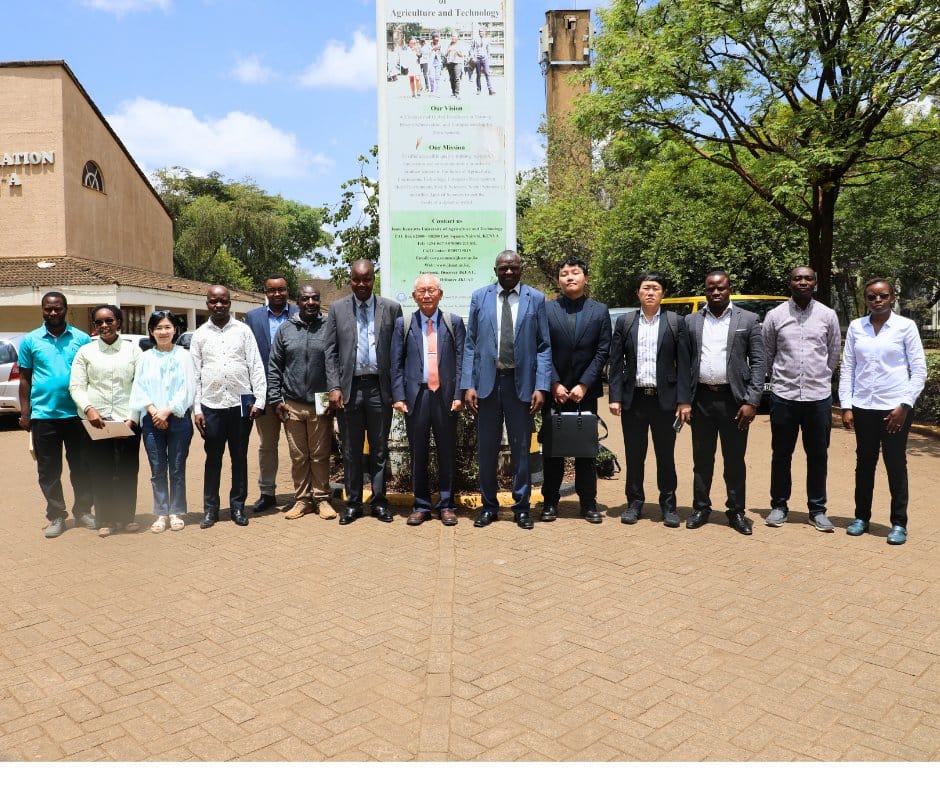
When Jomo Kenyatta University of Agriculture and Technology (JKUAT) hosted a delegation from Jadeoriental Ship Management Co. Ltd. of the Republic of Korea in early November 2026, it was far more than a polite institutional courtesy call. It was the operational follow-through to a June 2026 Memorandum of Understanding on mutual recognition of Certificates of Competency (CoCs). That agreement—reached during the Ocean Conference and reinforced through high-level bilateral engagements—finally allows qualified Kenyan seafarers to serve on Korean-flagged vessels without the bureaucratic friction that previously restricted access.
This is not abstract diplomacy. It is a concrete pathway from Kenyan lecture halls and training simulators into the international shipping labour market—at a moment when global demand for competent seafarers remains structurally tight.
The Structural Opportunity
South Korea is a major ship-owning and ship-operating nation. Its fleet and associated management companies need officers and ratings who meet STCW standards and can integrate into multinational crews. Kenya, for its part, has spent more than a decade building maritime education capacity. JKUAT’s Department of Marine Engineering and Maritime Operations offers accredited programmes in Marine Engineering and Nautical Science designed to produce officers of the watch. Bandari Maritime Academy, the Technical University of Mombasa, and other institutions have similarly expanded their training pipelines. The missing link was recognition: foreign flag states and ship managers often required additional verification or re-certification, raising costs and delaying placement.
The 2026 MoU closes that gap for Korean vessels. Jadeoriental’s visit—led by Director Jin Woo Byun and General Manager Seung Jae Lee, with facilitation by long-time maritime education supporter Hang Dong Bang—signals that industry is prepared to act on the policy opening. Bang’s role as a bridge between JKUAT and Korea Maritime and Ocean University further underscores the value of sustained people-to-people and institution-to-institution ties that predate the formal MoU.
Kenya’s broader strategy is clear. Successive administrations have identified the blue economy as a pillar of job creation and foreign-exchange earnings. Earlier estimates from the State Department for Shipping and Maritime Affairs pointed toward potential annual placements in the hundreds or low thousands on Korean ships—if training quality, medical fitness, and soft skills meet employer expectations. Even conservative uptake would represent meaningful employment for young Kenyans and remittances that support households far beyond the coast.
Beyond the Signature: What Success Requires
Recognition is necessary but not sufficient. Ship managers evaluate candidates on sea time, practical competence, language proficiency (especially English, the industry’s working language), cultural adaptability, and safety culture. Kenyan institutions must therefore ensure that classroom training translates into measurable onboard readiness. That means continued investment in simulators, sea-time opportunities, and partnerships that provide cadet berths. Programmes already linking Kenyan cadets to Korean training centres and onboard experience—such as the Smart Integrated Global Onboard Training initiatives—offer a proven model that should be scaled.
Welfare and protection mechanisms matter equally. International shipping involves long contracts, isolation, and sometimes difficult living conditions. Kenya will need reliable manning agents, clear channels for reporting grievances, and active diplomatic support through its embassy in Seoul and the Kenya Maritime Authority. The earlier commitment to designate a Kenyan liaison for seafarer welfare on Korean ships is a sensible start; it must be resourced and monitored.
Quality control is non-negotiable. Any perception that Kenyan CoCs are being issued without rigorous standards will quickly close doors. Kenya’s regulators and training institutions share responsibility for protecting the “Trusted Kenyan Seafarer” brand that policymakers have correctly identified as essential.
Strategic Context and Competitive Reality
Kenya is not the only country pursuing this route. India, the Philippines, Indonesia, and others have long-standing or expanding arrangements with major ship-owning nations. Korea itself has historically drawn heavily from Southeast Asian labour markets. Kenya’s advantages lie in relative proximity to Europe and Asia via the Indian Ocean, English-language capacity, and a growing cohort of university-trained marine engineers and deck officers. Its disadvantages are scale and the still-limited volume of domestic sea-time opportunities. Partnerships that combine local education with foreign sea time and eventual employment are the practical solution.
The JKUAT–Jadeoriental engagement also illustrates a mature division of labour: government negotiates recognition frameworks; universities produce the talent; industry selects and deploys. When these three elements align, results compound. Similar dynamics are visible in Kenya’s engagements with other ship managers and training partners. The pattern is becoming clearer: systematic outreach, mutual recognition, targeted training, and employer-led placement.
The Larger Stakes
If Kenya can convert recognition agreements into steady placement pipelines, the benefits will extend beyond individual careers. Remittances strengthen household resilience. Successful seafarers return with skills, networks, and sometimes capital that can support shore-based maritime services. A reputation for reliable, well-trained seafarers enhances Kenya’s standing in international maritime forums and can attract further investment in ports, ship management, and related services.
Failure would be equally instructive. If training quality slips, placement volumes remain negligible, or welfare issues go unaddressed, the MoU will join the long list of well-intentioned documents that never translated into jobs. The difference will be determined less by the next round of high-level meetings than by the unglamorous work of curriculum alignment, cadet placement, performance tracking, and continuous dialogue with employers such as Jadeoriental.
A Quiet but Significant Shift
The November 2026 visit to JKUAT will not dominate headlines the way a presidential summit does. Yet it is precisely these operational engagements—ship managers walking university corridors, examining facilities, discussing candidate profiles—that turn policy into paychecks. Kenya has spent years building the educational foundation and negotiating the legal framework. The test now is execution: producing graduates who meet international standards, matching them with employers ready to hire, and supporting them once they are at sea.
If that chain holds, the path from a Kenyan campus to a Korean-flagged vessel will become a viable, repeatable route for a growing number of young professionals. In a global industry that still faces officer shortages and that values competence over nationality, that is a strategic opening worth consolidating. The MoU opened the door. Industry visits such as Jadeoriental’s are the first serious steps through it. Kenya’s maritime institutions and policymakers must now ensure the pathway remains clear, competitive, and sustainable.