


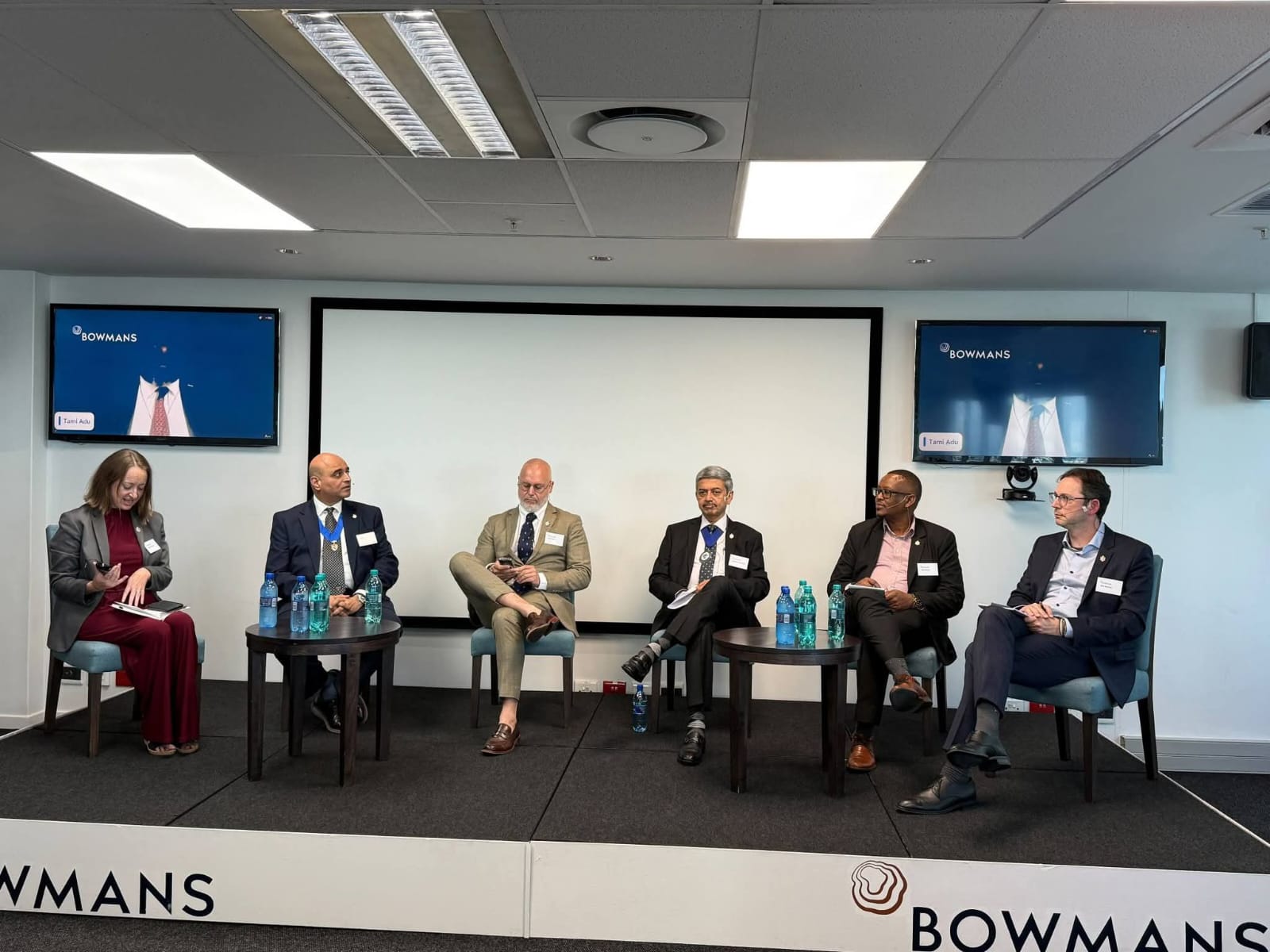
In the last week of October 2026, representatives from 27 locations across the Institute of Chartered Shipbrokers (ICS) gathered in Cape Town for the annual Controlling Council meeting. Hosted by the South Africa Branch, the gathering brought together branch leaders, senior officers, and the Head Office team to deliberate on the Institute’s strategic direction. While the formal outcomes centered on three pillars—Education, Membership, and Governance—the symbolic and practical significance runs deeper. The appointment of Natalia Margioli FICS as International President—the first woman and the first Greek to hold the office in the Institute’s 115-year history—crystallizes a quiet but consequential evolution in how the global commercial shipping profession organizes itself.
Founded in 1911 and granted a Royal Charter in 1920, the ICS has long served as the professional body for the commercial shipping industry, setting standards through rigorous examinations, continuous professional development, and a worldwide network of branches. With more than 4,000 members and fellows, its influence rests less on regulatory power than on the credibility of its qualifications and the cohesion of its international community. The Cape Town meeting was therefore not merely ceremonial. It was an exercise in collective self-assessment at a moment when shipping faces simultaneous pressures from decarbonization mandates, digital disruption, geopolitical realignment of trade routes, and a persistent skills gap in many emerging markets.
Education as the Core Competitive Advantage
Margioli’s background makes the education priority unsurprising. As founder and managing director of the Hellenic Management Centre since 1999, and the driving force behind the establishment of the ICS Greek branch and teaching centre in 2005, she has spent more than two decades turning professional education into institutional strength. Her stated priorities—strengthening maritime education, enhancing the value of membership, drawing international branches closer together, and deepening ties with the shipping industry—align closely with the three pillars discussed in Cape Town.
This focus is overdue. Shipping remains an industry in which commercial judgment, contractual precision, and risk assessment cannot be fully automated. Artificial intelligence, alternative fuels, and increasingly complex environmental regulations will change the tools professionals use, but they will not eliminate the need for people who understand why a particular clause exists or how a market dislocation might cascade. An Institute that treats education as a living system rather than a static syllabus will remain relevant; one that does not will gradually become ornamental.
Membership Value and Branch Collaboration
The second pillar—membership—speaks to a practical challenge. Professional institutes thrive when the credential delivers tangible advantage in the marketplace and when local branches feel ownership of the global project. The West Africa Branch’s post-meeting reflection, authored under the leadership of Chairperson Ama Sam FICS MCIMArb, captured this accurately: the gathering offered an opportunity to exchange ideas and strengthen relationships, but the real test will be translating those deliberations into initiatives that strengthen membership, deepen regional collaboration, and support the growth of commercial shipping in West Africa.
West Africa’s maritime sector sits at an inflection point. Growing trade volumes, expanding port infrastructure, and the strategic importance of the Gulf of Guinea create demand for locally grounded yet internationally credible professionals. An active ICS presence that prioritizes accessible, high-quality education and networking can accelerate the shift from reliance on external expertise toward indigenous capacity. The same logic applies, with local variations, across many of the Institute’s other branches in emerging markets. Stronger branch collaboration is therefore not merely administrative housekeeping; it is the mechanism through which global standards become locally useful.
Governance and the Meaning of a Historic First
The third pillar—governance—intersects with the leadership transition itself. The election of a woman as President after 115 years is both overdue and consequential. Symbolic firsts matter because they expand the pool of people who can imagine themselves in positions of institutional authority. Margioli’s Greek nationality adds another layer: the Institute’s leadership has historically been weighted toward certain traditional shipping centers. A presidency rooted in one of the world’s major shipowning nations, combined with deep educational experience, signals a willingness to draw leadership from the broader international membership.
Jeffrey Blum FICS’s simultaneous election as Vice President provides continuity and support for a two-year term. Outgoing President Punit Oza left the Institute with increased visibility and a clearer five-year strategic framework. The succession therefore appears orderly rather than disruptive—an important quality for an organization whose authority rests on reputation.
Implications Beyond the Institute
The Cape Town meeting occurred against a backdrop of structural change in shipping. Environmental regulation is tightening, digital platforms are reshaping brokerage and chartering workflows, and talent shortages persist in key commercial functions. Professional bodies that successfully integrate new technical competencies with traditional commercial judgment will help the industry navigate these shifts. Those that cling to yesterday’s syllabus will not.
For regions such as West Africa, the opportunity is particularly clear. Capacity building that is internationally recognized reduces transaction costs, improves the quality of local decision-making, and strengthens the case for greater participation in the value chain beyond pure cargo handling. The West Africa Branch’s stated intention to convert Council outcomes into concrete membership and collaboration initiatives is therefore the right orientation. Execution will determine whether the intention becomes impact.
A Shared Vision, Tested in Practice
The closing refrain of the West Africa Branch’s reflection—“One Institute. One Global Maritime Community. One Shared Vision”—is more than rhetoric. It is a statement of institutional identity. Maintaining that unity while allowing regional branches the autonomy to address local realities is the perennial challenge of any global professional body. The 2026 Controlling Council appears to have approached the task with seriousness: clarifying strategic priorities, celebrating a historic leadership milestone, and reaffirming the centrality of education and membership value.
Whether the Institute fully capitalizes on this moment will depend on the quiet, sustained work that follows: curriculum updates that keep pace with technological and regulatory change; membership experiences that deliver clear professional advantage; and branch networks that function as genuine communities of practice rather than distant affiliates. If those pieces move forward, the Cape Town meeting will be remembered not only for the first woman to lead the Institute, but for the clearer direction it set for a profession that still underpins the majority of global trade.
The maritime industry does not lack challenges. It does, however, possess institutions capable of raising the competence and cohesion of its commercial professionals. The Institute of Chartered Shipbrokers has just reminded its members—and the wider industry—that it intends to remain one of them.