


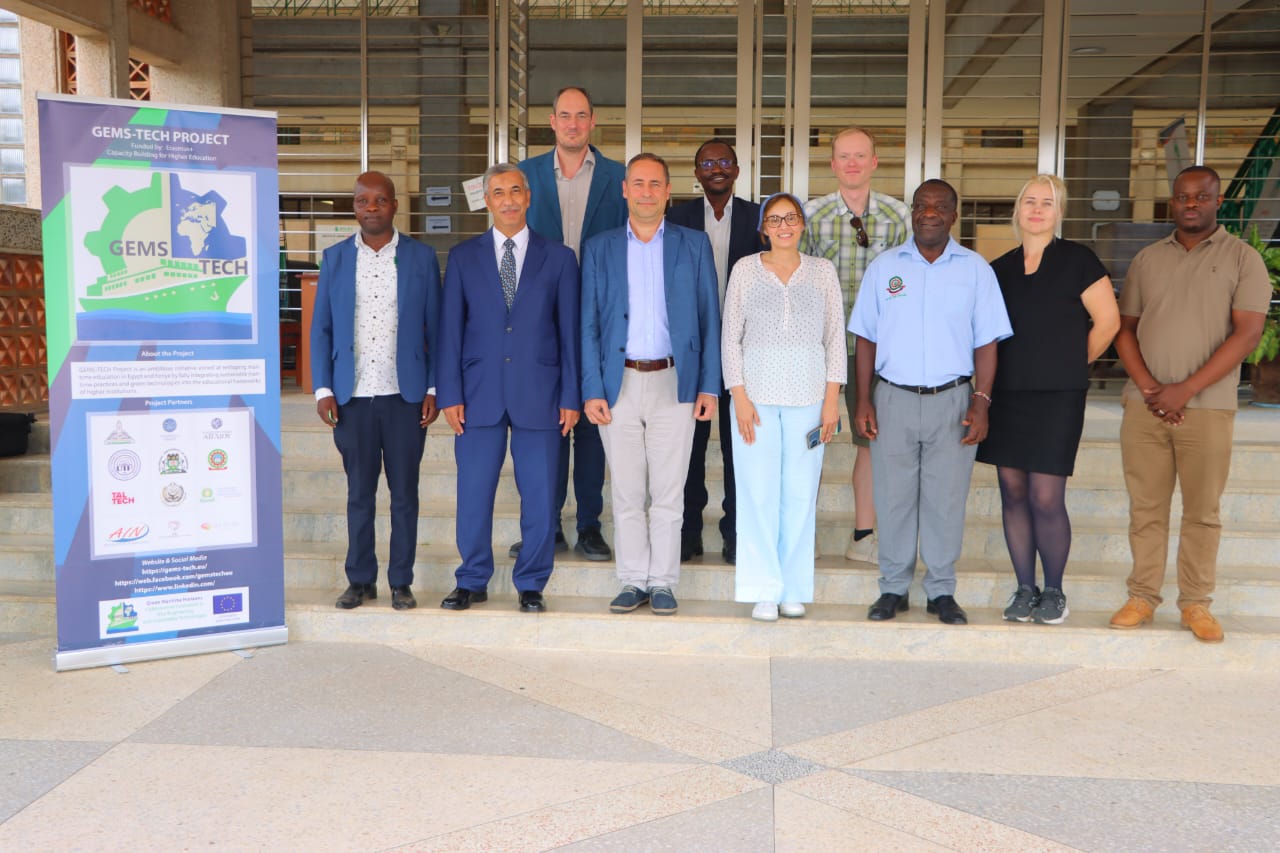
Jomo Kenyatta University of Agriculture and Technology (JKUAT) is participating in a 36-month international capacity-building project aimed at modernising higher education in Kenya and Egypt. The initiative, known as GEMS-TECH (Green Maritime Horizons: Collaborative Innovation in Ship Engineering and Sustainable Technologies), is funded under the European Union’s Erasmus+ Capacity Building in Higher Education programme. Its core mission is to integrate green technologies, sustainable maritime practices, and business skills into maritime engineering curricula.
This is not another isolated academic partnership. It represents a strategic response to the accelerating global shift toward low-carbon shipping, the International Maritime Organization’s 2050 decarbonisation targets, and the growing demand for professionals who can navigate both technical innovation and environmental responsibility.
The Imperative for Change
The maritime sector underpins global trade and, for Kenya, forms a critical pillar of the blue economy. Ports such as Mombasa, coastal shipping, inland waterways, and related industries generate significant employment and foreign exchange. Yet the industry faces intensifying pressure. Shipping accounts for a substantial share of greenhouse gas emissions, and international regulations are tightening around energy efficiency, alternative fuels, emissions monitoring, and environmental risk management.
Traditional maritime engineering programmes have often emphasised classical seamanship, naval architecture, and conventional propulsion systems. While these remain foundational, they are no longer sufficient. Graduates increasingly need competence in green technologies—alternative fuels, hybrid and electric propulsion concepts, digital twinning, smart shipping systems—alongside entrepreneurial and business skills that enable them to commercialise innovations or lead organisational change. GEMS-TECH directly targets this gap by embedding sustainability, digital tools, and multidisciplinary modules into curricula in both Kenya and Egypt.
JKUAT’s Specific Contribution
JKUAT, through its Department of Marine Engineering within the School of Mechanical, Manufacturing and Materials Engineering, is a key Kenyan partner alongside the Technical University of Mombasa. Egyptian partners include Ain Shams University and the Arab Academy for Science, Technology and Maritime Transport. European institutions from Bulgaria, Greece, Croatia, Estonia and elsewhere provide expertise and co-development capacity. The consortium structure itself is instructive: it pairs African institutions that understand local operational realities and labour-market needs with European partners experienced in curriculum reform, laboratory modernisation, and digital learning platforms.
Within the project, JKUAT leads the development of Massive Open Online Courses (MOOCs). These open-access resources are designed to extend training in green maritime operations, environmental risk mitigation, and smart shipping technologies beyond the walls of partner universities. This is a high-leverage role. MOOCs can reach practising professionals, cadets at other institutions, and lifelong learners across the region, amplifying impact far beyond enrolled students.
The project also supports the creation and implementation of new multidisciplinary modules, laboratory upgrades, staff capacity building, and closer engagement with industry and regulatory authorities. Stakeholder workshops already held in Kenya have brought together academics, industry representatives, and cadets to ground curriculum updates in real operational needs and to align them with IMO strategies and relevant Sustainable Development Goals, particularly those concerning clean water, climate action, and decent work.
Broader Strategic Significance
Several factors elevate GEMS-TECH beyond a routine capacity-building exercise.
First, it addresses the employability and relevance challenge head-on. Universities that fail to update programmes risk producing graduates mismatched to industry requirements. By co-designing content with European partners and local stakeholders, the project reduces that risk and strengthens the link between training and emerging green jobs in shipping, port operations, and related services.
Second, it builds institutional capability rather than merely transferring knowledge. Curriculum modernisation, laboratory development, and MOOC production leave lasting assets. Staff who participate in co-creation and training gain skills they can apply to future programme reviews. The emphasis on open resources further multiplies reach.
Third, the Kenya–Egypt axis is significant. Both countries have substantial maritime interests and face parallel challenges of skills development, infrastructure modernisation, and alignment with international standards. South–South elements of the collaboration, supported by North–South technical partnership, offer a model that other African coastal and inland-waterway states may later adapt.
Fourth, the timing aligns with national and continental priorities. Kenya’s blue economy agenda, regional port development ambitions, and commitments under international climate frameworks all require a pipeline of professionals equipped for the transition. Projects of this nature help translate high-level policy into concrete educational outcomes.
Challenges and Realism
No capacity-building project is without risks. Curriculum change can encounter institutional inertia. Laboratory investments require sustained maintenance and skilled technical support. Industry uptake of new graduates depends on parallel efforts by employers and regulators. Open educational resources must be actively promoted and updated if they are to remain relevant. The 36-month timeframe is long enough to produce tangible outputs yet short enough that continuity planning after the formal end date will be essential.
Success will therefore depend on more than technical delivery. It will require sustained leadership within the partner universities, genuine industry co-ownership of the new modules, and mechanisms to embed the reforms into routine academic quality assurance processes. Monitoring of graduate outcomes and employer feedback will be important indicators of impact.
A Call for Ambition
GEMS-TECH is one project among many needed to modernise African maritime education. Yet it is a well-structured and timely intervention. JKUAT’s leadership on the MOOC component positions the university not only as a beneficiary but as a contributor to regional knowledge infrastructure.
The deeper opportunity lies in using this collaboration as a catalyst. Updated curricula and open courses can feed into national discussions on seafarer training standards, port-state control competence, and the skills required for Kenya’s growing maritime services sector. They can also strengthen the case for further investment in specialised laboratories, research centres, and industry–academia partnerships focused on green shipping technologies.
Kenya’s maritime future will not be determined solely by infrastructure or trade volumes. It will be shaped by the quality of the people who design, operate, regulate, and innovate within the sector. By participating in GEMS-TECH, JKUAT is helping ensure that the next generation of maritime engineers and professionals are prepared for a world in which sustainability is no longer optional but foundational.
The seas are changing. Education must change with them—and in this instance, Kenya’s leading technological university is helping chart the course.
Andrew Mwangura is a maritime safety and security analyst. The views expressed are his own.