


In early November 2026, a high-level delegation from the Tanzania Ports Authority (TPA) and other public institutions spent two days in Bremen and Hamburg. Hosted by the Institute of Shipping Economics and Logistics (ISL) and HPC Hamburg Port Consulting, the programme focused on Germany’s landlord port model, concession management, infrastructure investment, and the practical realities of modern terminal operations. The group visited Container Terminal Altenwerder (CTA), one of the world’s most automated container facilities.
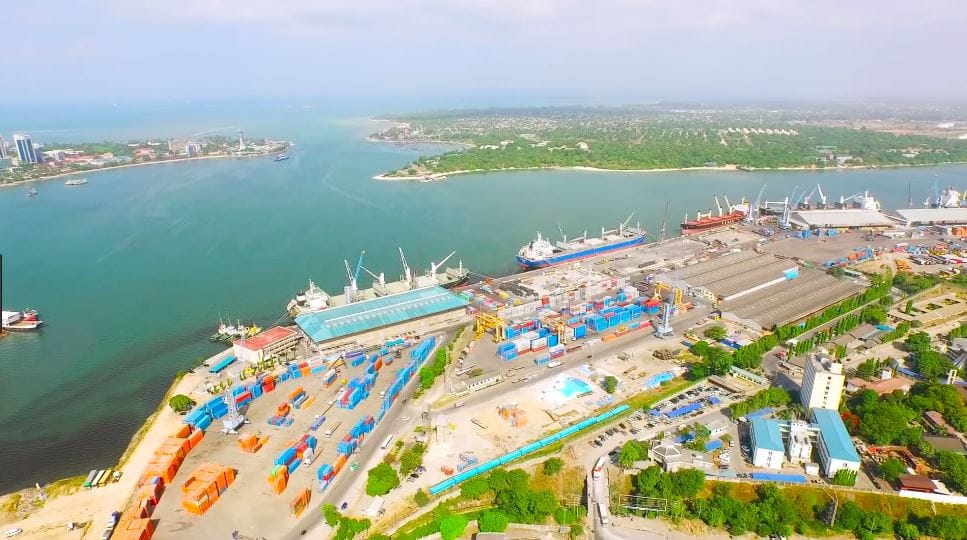
This was not a ceremonial study tour. It comes at a pivotal moment for Tanzania’s ports. Dar es Salaam has recorded substantial volume growth, private operators such as DP World have transformed specific terminals, waiting times have fallen, and expansion plans—from additional berths to the long-delayed Bagamoyo project—are advancing. The question is no longer whether Tanzania can handle more cargo. It is whether the institutional architecture can keep pace with the physical expansion and private capital now flowing in.
The German Reference Point
Germany’s major ports operate largely under the landlord model. Public authorities own the land and basic infrastructure, plan long-term development, and regulate. Private companies design, finance, equip, and operate the terminals under long-term concessions. Revenue models, risk allocation, performance standards, and the precise division of responsibilities between landlord and operator are codified in detailed contracts. The system has delivered high efficiency, continuous investment, and clear accountability.
The Tanzanian delegation received briefings on exactly these mechanics: how concessions are structured, how revenues are shared, how public institutions retain strategic control while transferring operational risk, and how automation and data systems are integrated when the operator is private. Seeing CTA in operation made the abstract concrete. Automation is not merely technology; it is the product of aligned incentives between a landlord that provides the platform and an operator that has both the capital and the incentive to optimise every process.
Tanzania’s Hybrid Reality
Tanzania already operates a hybrid. TPA functions as both landlord and, in places, operator. Concessions with DP World and Tanzania East Africa Gateway Terminal Limited have demonstrably improved performance at key berths in Dar es Salaam. Cargo volumes have risen sharply, ship turnaround has improved, and the private partners have injected capital and operational discipline. Yet the dual role of TPA continues to generate friction. Overlapping mandates with the Tanzania Revenue Authority and other agencies, unclear lines of accountability in disputes, and the residual temptation for the public authority to intervene operationally remain structural weaknesses.
Parliament and independent observers have repeatedly flagged the need to separate regulatory and operational functions more cleanly. The German experience offers a tested template, not a rigid blueprint. The core lesson is institutional clarity: the landlord must be a strong, professional, and independent steward of public assets and long-term strategy; the operator must have secure rights, performance obligations, and commercial freedom. Ambiguity between the two roles is expensive.
Beyond Dar es Salaam
The stakes extend well beyond the existing port. Bagamoyo, now advancing with a new construction and operating partner linked to MSC, is designed on a far larger scale. Lake ports are being upgraded. New berths and deeper channels are planned at Dar. If these projects simply replicate the current hybrid model at greater volume, the governance bottlenecks will scale with them. If they are structured with clearer landlord–operator boundaries, transparent concession processes, and performance-based regulation, Tanzania can convert its geographic advantage into sustained regional competitiveness.
Germany’s ports also illustrate that landlord does not mean passive. Public authorities remain active in planning, environmental standards, hinterland connectivity, and the continuous upgrading of common infrastructure. Private operators thrive when the rules are stable and the playing field is level. Both sides require professional capacity. The knowledge exchange with ISL and HPC is valuable precisely because it focuses on these institutional and contractual details rather than glossy hardware.
A Strategic Opportunity
Tanzania’s ports already serve a large hinterland that includes land-linked neighbours. Congestion and inefficiency in the past diverted traffic to competing corridors. Recent performance gains have begun to reverse that. Sustaining and accelerating the gains requires more than additional quay length and bigger cranes. It requires a governance framework that can attract successive waves of private capital, enforce service standards, resolve disputes predictably, and keep strategic control in public hands.
The November visit should be treated as the start of a process, not a one-off event. Follow-up could usefully include joint work on model concession clauses adapted to Tanzanian law, capacity building for TPA staff on contract management and performance monitoring, and structured dialogue on how digital systems and automation will be governed when terminals are privately operated. The foundations for such cooperation were laid in Bremen and Hamburg.
Ports are national strategic assets. Their performance determines the competitiveness of exporters, the cost of imports, and the reliability of regional supply chains. Tanzania has shown it can modernise physical infrastructure and bring in capable private partners. The harder, more consequential work is institutional. Learning from mature landlord systems is not an admission of weakness; it is the rational next step for a country determined to turn its ports into a durable source of comparative advantage. The German experience offers a clear map. The test is whether Tanzania will use it to draw its own.