


On 1 December 2026, if the timetables hold, Kenya will join the ranks of oil-producing nations. Gulf Energy, a Nairobi-based firm, has begun drilling at the Amosing field in Turkana’s South Lokichar Basin, targeting initial output of 20,000 barrels per day and first exports by March 2027 . The government has touted this as a historic milestone, a $6 billion investment that will reshape the economy and finally deliver on a promise made when oil was first discovered in 2012 .
But as the trucks prepare to roll and the drilling rigs hum, a more uncomfortable question lingers: after fourteen years of waiting, will the people of Turkana actually benefit, or will they become a case study in how not to manage a resource boom?
The warning signs are already there. Approximately 3,600 people face compulsory land acquisition for the project . Compensation remains unresolved. In October, Turkana elders threatened to obstruct extraction and transportation over unpaid claims . Residents have blocked oil trucks over insecurity . These are not the actions of a community poised to reap the rewards of a windfall. They are the actions of people who have watched a decade of promises evaporate and who suspect, with good reason, that the latest iteration will be no different.
The revenue-sharing framework, at least on paper, appears progressive. Under the Petroleum Act, profit oil is split 75 percent to the national government, 20 percent to the county government, and 5 percent to the local community . Parliament’s ratification of the field development plan in February 2026 was accompanied by assurances that local content provisions would ensure Turkana residents gain employment and business opportunities . Gulf Energy reports that 599 of 716 jobs on the project are held by Kenyans, with 61 percent hailing from Turkana County . Four hundred of the 600 trucks contracted to transport crude have been reserved for local transporters .
These figures are commendable in isolation. But they obscure a deeper structural fragility. The 5 percent community share is not guaranteed to arrive promptly or intact. Cost-recovery provisions—the mechanism by which the operator recoups its capital expenditure before profit oil is shared—could reduce or delay the community’s portion, a concern raised during public participation . And even when the money flows, the absence of a ring-fenced mechanism to ensure it reaches the intended beneficiaries remains a critical gap .
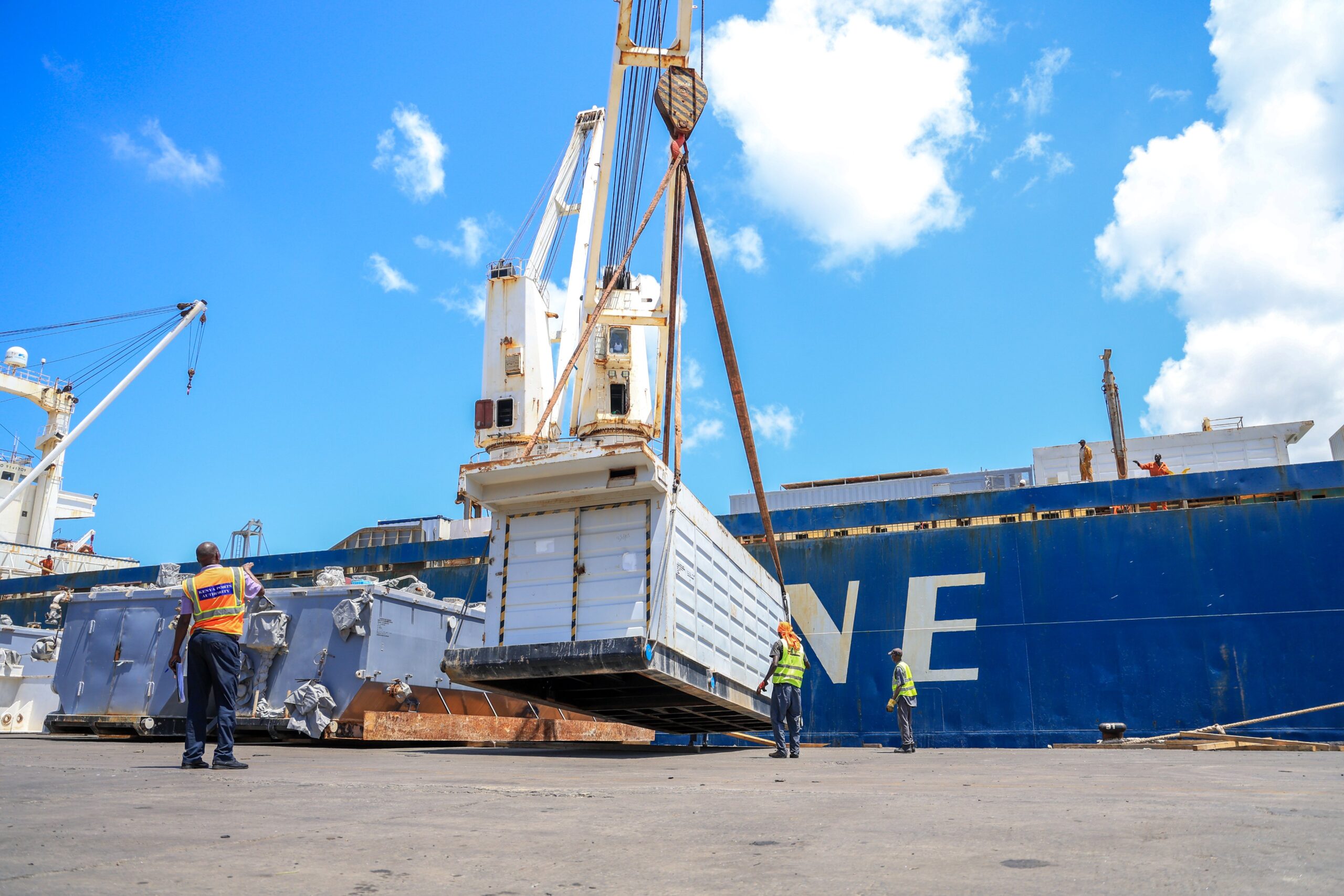
More fundamentally, the project’s design raises questions about the nature of the benefit itself. Initial production will be transported by road—a fleet of 600 trucks traversing the roughly 800 kilometres from Lokichar to Mombasa . This is a stopgap measure, necessitated by the absence of a pipeline. The crude’s high wax content requires heated storage and insulated tankers . The logistical complexity is immense, and the cost—both financial and environmental—will be borne disproportionately by the communities along the route. Yet the long-term solution, a pipeline to Lamu linked to a proposed refinery by Aliko Dangote, remains years away and dependent on financing that has not been secured .
The project’s operational leadership has also shifted dramatically. Tullow Oil, the British company that discovered the resource, exited in 2025, selling its assets to Auron Energy, a Gulf Energy affiliate, for a minimum of $120 million . The transition from an international major to a domestic operator is not inherently problematic; indeed, it could signal greater local ownership. But it places enormous responsibility on a company with limited track record in upstream production, at precisely the moment when scrutiny should be most intense. The environmental and social impact assessment licence still needs to be transferred from Tullow, and supplementary assessments for the revised development and transport arrangements have not been confirmed as complete .
Turkana’s deputy governor has rightly called for a transparent and independent audit of the environmental and social impacts of the exploration phase, citing years of unaddressed complaints about dust pollution, disposal of drilling cuttings, and restricted access to grazing corridors . That audit is underway. Its findings must not be buried.
Kenya has a narrow window to get this right. The pilot scheme of 2019, which exported 200,000 barrels, was a technical success but a political non-event; it generated revenue but no lasting transformation . The difference this time is supposed to be commercial scale. But scale without equity is merely extraction by another name.
The government’s blueprint for the sector must move beyond production targets and investment figures. It must guarantee that compensation for land is settled before drilling proceeds, not after. It must establish a transparent, ring-fenced mechanism for the community’s 5 percent share, with public reporting on disbursement and use. It must enforce local content requirements not as aspirational rhetoric but as binding obligations, with penalties for non-compliance. And it must invest in the institutions—the county government, the community land committees, the oversight bodies—that will be responsible for managing the resource for decades to come.
The oil beneath Turkana is finite. The decisions made in the next twelve months will determine whether it becomes a foundation for lasting development or another chapter in the long, familiar story of African resources enriching distant capitals while leaving the ground beneath them scarred and its people marginalised. Kenya’s Blue Economy ambitions and its green energy rhetoric mean little if the first major fossil fuel project in the country’s history replicates the failures of the past. The trucks are already on the road. It is not too late to change their destination.