


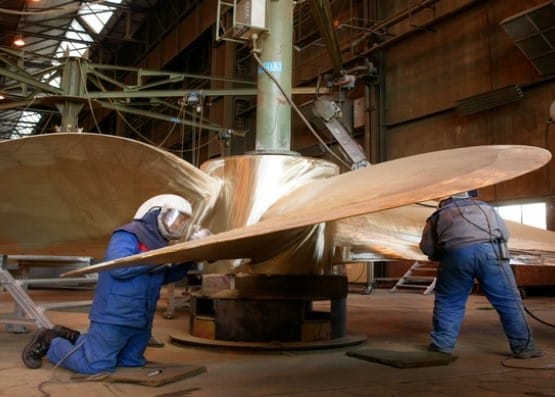
Southern Engineering Co. Ltd (SECO), a major East African engineering and fabrication firm, recently distilled a hard truth of industrial craftsmanship into a single, memorable line: “The pipe doesn’t move. The welder has to. That’s 6G welding.”
That observation is more than marketing. It captures one of the most rigorous tests of skill, discipline, and physical intelligence still required in modern heavy industry. In an age of automation, AI vision systems, and robotic welding cells, the 6G position continues to separate capable operators from true craftsmen—and to reveal why human expertise remains indispensable on critical infrastructure projects across East Africa and beyond.
What 6G Actually Demands
Welding positions are classified by orientation and joint type. For pipe, the key designations are:
· 1G: Pipe rotates; welder stays in the flat position (easiest).
· 2G: Pipe fixed vertically; weld progresses horizontally.
· 5G: Pipe fixed horizontally; welder works through vertical and overhead positions.
· 6G: Pipe fixed at approximately 45 degrees and cannot be rotated. The welder must travel the full circumference, continuously transitioning through flat, vertical, horizontal, and overhead conditions in a single joint.
The 45-degree incline creates compound angles that do not exist in simpler tests. Gravity pulls on the molten pool differently at every clock position. At the bottom of the joint the pool wants to sag; overhead it threatens to drip; on the sides it tries to run. Heat input, travel speed, electrode angle, and body position must all change fluidly without ever stopping the arc or allowing defects such as lack of fusion, undercut, porosity, or incomplete penetration.
Certification bodies (AWS D1.1, ASME Section IX, ISO 9606) treat a successful 6G test as evidence that the welder can handle virtually any pipe position. Pass rates on first attempts remain low—often cited around 15 percent even among experienced welders—because the margin for error is vanishingly small. Radiographic or ultrasonic inspection will catch what the eye misses.
Why This Matters in East Africa
SECO operates in a region where infrastructure demands are rising rapidly: ports, energy facilities, industrial plants, marine structures, storage tanks, and process piping. Many of these assets cannot be rotated into a comfortable welding position. Pipes are already installed, constrained by existing steelwork, or part of large fixed assemblies. The welder must adapt to the geometry, not the other way around.
In this environment, “close enough” is not a viable standard. A defective root pass on a high-pressure line or structural member can lead to leaks, catastrophic failure, costly downtime, or worse. SECO’s emphasis on 6G-certified welders and structural engineers is therefore not mere branding; it is a direct response to the physical and regulatory realities of complex steel fabrication in East Africa. The company has invested in training Kenyan welders to international (including Lloyd’s) standards precisely because the market increasingly requires that level of assurance.
The Human Element That Automation Has Not Yet Replaced
Robotic and AI-assisted welding systems are advancing quickly. Vision systems can track joints to sub-millimeter accuracy, adaptive controls can adjust parameters in real time, and collaborative robots reduce physical strain. Yet most of these systems still perform best in controlled, accessible, or repeatable setups. Constrained field conditions—tight clearances, variable fit-up, restricted access, and the need for on-the-spot judgment—still favor skilled human welders who can feel the puddle, read the joint, and adjust body position instinctively.
The 6G test remains valuable exactly because it forces that full-spectrum competence. It is less a discrete skill than a demonstration of adaptive mastery under continuous change. In that sense, it functions as both a technical qualification and a cultural signal: this organization prioritizes integrity over expediency.
Broader Implications for Industry and Skills Development
Three larger points emerge from SECO’s simple observation.
First, certification standards matter more than ever. As projects grow in scale and consequence, clients and regulators rightly demand documented competence. Firms that treat 6G (and related qualifications such as 6GR with restriction rings) as non-negotiable raise the baseline for the entire supply chain.
Second, skills investment is strategic infrastructure. Training welders to this level is expensive and time-consuming. Yet the alternative—relying on under-qualified labor or importing expertise—is costlier in the long run through rework, delays, and risk. East African fabricators that build deep local capability create both competitive advantage and national industrial capacity.
Third, human craftsmanship and technology are complementary, not opposing forces. Advanced equipment, NDT, and digital quality systems amplify the value of skilled people; they do not eliminate the need for them. The best outcomes arise when high-capability tools are placed in the hands of high-capability operators.
Conclusion
“The pipe doesn’t move. The welder has to.” That sentence is both a technical description and a quiet statement of professional ethos. In structural and process fabrication, where the consequences of failure are measured in safety, cost, and reputation, the willingness to meet the geometry on its own terms is the difference between adequate and excellent work.
SECO’s emphasis on 6G certification is a useful reminder that, even as manufacturing modernizes, certain fundamentals endure. Precision is non-negotiable. Gravity does not negotiate. And the welder who can control the puddle through every changing angle of a 6G joint remains one of the most valuable assets any serious fabrication organization can possess.
In East Africa’s expanding industrial landscape, that kind of competence is not optional. It is the foundation on which reliable infrastructure is built.