


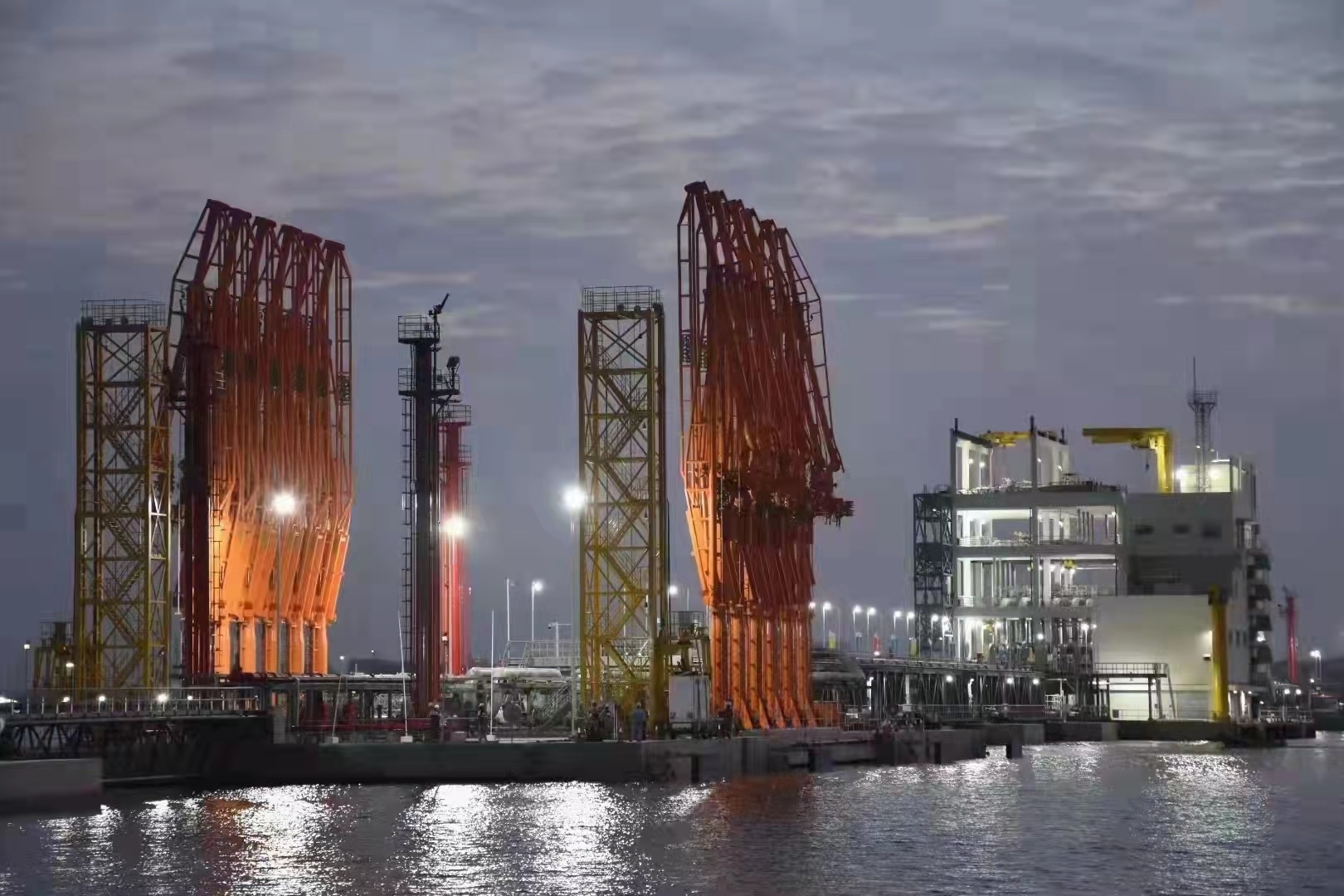
The MT Lunaria, a Liberia-flagged Aframax tanker of the LR2 class built in 2021, arrived at the Port of Mombasa around March 20 or 21 of this year.
It took few days and by March 26, it discharged 85,000 metric tons of diesel at the Kipevu Oil Terminal. The vessel, measuring roughly 250 meters long with a summer deadweight of 211,000 tons, was one of several tankers that have helped to alleviate fuel supply issues in Kenya.
It left on March 27, at one minute past midnight local time, the Lunaria departed Mombasa headed a northward course toward Jizan, Saudi Arabia, where it is expected to arrive around April 5. On the surface, this is routine. A ship arrives. A ship unloads. A ship departs. But for anyone paying close attention to Kenya’s energy security, the voyage of the MV Lunaria is anything but ordinary.
The cargo itself was significant as that volume of 85,000 tons of diesel represents a substantial infusion of fuel into the Kenyan market at a moment when supply concerns have been real and pressing. That volume is enough to keep thousands of trucks moving, generators running, and industries operating for a meaningful period. The Kipevu Oil Terminal, a relatively new facility designed to handle larger vessels and faster turnaround times, performed as intended.
But operational success should not be mistaken for strategic security. The fact that Kenya continues to rely on tankers sailing from Saudi Arabian ports like Jizan should concern every citizen who depends on affordable fuel. Because the supply chain that the MT Lunaria represents is long, expensive, and entirely outside Kenyan control.
Every ton of diesel that arrives at Kipevu has travelled thousands of kilometres, passed through foreign ports, been priced in foreign currencies, and been subject to international shipping rates that fluctuate with global geopolitics. When the world is calm, this system works adequately. When the world is not calm, Kenya feels the shock.
We have felt those shocks recently. Fuel supply issues in Kenya have not been abstract statistics. They have meant long queues at service stations, uncertainty for transport operators, and higher prices for everything from maize flour to matatu fares. The arrival of the MT Lunaria and its sister tankers helped ease those pressures. But easing a symptom is not the same as curing a disease. The disease is that Kenya, like most of Africa, remains a passive recipient of maritime fuel supplies rather than an active participant in the shipping, storage, and distribution systems that determine who pays what and when.
Consider the journey of the eighty-five thousand tons of diesel that the MT Lunaria delivered. It originated somewhere in or around Saudi Arabia, likely refined at a facility that Kenya had no role in building and owns no share in.
It was loaded aboard a Liberian-flagged vessel owned by interests that are not Kenyan. It was insured through markets in London or other global hubs. It was transported by a crew that may include few if any Kenyan seafarers. And it was discharged at a terminal in Mombasa that, while new and improved, is still part of a national logistics chain that struggles with inefficiency, aging infrastructure, and limited storage capacity.
At every step of that journey, value was added elsewhere. At every step, Kenyan money left the country to pay for services that could, in a different policy environment, be provided domestically.
This is not an argument for unrealistic autarky. Kenya cannot instantly build a national fleet of oil tankers or construct its own refineries overnight. The global shipping industry is complex, capital-intensive, and dominated by established players. But the voyage of the MT Lunaria should serve as a reminder of how much work remains to be done.
The Revised African Maritime Transport Charter, which came into force recently, is supposed to create a framework for African countries to cooperate on maritime transport, including the movement of essential cargoes like fuel.
The Green Ports Guidelines being developed with support from regional maritime organizations and technical partners are supposed to modernize facilities like Kipevu. These are positive developments. But they are not happening quickly enough to change the reality that when the MT Lunaria departed Mombasa on March 27, it took with it not only an empty hold but also the profits from a journey that Kenya could have participated in more fully.
The timing of the departure, one minute past midnight, may be nothing more than operational scheduling. But for those who watch maritime movements, the departure of a fuel tanker is never without significance. Kenya’s fuel supply concerns did not begin with the MT Lunaria and will not end with its departure.
The ship will sail north, load another cargo at Jizan or elsewhere, and likely return to Mombasa or another East African port in the coming weeks. And when it does, the same questions will still be waiting. Who owns the cargo? Who sets the price? Who benefits from the shipping contract? Who is building Kenyan capacity to do more than simply receive?
The MT Lunaria is a fine ship. It is modern, well-maintained, and crewed by professionals doing a difficult job. This is not a criticism of the vessel or its operators. It is a criticism of a status quo in which African ports remain points of delivery rather than points of control.
Until Kenya and other African nations invest seriously in their own maritime capacity — from seafarer training to fleet ownership to fuel storage and distribution infrastructure — we will continue to see tankers arrive from distant ports, discharge their cargoes, and depart with the value of our trade in their wake.
The Kipevu Oil Terminal is an improvement. The MT Lunaria’s delivery of the huge diesel consignment was a welcome relief. But relief is not transformation. And transformation is what Kenya’s energy security ultimately requires. The ship has gone north. The questions remain exactly where they were.