


Few industries have demonstrated the stubborn resilience of the global cruise sector. After absorbing the near-total devastation of the COVID-19 pandemic—an enforced shutdown no other leisure industry endured with such totality—cruising roared back with what observers called “revenge travel.”
That wave of pent-up demand propelled bookings, revenues, and investor confidence to levels that surprised even the most optimistic analysts.
Yet as 2026 unfolds, the industry finds itself at a more complicated juncture. The easy growth of the post-pandemic rebound is giving way to structural headwinds: rising prices, emerging overcapacity, and a macro environment that demands greater strategic discipline. The question is no longer whether cruising can survive disruption, but whether it can sustain growth in a more demanding and discerning era.
The headline numbers remain encouraging. HSBC analysts note that the industry navigated intermittent cross-currents in 2025 and emerged outperforming both the S&P 500 and the broader travel sector—no small feat given global financial market turbulence.
The early 2026 “wave season” (the critical January-to-March booking window) has started strongly, with major sellers reporting volumes in line with or ahead of expectations. Carnival Corporation, Royal Caribbean Group, and Norwegian Cruise Line Holdings have all reported strong booking curves extending well into 2026, and 2027 itineraries are already being released.
These are not the metrics of an industry in distress. Yet behind the strong topline performance, analysts are beginning to identify fault lines that could complicate the next phase of growth.
Chief among them is pricing and value fatigue. Cruise lines have understandably sought to maximize yield since the pandemic, layering charges onto base fares—onboard extras, shore excursions, specialty dining, Wi-Fi—in ways that erode the all-inclusive simplicity that long differentiated cruising from land-based holidays. Deutsche Bank’s cruise analyst has observed signs of fatigue setting in among repeat cruisers who find themselves absorbing steadily rising total costs.
The genius of the cruise product has always been its value proposition: a single upfront price covering accommodation, meals, entertainment, and transport between destinations. When that equation becomes obscured by a proliferating menu of add-ons, the competitive advantage narrows. Yield growth in 2026 is expected to be markedly more moderate than in the post-pandemic years—a signal that the industry cannot rely indefinitely on pricing power alone.
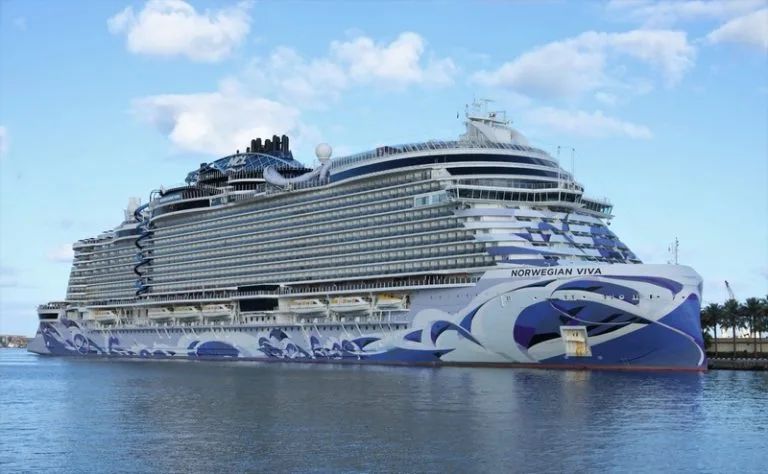
Compounding the pricing challenge is the specter of overcapacity, particularly in the Caribbean, which remains the dominant cruising region. The 2025 ship delivery schedule was notably heavy, with MSC Cruises, Royal Caribbean, Norwegian Cruise Line, and Celebrity Cruises all introducing major newbuilds.
The ships involved are of extraordinary scale. Royal Caribbean’s Star of the Seas, homeported at Port Canaveral, carries some 7,600 passengers. It shares with her sister vessel, Icon of the Seas, the distinction of being the world’s largest cruise ship. Port Canaveral itself has now overtaken Port Miami to become the busiest cruise port on earth, processing 8.6 million passenger movements in fiscal year 2025.
These are remarkable logistical achievements, but they also concentrate enormous supply in a single region. Truist Securities has identified a modest but real imbalance between supply and demand in the contemporary mass-market segment, and expects this to result in elevated promotional activity in the first half of 2026—the kind of discounting that, if sustained, could erode net yields and pressure earnings.
The industry’s response to these pressures is instructive. On the cost side, cruise lines are sharpening revenue management, deepening loyalty programs, and placing greater emphasis on pre-boarding expenditure—encouraging passengers to purchase packages, excursions, and upgrades well before they step on the gangway. High-margin onboard activities are being refined with the discipline of a hotel group studying revenue-per-available-room metrics.
On the supply side, companies are investing in private destinations—bespoke beach clubs and island facilities they own and operate—to retain more passenger spending that might otherwise flow to local economies or third parties. Carnival has opened a new private island facility in the Bahamas; Royal Caribbean is launching private beach clubs. These investments reflect a broader strategic shift toward keeping revenue within the ecosystem.
Yet the most consequential strategic development in the cruise industry is not in the mass market at all. It is the rapid growth and institutional embrace of ultra-luxury and expedition cruising. Norwegian Cruise Line Holdings has placed orders for a new class of vessels for Regent Seven Seas Cruises—four ships of 77,000 gross tons due by 2036.
Its Oceania Cruises brand has ordered five ships of 86,000 gross tons. Across the industry, 32 luxury cruise ships are currently on order. What gives this segment particular significance is not merely its growth, but the caliber of brands now entering the space.
Ritz-Carlton, Four Seasons, Orient Express, and Aman have all moved to launch branded cruise ships, bringing formidable loyalty programs, established affluent customer bases, and powerful aspirational equity. HSBC analysts describe this as the “luxury halo” effect—the capacity of ultra-premium entrants to elevate aspirational pricing and reframe the upper end of the market.
Critically, HSBC notes that approximately 70 percent of Ritz-Carlton Yacht Collection’s first-year bookings came from passengers new to cruising, suggesting that luxury hotel brands are genuinely expanding the total addressable market rather than simply poaching existing cruise customers.
Expedition cruising deserves equally serious attention. This segment—characterized by smaller vessels, remote destinations, and an emphasis on ecological authenticity and once-in-a-lifetime access—is among the fastest-growing in the entire travel industry.
Research by Internova Travel Group, drawing on millions of travel bookings and a survey of 4,000 North American travelers, found that one-third expressed interest in luxury yacht cruises and expedition-style voyages, with particularly strong demand among affluent and adventure-oriented travelers.
The insight from operators in this space is that today’s discerning traveler has grown wary of the manufactured. What they seek instead is an experience that feels scarce, unscripted, and genuinely story-worthy. In a world saturated with curated content and Instagram-ready destinations, the expedition vessel anchoring in an Antarctic bay or a remote archipelago offers something the mass-market megaship cannot replicate: the feeling of genuine discovery.
Taken together, these dynamics describe an industry in the midst of a meaningful strategic reorientation. The era of simply building ever-larger ships and filling them through aggressive discounting is not sustainable in a more competitive, price-sensitive, and experience-oriented market. The $70 billion orderbook—comprising 75 ships, with the longest delivery timelines stretching to 2036—reflects the industry’s enduring confidence in long-term demand. But it also represents a substantial capital commitment that will require disciplined management. Analysts anticipate a fresh round of older ship retirements within the next three to five years, as newer, larger, more efficient vessels render legacy tonnage uneconomic. The rationalization of capacity, combined with investment in private destinations and cultivation of the luxury segment, points toward a cruise industry that is growing up—moving from breathless post-pandemic expansion toward a more considered and sustainable model.
For a maritime sector accustomed to navigating open water, the course corrections now required are neither unfamiliar nor insurmountable. The fundamental appeal of the cruise product—its convenience, its value, its ability to deliver multiple destinations without the friction of repeated check-ins and transfers—remains intact and continues to attract new passengers, particularly younger travelers drawn in by social media.
The outdated image of the cruise ship as a floating retirement home has given way to a more accurate picture of a diverse and evolving product range. What the industry must now demonstrate is that it can grow with the sophistication its customers increasingly demand, and manage its capital with the rigor its investors require.
The seas ahead are not without hazard. But for an industry that survived total shutdown and returned stronger, navigating a period of moderate growth and strategic recalibration should be well within its competence.