


More than 80 percent of global trade by volume moves by sea—a statistic that underscores the centrality of maritime logistics to the world economy. For Africa, this reality is even more pronounced. With limited intra-continental transport integration and high logistics costs, ports are not merely nodes in the supply chain; they are the supply chain. Whoever shapes Africa’s port infrastructure is, in effect, shaping Africa’s participation in global trade.
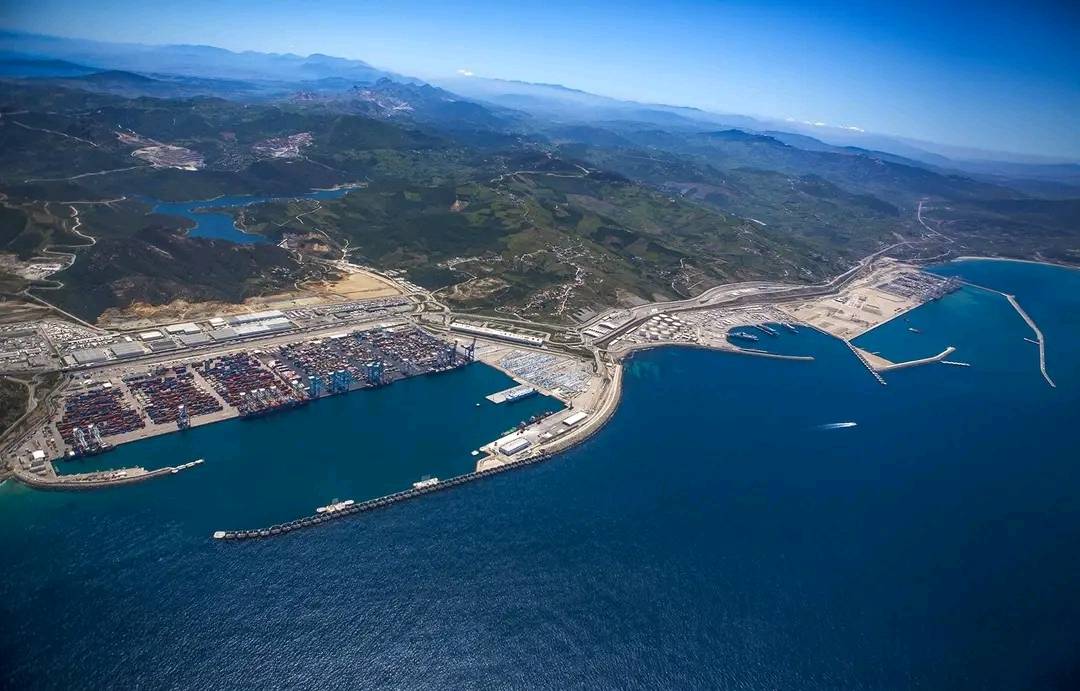
Across the continent, a new generation of ports is rising with remarkable speed and ambition. Morocco’s Tanger Med has emerged as a global heavyweight, handling over nine million containers annually and positioning itself as a transshipment hub linking Europe, Africa, and the Americas. In West Africa, Nigeria’s Lekki Deep Sea Port and Ghana’s expanded Tema port signal a regional race to capture maritime traffic. Meanwhile, in Southern Africa, Durban continues to quietly underpin regional trade, moving millions of containers and acting as a gateway for landlocked economies.
Yet beneath this expansion lies a more complex and uncomfortable truth. Africa’s port boom is not merely about infrastructure—it is about influence. Global actors are not investing out of charity or even simple commercial logic. They are investing because ports are strategic assets. Ports determine who controls trade routes, who captures logistics revenue, who owns critical data, and who exercises leverage over national economies.
China’s footprint in Africa’s port sector is perhaps the most visible manifestation of this dynamic. It is involved in more than 60 port projects across the continent, with financing, construction, or operational roles in roughly one-third of Africa’s maritime trade hubs. These are not short-term engagements. Port concessions can run for decades—often between 25 and 99 years—locking in influence that extends far beyond any single political cycle.
But this is not a story of China versus the West. European, Gulf, and other global players are equally active, competing for stakes in terminals, logistics corridors, and special economic zones. The real issue is not who invests, but on what terms. Too often, port agreements are negotiated with limited transparency, bundled with sovereign debt, and structured in ways that obscure revenue-sharing arrangements and data ownership. The result is a creeping erosion of economic sovereignty—subtle, legal, and long-term.
Africa’s challenge, therefore, is not to reject foreign investment. That would be both unrealistic and counterproductive. The continent urgently needs modern ports to support industrialization, facilitate intra-African trade under the African Continental Free Trade Area (AfCFTA), and reduce the crippling cost of logistics. The challenge is to ensure that these investments align with national and regional interests, rather than external strategic priorities.
This requires a fundamental shift in how African governments approach port development.
First, there must be a move from transactional thinking to strategic planning. Ports should not be treated as isolated projects but as components of integrated logistics ecosystems—linked to railways, inland waterways, industrial zones, and digital trade platforms. Without these connections, even the most advanced port risks becoming an expensive bottleneck rather than a catalyst for growth.
Second, transparency must become non-negotiable. Concession agreements, financing terms, and operational frameworks should be subject to public scrutiny and parliamentary oversight. The long-term nature of port deals means that today’s decisions will shape fiscal and economic outcomes for generations. Secrecy is not just a governance issue; it is a strategic vulnerability.
Third, Africa must invest in its own institutional and technical capacity. Too often, negotiations with global port operators are asymmetrical, with African authorities lacking the expertise to fully assess complex financial and operational models. Building this capacity—through regional cooperation, knowledge-sharing, and partnerships with institutions like the African Development Bank—is essential to leveling the playing field.
Finally, there is a need to rethink ownership and participation. African pension funds, sovereign wealth funds, and private investors should play a larger role in port development. Retaining equity stakes in strategic infrastructure is not merely a financial decision; it is a means of ensuring that the value generated by African trade remains within African economies.
The stakes could not be higher. Ports are no longer just gateways; they are levers of power in a fragmented global economy. Control over logistics chains translates into control over value chains, and ultimately into geopolitical influence. As supply chains become more regionalized and contested, Africa’s ports will only grow in importance.
The question, then, is not whether Africa’s ports will expand—they already are. The question is who will control them, who will benefit from them, and whether they will serve as engines of African prosperity or conduits of external dependency.
In this unfolding contest, Africa still has agency. The continent is not a passive arena but an active participant. By asserting strategic clarity, strengthening governance, and prioritizing long-term national interests, African nations can transform their ports from battlegrounds of influence into foundations of sovereignty and growth.
The map is being redrawn. The only question is whether Africa will draw it for itself.