


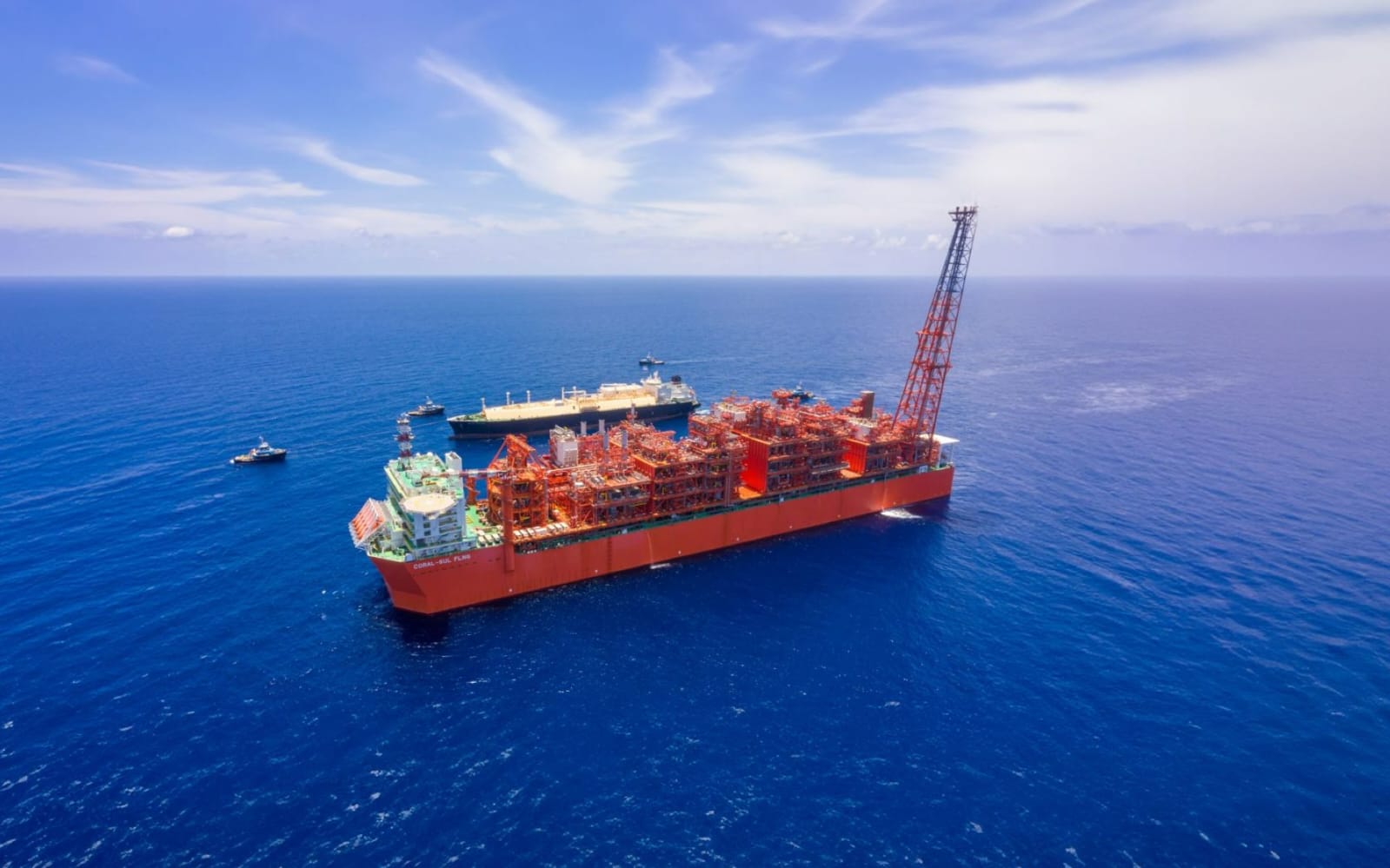
Few places in the world embody the promise and peril of natural resource wealth as starkly as Cabo Delgado Province. Beneath its offshore waters in the Rovuma Basin lies one of the largest untapped natural gas accumulations on Earth—an estimated 100 to 150 trillion cubic feet of recoverable reserves. This immense endowment has elevated Mozambique from relative obscurity to the front lines of global energy geopolitics. Yet, paradoxically, it has also deepened fragility, conflict, and uncertainty in the very province expected to power the country’s economic future.
The scale of Mozambique’s offshore gas is difficult to overstate. Discoveries made over the past decade, particularly in Areas 1 and 4 of the Rovuma Basin, have positioned the country as a potential top-tier global LNG exporter. Some estimates place total reserves at over 100 trillion cubic feet—enough to sustain decades of production and reshape global supply dynamics. The individual fields are staggering in size: Prosperidade, Golfinho, Atum, Coral—each holding trillions of cubic feet, together forming a hydrocarbon system that rivals the world’s most prolific gas provinces.
This resource base has attracted some of the biggest names in global energy. TotalEnergies leads the Mozambique LNG project in Area 1, while Eni and ExxonMobil anchor developments in Area 4. These are not speculative ventures; they are multi-billion-dollar investments designed to feed growing global demand for liquefied natural gas. The Mozambique LNG project alone, valued at around $20 billion, is one of the largest private investments ever undertaken in Africa and is expected to produce over 13 million tonnes of LNG annually once operational.
Yet, for all its geological certainty, Mozambique’s gas story is defined by disruption. In 2021, escalating insurgent violence in Cabo Delgado forced the suspension of the flagship LNG project. What followed was a prolonged period of uncertainty, as security concerns, financing challenges, and geopolitical pressures stalled progress. Only in 2026 did construction meaningfully resume, after years of delay and billions in cost overruns.
This is the central contradiction: Mozambique possesses one of the world’s most valuable energy reserves, but the very region that hosts it remains economically marginalized and politically volatile. Cabo Delgado is not just resource-rich; it is also one of the poorest provinces in the country. Despite the presence of trillion-cubic-foot gas fields just offshore, local communities have seen little tangible improvement in their living conditions. The widening gap between expectation and reality has fueled grievances that, in part, have contributed to instability.
It is tempting to view the insurgency in Cabo Delgado purely through a security lens, but that would be a mistake. The violence is deeply intertwined with questions of resource governance, inclusion, and economic justice. When vast wealth is discovered in a long-neglected region, the stakes become existential. Who benefits? Who is displaced? Who decides? These are not abstract questions—they are lived realities for communities near Palma, Mocímboa da Praia, and other parts of northern Mozambique.
The gas projects themselves have attempted to address these concerns through local content initiatives and community engagement programs. Contracts worth billions have been earmarked for Mozambican firms, and efforts have been made to build local capacity and integrate domestic businesses into the supply chain. But these initiatives, while commendable, remain insufficient when measured against the scale of expectations. For many residents, the gas boom still feels distant, almost abstract—an offshore phenomenon with limited onshore impact.
Meanwhile, the global context continues to evolve. LNG is increasingly seen as a transitional fuel in the shift toward cleaner energy systems. This places Mozambique in a unique position: its gas resources are both an opportunity and a time-bound asset. The window to monetize these reserves may not remain open indefinitely. Delays caused by insecurity or governance challenges risk eroding the country’s competitive advantage, especially as other producers ramp up capacity.
The recent restart of the Mozambique LNG project signals renewed momentum, but it also underscores the fragility of progress. Project costs have risen significantly, timelines have been pushed back, and financing structures have been tested. Some international partners have withdrawn support, citing both security risks and shifting climate policies. Yet, despite these challenges, the project persists—driven by the sheer scale of the resource and its strategic importance to global energy markets.
For Mozambique, the stakes could not be higher. Revenues from LNG exports are projected to generate tens of billions of dollars over the coming decades, potentially transforming the national economy. But history offers a cautionary tale. Resource wealth, if poorly managed, can entrench inequality, fuel corruption, and exacerbate conflict—a phenomenon often known as the “resource curse.” Cabo Delgado stands at the edge of that precipice.
What is required now is not merely the extraction of gas, but the construction of a governance framework capable of translating resource wealth into broad-based development. This means transparent revenue management, equitable distribution of benefits, and meaningful inclusion of local communities in decision-making. It also means addressing the underlying drivers of instability—poverty, marginalization, and lack of opportunity.
Security, while essential, cannot be the sole response. The deployment of regional forces has helped stabilize parts of Cabo Delgado, creating the conditions for project resumption. But lasting peace will depend on more than military presence. It will require rebuilding trust between the state, investors, and local populations—an effort that must go hand in hand with economic development.
There is also a broader lesson for Africa. Mozambique’s experience highlights both the potential and the pitfalls of large-scale resource discoveries. The continent is rich in natural resources, but the challenge has always been converting that wealth into sustainable development. Cabo Delgado is not an isolated case; it is part of a wider narrative about how Africa engages with its resource endowment in an era of global energy transition.
In the end, Mozambique’s offshore gas is neither a blessing nor a curse—it is a test. A test of governance, resilience, and vision. The reserves beneath the waters of Cabo Delgado are vast, but finite. What will endure is the legacy of how they are managed.
If Mozambique succeeds, Cabo Delgado could become a model for resource-driven transformation—a region where natural wealth is harnessed to build infrastructure, create jobs, and improve lives. If it fails, it risks becoming another cautionary tale of squandered opportunity.
For now, the gas remains both a promise and a question. And the answer will not be found offshore, but on land—among the people of Cabo Delgado, whose future is inextricably tied to the wealth beneath their shores.