


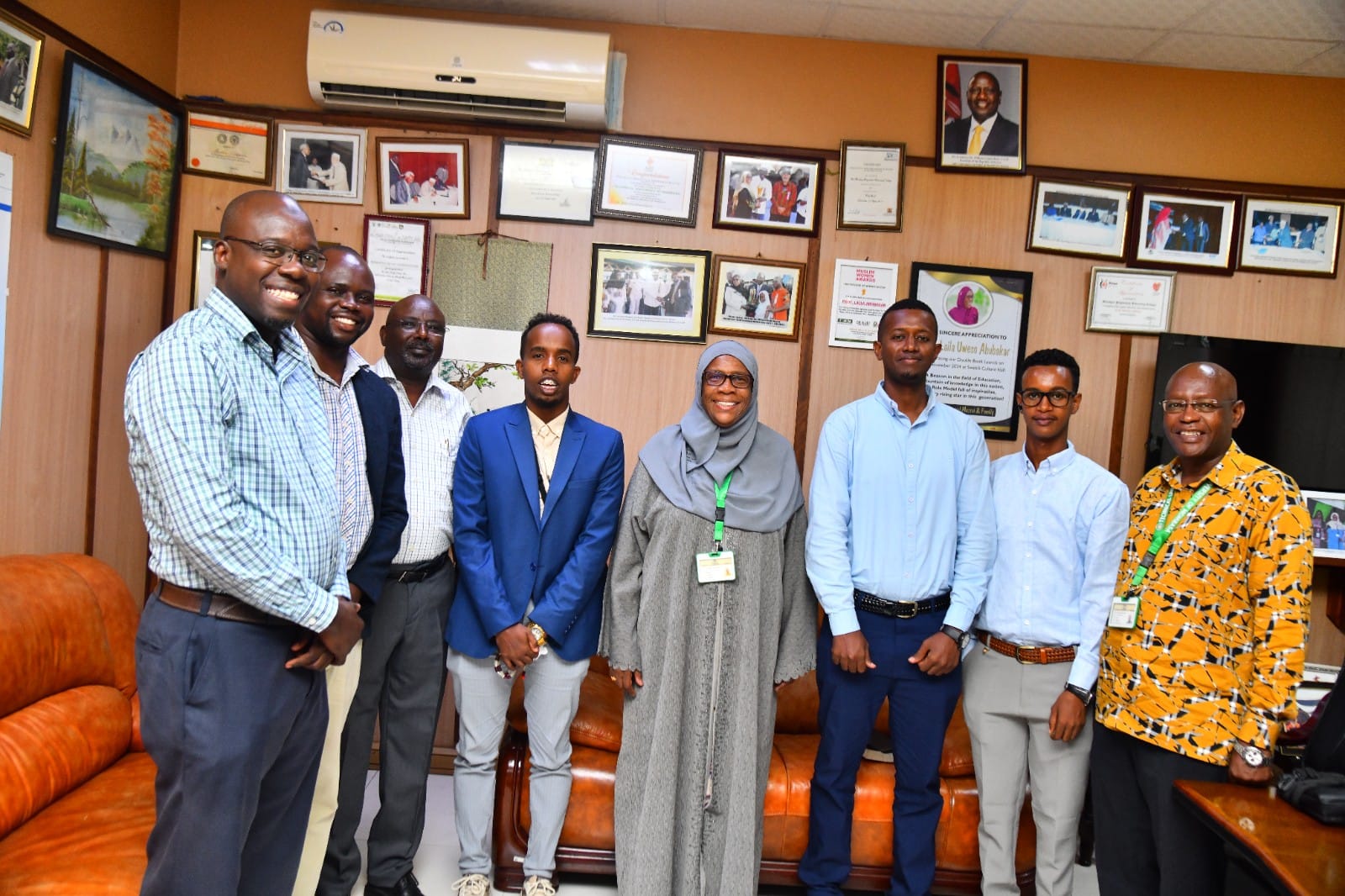
The admission of the first cohort of marine pilots from Mogadishu into the Technical University of Mombasa’s Institute of Maritime and Seafaring Studies marks a major routine academic milestone in terms of Kenya’s training capacity.
It is a strategic signal—one that marks Kenya’s quiet but consequential repositioning as a regional hub for maritime competence, safety governance, and professional standardization.
In an era when the Indian Ocean’s shipping lanes are increasingly congested, contested, and commercially vital, the question is no longer whether East Africa needs advanced maritime training capacity, but whether it can deliver it to globally acceptable standards. This initiative suggests the answer is beginning to tilt in the affirmative.
Pilotage is among the most sensitive and technically demanding disciplines in the maritime sector. A marine pilot is not merely a navigator but the final arbiter of safety when large vessels enter constrained waters—often under conditions of uncertainty, environmental pressure, and commercial urgency.
Ports across the region, from Mombasa to Mogadishu, are gateways to national economies, yet they remain exposed to navigational risks stemming from human error, inadequate training, and evolving vessel technologies. Strengthening pilot competence is therefore not a peripheral concern; it is central to maritime security, environmental protection, and economic continuity.
By aligning its Marine Pilot Training Program with the competency-based framework of the International Maritime Organization and the STCW Convention, the Technical University of Mombasa is stepping into a space long dominated by institutions outside Africa.
For decades, African maritime professionals have often had to seek specialized training abroad, incurring significant costs and facing structural barriers to access. The emergence of a credible, standards-compliant training ecosystem within the region begins to reverse this dependency. It localizes expertise while maintaining global benchmarks—a balance both necessary and overdue.
Yet the significance of this development extends beyond Kenya’s institutional ambitions. The inclusion of Somali marine pilots reflects a deeper layer of regional maritime diplomacy.
Somalia’s maritime domain has for years been shaped by instability, underdeveloped infrastructure, and the lingering shadows of piracy and illicit activity. Building a cadre of well-trained pilots is an essential step in restoring order, confidence, and legitimacy within its port systems. It also acknowledges that maritime safety is inherently transnational: a navigational incident in one port can reverberate across supply chains, insurance markets, and geopolitical relationships.
Here, the Technical University of Mombasa’s initiative acquires broader strategic weight. It is not merely training individuals; it is contributing to the stabilization and professionalization of a neighboring maritime system.
Such efforts align with the broader objectives of the blue economy, where collaboration, sustainability, and shared standards are indispensable. In this context, the university functions not just as an academic institution but as an instrument of regional capacity-building and soft power.
The emphasis on competency-based education, simulator training, and real-world application is particularly noteworthy. Maritime training cannot afford to be purely theoretical. The complexities of modern shipping—from ultra-large container vessels to hazardous cargo handling—demand practical, scenario-driven learning.
The integration of bridge resource management, risk mitigation, and confined water navigation into the curriculum reflects a clear understanding of contemporary maritime challenges. It also underscores the importance of human factors in maritime safety, an area that continues to account for a significant proportion of incidents worldwide.
However, while the program’s design and intent are commendable, its long-term success will depend on sustained investment, rigorous oversight, and continuous adaptation. Maritime standards are not static. The IMO frequently updates its frameworks in response to technological advances, environmental concerns, and emerging risks.
Training institutions must therefore remain agile, ensuring that curricula, equipment, and instructional methods evolve in tandem with global developments. This requires not only financial resources but also institutional discipline and regulatory alignment.
Quality assurance, as highlighted by the university’s leadership, will be the litmus test. The credibility of any maritime training program rests on its ability to produce professionals who can perform under pressure, adhere to international protocols, and command the confidence of shipmasters and port authorities alike.
This is especially critical for pilotage, where errors can lead to catastrophic consequences—groundings, collisions, and environmental disasters. Maintaining high standards is not optional; it is existential.
There is also a broader policy dimension that cannot be ignored. Kenya’s aspiration to become a leading maritime nation must be matched by coherent national strategies integrating education, port development, regulatory frameworks, and international partnerships. The Technical University of Mombasa’s efforts should be seen as part of a larger ecosystem—one that includes port authorities, maritime regulators, shipping companies, and regional bodies. Coordination among these actors is essential to ensure that training outcomes translate into operational improvements on the ground.
Moreover, the initiative raises important questions about the future of maritime labor in East Africa. As global shipping becomes more technologically advanced, the demand for highly skilled professionals will only increase.
Automation, digital navigation systems, and environmental compliance measures are reshaping the industry. Training programs must anticipate these trends, equipping trainees with not only current competencies but also the capacity to adapt to future changes. This is where academic rigor and professional training must intersect, creating a workforce that is both technically proficient and intellectually resilient.
The involvement of experienced master mariners and subject-matter experts in delivering the program is a positive indicator. Operational experience cannot be easily replicated in classrooms; it is transmitted through mentorship, practical exposure, and the sharing of lived realities at sea and in ports.
Ensuring that trainees benefit from this depth of knowledge will be crucial in bridging the gap between theory and practice.
Ultimately, the significance of this program lies in its potential to redefine how maritime capacity is built in the region. It challenges the notion that excellence must be imported and demonstrates that, with the right frameworks and commitment, it can be cultivated locally.
It also reinforces the idea that maritime safety is a collective responsibility—one that transcends borders and demands collaboration.
As the first cohort of Somali marine pilots undergoes training in Mombasa, they carry with them more than individual aspirations. They represent a broader shift toward regional integration, professionalization, and shared responsibility in the maritime domain.
Their success will reflect not only the quality of the training they receive but also the strength of the partnerships that made it possible.
In the final analysis, the Technical University of Mombasa’s initiative is a step in the right direction—but only the beginning. Sustaining and expanding such efforts will require vision, discipline, and a willingness to confront the challenges that accompany growth.
If managed well, it could position Kenya—and by extension East Africa—as a credible player in the global maritime training landscape. If neglected, it risks becoming another well-intentioned but underutilized program.
The stakes are clear. Maritime safety, economic resilience, and regional stability all hinge, in part, on the competence of those who guide ships through our waters. Investing in their training is not just an educational endeavor; it is a strategic imperative.