


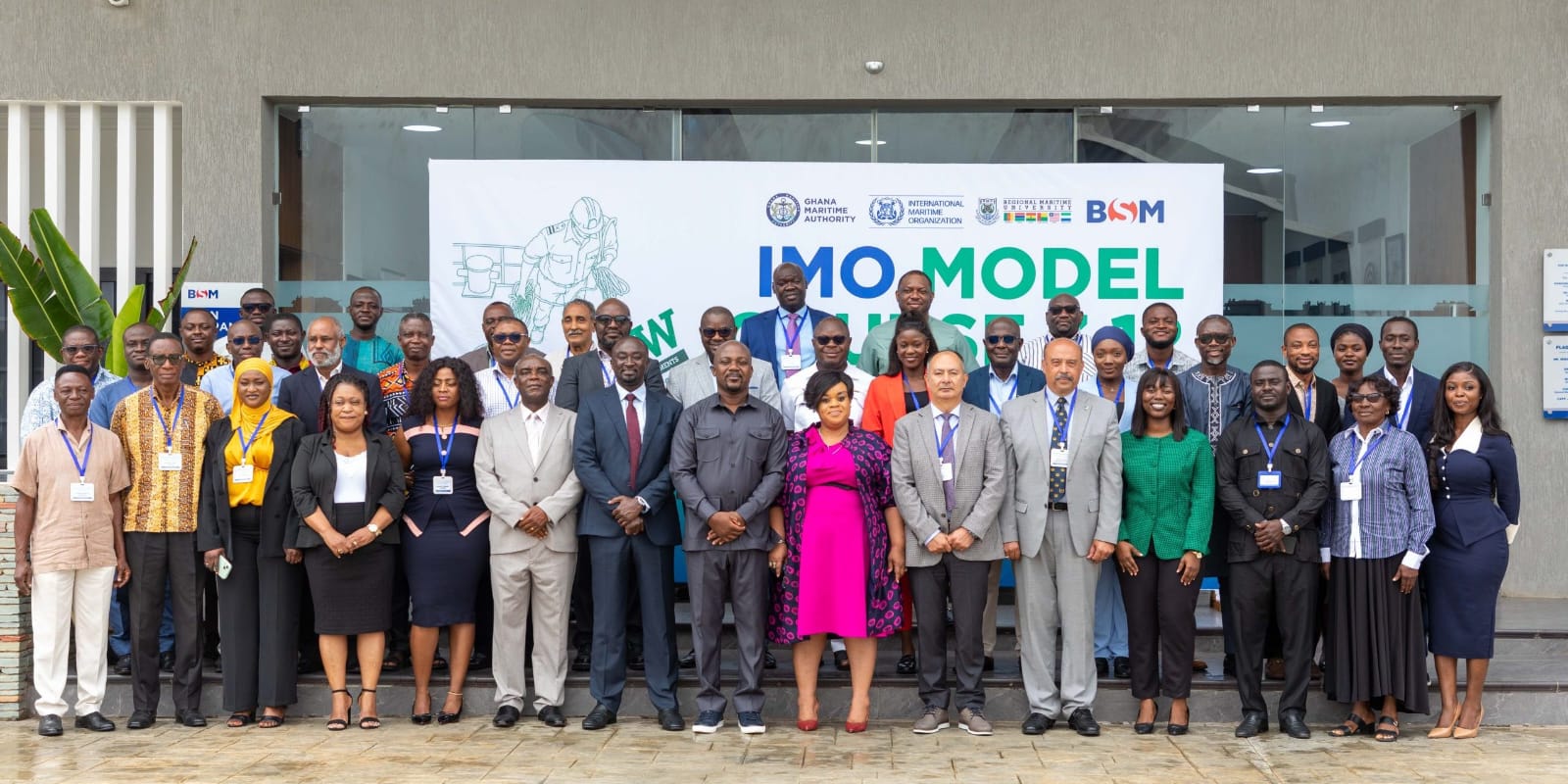
In the high-stakes world of global shipping, a Certificate of Competency is far more than a piece of paper. It is a solemn international pledge that the holder can safely navigate vessels, protect lives, and safeguard the marine environment. When that pledge loses credibility in one administration, distrust spreads across an entire region. That is why the regional workshop that opened in Accra last week—organized by the International Maritime Organization in partnership with the Ghana Maritime Authority—deserves far more attention than a routine training announcement.
The five-day program, based on IMO Model Course 3.12 on the Assessment, Examination and Certification of Seafarers, brought together 24 maritime professionals from Ghana, Liberia, Cabo Verde, Nigeria, The Gambia and Sierra Leone. Its purpose was straightforward yet urgent: to equip sub-regional examiners with the rigorous tools needed to test and certify the next generation of seafarers to the highest international standards.
The numbers tell a sobering story. Of the Ghana Maritime Authority’s 69 seafarer assessors, only four currently hold this mandatory prerequisite qualification. Closing that competency gap is not bureaucratic box-ticking. It is the difference between certificates that “hold water internationally,” in the words of GMA Deputy Director General Mubarick Masawudu, and credentials that invite scrutiny and doubt. In an industry where mutual recognition of qualifications underpins the free movement of seafarers, regional credibility is collective currency.
Ghana’s proactive stance is particularly noteworthy. Rather than waiting for external auditors to expose weaknesses, the Authority is strengthening its assessment frameworks well ahead of the mandatory IMO Member State Audit Scheme in 2027. This is the posture of a responsible maritime administration that understands the stakes. Certificates of Competency and Certificates of Proficiency issued by Ghana must withstand global scrutiny. Anything less risks not only Ghana’s reputation but the standing of West African seafarers in the international labour market.
The broader context makes this work even more consequential. Shipping is undergoing rapid transformation driven by automation, digitalization, alternative fuels and the rise of the blue economy. The IMO’s recent adoption of the Maritime Autonomous Surface Ships Code signals just how quickly the industry is evolving. Future-ready seafarers will need competencies that range from traditional seamanship to cyber awareness and the safe handling of new energy sources. High-quality assessment systems are the only reliable mechanism for ensuring that training keeps pace.
IMO Technical Officer Milton Baron correctly frames the link between robust examination processes and operational safety at sea. Model Course 3.12 gives participants practical tools to implement STCW provisions fairly and accurately, organize standardized examinations, and manage the full certification lifecycle. With a comprehensive review of the STCW Convention underway and new amendments expected to enter into force around 2030, member states that invest now in examiner capacity will be better positioned to close existing gaps and meet rising expectations for safety, productivity and technological competence.
Regional Maritime University Acting Vice Chancellor Jethro W. Brooks Jr. and IMO Regional Representative Capt. Dallas Laryea both underscored a fundamental truth: ongoing professional development for those who assess competence is no longer optional. Seafarer competence remains the cornerstone of maritime safety, security and environmental protection. When policies and technologies shift, the systems that verify readiness must shift with them.
Critics might dismiss such workshops as yet another conference. That would be a mistake. The real work of maritime administration happens in the quiet discipline of consistent, integrity-driven assessment. When examiners are well-trained, standards become more uniform across borders. Inconsistencies that currently undermine mutual trust can be identified and resolved. Local expertise is elevated to meet global benchmarks rather than diluted by them.
Africa’s growing role in ocean transport and the blue economy will only amplify these demands. Economic potential is meaningless without operational reliability. As Masawudu noted, every operational rope must be tightly secured. That begins with assessors who can honestly evaluate current practices, adapt to industry evolution, and ensure that African seafarers are thoroughly prepared to meet—and exceed—international expectations.
Last week’s Accra workshop was a concrete step in the right direction. It addressed a measurable competency shortfall, strengthened regional capacity, and demonstrated foresight ahead of the 2027 audit. More of this practical, standards-focused collaboration is needed across the continent. The global shipping industry will not lower its bar for African certificates. The responsibility, therefore, falls on maritime administrations to raise their own.
Credible certification is not a peripheral concern. It is foundational to safety at sea, environmental protection, and the long-term competitiveness of African seafarers. By investing in the people who examine competence, Ghana and its West African partners are investing in the credibility of an entire region. That is an investment the industry—and the oceans—cannot afford to neglect.