


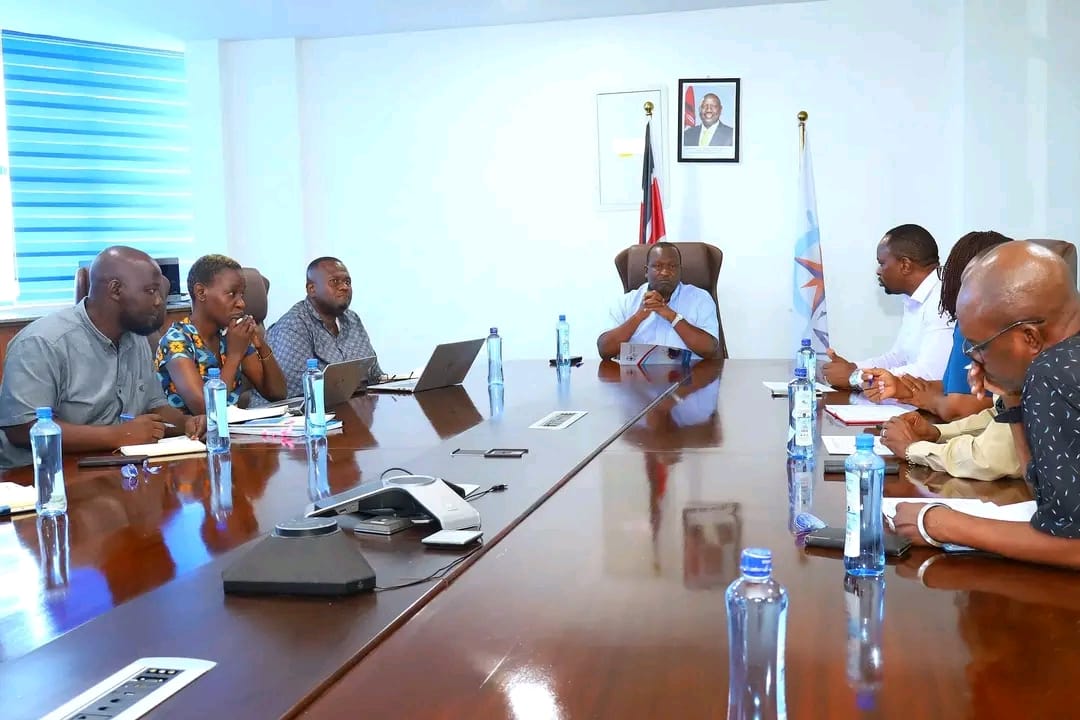
Kenya’s maritime and logistics sector stands at a pivotal moment. The recent courtesy visit and strategic engagement between the Kenya Maritime Authority (KMA) and the Kenya International Freight and Warehousing Association (KIFWA) is more than a routine stakeholder meeting. Received by KMA Director General CPA Omae Nyarandi, Assistant Director Maritime Trade and Development Ahmed Juma, and Assistant Director Licensing and Seaborne Trade Ms Ellah Kiyangu, the KIFWA delegation focused on operational bottlenecks, measures to reduce logistics costs, and enhancing efficiency in clearing and forwarding.
This dialogue deserves close attention—and sustained follow-through—because the issues on the table determine whether Kenya consolidates its position as East Africa’s premier trade gateway or continues to bleed competitiveness through high costs and friction.
The Sharp End of Cargo Movement
KIFWA represents the clearing, forwarding, and warehousing firms that sit at the sharp end of cargo movement. These agents facilitate the bulk of customs processes and contribute substantially to revenue collection. Their daily reality includes documentation hurdles, port congestion, container handling delays, valuation disputes, and the cumulative layering of fees that inflate the landed cost of goods.
KMA, as the maritime regulator, oversees the broader framework of safety, licensing, seaborne trade, and sector development. When the regulator and the industry association sit down to address bottlenecks, the conversation goes to the heart of Kenya’s trade performance.
The Cost Burden
Logistics costs in Africa remain stubbornly high relative to more efficient regions. In East Africa, transport and logistics barriers have been estimated to impose costs equivalent to a meaningful share of GDP, with border delays and related frictions exacting a particular toll.
For Kenyan exporters and importers—especially SMEs seeking opportunities under the African Continental Free Trade Area (AfCFTA)—these costs often erase the benefits of preferential market access. Shipping a container along key corridors can run into thousands of dollars, with transit times stretched by congestion, incomplete documentation alignment, scanner downtime, and procedural uncertainty. Recent pressures, including empty-container backlogs at Mombasa, stricter import documentation rules, and valuation adjustments, have only sharpened the pain for forwarders and their clients. Idle trucks, demurrage charges, and prolonged clearance times translate directly into higher prices for consumers and thinner margins for producers.
Why This Engagement Matters
The focus of the KMA-KIFWA talks on reducing these costs and improving efficiency in clearing and forwarding is therefore welcome and overdue. Efficiency gains here would ripple outward. Faster, more predictable clearance reduces inventory holding costs, improves vessel turnaround, strengthens the case for using the Standard Gauge Railway and inland container depots, and enhances Kenya’s attractiveness as a transit hub for Uganda, Rwanda, South Sudan, eastern DRC, and beyond. It also supports the Bottom-Up Economic Transformation Agenda by making it easier for smaller players to participate in formal trade rather than being squeezed by complexity and expense.
The Risk of Performative Engagement
Yet courtesy visits and strategic engagements risk becoming performative if they do not produce measurable outcomes. The sector already has a track record of stakeholder forums, strategic plans, and digital ambitions. KIFWA’s own Strategic Plan 2025–2030 emphasizes a digital-centralized clearing and forwarding management system, aligning with broader government digitalization efforts. KMA has pursued partnerships on training, seafarer opportunities, and regional cooperation.
The missing link is disciplined implementation: clear timelines, joint working groups with defined deliverables, shared data on clearance times and cost components, and public reporting on progress.
Four Practical Priorities
Several practical priorities stand out.
First, tackle documentation and process friction head-on. Incomplete or mismatched paperwork remains a leading cause of delay. Greater interoperability between systems used by KRA, KPA, KMA, and private agents—building on the National Single Window—can shrink the administrative burden.
Second, address physical and operational bottlenecks at the port and hinterland, including empty-container management and gate processes.
Third, ensure that regulatory changes, whether on valuation benchmarks or new import requirements, are introduced with adequate transition periods, clear guidance, and genuine consultation so that legitimate trade is facilitated rather than disrupted.
Fourth, strengthen local capacity and fair competition. Concerns about the dominance of foreign firms in clearing and forwarding, and the collapse of many smaller local operators, point to the need for policies that support Kenyan enterprises without compromising efficiency or compliance.
From Ceremony to Standing Mechanism
CPA Omae Nyarandi brings substantial experience from the Northern Corridor and port operations to the DG role. That background positions KMA to understand the operational realities that KIFWA members face daily. The presence of the Assistant Directors responsible for maritime trade development and licensing underscores that the discussion was intended to be substantive rather than ceremonial.
The test will be whether the engagement evolves into a standing mechanism for joint problem-solving rather than a one-off photo opportunity.
Soft Infrastructure Matters
Kenya’s ambition to be the gateway of choice for continental trade cannot rest on infrastructure alone. World-class ports and corridors lose their advantage if the soft infrastructure of processes, regulation, and industry collaboration remains inefficient.
Lower logistics costs would boost export competitiveness, ease the cost of living through cheaper imports, create and retain jobs in the freight and warehousing ecosystem, and reinforce the Blue Economy agenda. Conversely, continued high friction will leave Kenyan goods less competitive under AfCFTA and limit the returns on heavy public investment in maritime and transport infrastructure.
The Discipline to Deliver
The KMA-KIFWA meeting is a positive signal of recognition that the regulator and the industry must work in tandem. It should now be followed by concrete action plans, pilot reforms in high-impact areas, and transparent monitoring of clearance times, cost indicators, and stakeholder satisfaction.
Kenya has the geographic position, the institutional framework, and the private-sector capability to run a more efficient maritime logistics system. What it needs is the discipline to convert dialogue into reduced costs and smoother flows. Anything less would be a missed opportunity the economy can ill afford.
Andrew Mwangura is a maritime analyst based in Mombasa, Kenya.