


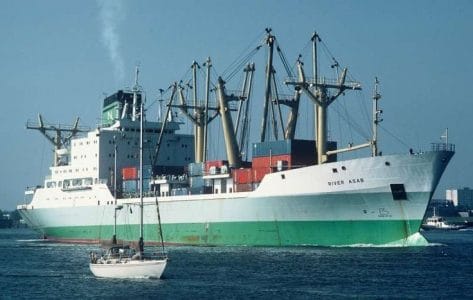
Douglas Oliver’s recent LinkedIn post cuts to the bone of a long-running national failure. Nigeria once trained its own ocean-going seafarers on its own ships. Corruption and mismanagement killed the Nigerian National Shipping Line (NNSL), and the training pipeline collapsed with it. Restricted certificates replaced globally recognized ones. The Cabotage Act of 2003 was meant to force the market to hire Nigerians. Instead, it exposed a cruel mismatch: a law demanding Nigerian crews for a workforce that largely lacked the credentials and sea-time to meet the demand. Three decades later, the country is still struggling to close the gap it created.
The Original System and Its Destruction
Before the mid-1990s, NNSL served as both a national carrier and a practical training ground. Cadets gained sea-time on Nigerian-flagged ocean-going vessels. The cycle sustained itself: ships employed trained Nigerians, who in turn trained the next cohort. By the late 1980s, that system was already rotting. Vessels were arrested in European ports for unpaid debts. Maintenance lagged. Government interference, political patronage, and outright corruption drained the company. A fleet that once numbered in the low twenties dwindled. In 1995, the government liquidated NNSL. The ships were sold. The workforce was largely discarded. Nigeria’s primary mechanism for producing internationally competitive seafarers disappeared overnight.
The human cost endures. Aged NNSL retirees still campaign for unpaid pensions more than thirty years later. But the institutional cost was larger: the loss of a domestic platform for continuous, practical training under real commercial conditions.
Restricted Papers and the Sovereignty Gap
Without active ocean-going tonnage and the auditing regime that international recognition requires, Nigeria began issuing restricted Near Coastal Voyage (NCV) Certificates of Competency. These papers confine holders largely to domestic waters. They are not freely accepted on the foreign-flagged tankers and bulk carriers that move Nigerian crude and imports. The result, as Oliver notes, is a sovereignty gap dressed up as a compliance issue. Nigeria exports oil and imports goods on vessels that systematically prefer foreign crews because Nigerian documentation does not meet global standards.
Cabotage was supposed to reverse this. On paper, it requires Nigerian-owned, Nigerian-crewed, and preferably Nigerian-built vessels for coastal trade. In practice, chronic shortages of qualified officers and suitable tonnage forced repeated waivers. Foreign vessels and foreign officers continued to dominate the very trades the law was written to reserve.
The Training Response and Its Limits
Successive governments have tried to rebuild capacity. The Nigerian Seafarers Development Programme (NSDP), run by NIMASA, has sent thousands of cadets overseas for academic training. The Maritime Academy of Nigeria (MAN) Oron and the newer Nigerian Maritime University (NMU) Okerenkoko produce graduates. Recent official figures claim thousands of seafarers have been placed for sea-time and hundreds have obtained Certificates of Competency. NLNG’s shipping arm and some private operators have begun offering berths.
Yet the outcomes remain thin relative to both need and expenditure. Large numbers of trained cadets still struggle to secure the sea-time required for unlimited certificates. Employment on international merchant ships remains disproportionately low. Coordination problems persist: accreditation and eligibility hurdles between institutions and the regulator leave some graduates professionally stranded. Sea-time berths are scarce because Nigeria still lacks a substantial national or indigenous commercial fleet that can absorb and train large cohorts. Training without sufficient ships is classroom education without the apprenticeship that makes a seafarer employable worldwide.
Policy Before Capacity
Oliver’s core insight is correct and still under-appreciated. Nigeria legislated a protectionist maritime policy (Cabotage) before it had rebuilt the manpower and the fleet to support it. The law created demand that the domestic supply side could not meet. Waivers became the safety valve. Capital flight to foreign operators continued. The promised jobs, indigenous tonnage growth, and shipbuilding renaissance arrived only partially and slowly. Shipbuilding and repair capacity remains limited. Financing for new tonnage through the Cabotage Vessel Financing Fund has been delayed and contested. Enforcement has been uneven.
This is not an argument against Cabotage in principle. Preferential access for nationals in coastal trades is common internationally. The failure lies in sequencing and in the absence of a coherent industrial strategy that treated fleet development, training berths, certification standards, and enforcement as a single system. Training programmes that produce graduates who then wait years for sea-time, or who receive restricted papers, merely enlarge the pool of under-employed certificate holders.
What a Serious Response Requires
Closing the gap demands more than another round of cadet sponsorships. It requires the deliberate creation of training platforms—whether through revitalized indigenous shipping, structured partnerships that guarantee sea-time on commercial vessels, or a properly governed national training fleet. Certification must be aligned with STCW standards so that Nigerian papers are accepted without restriction. Accreditation processes between universities, academies, and the regulator need to be transparent and timely. Industry, not only government, must own part of the training obligation; operators who benefit from Nigerian cargo should be required or incentivized to take on cadets. Welfare, career progression, and protection against exploitation matter if the profession is to attract and retain talent rather than serve as a temporary escape from unemployment.
Most of all, policy must stop pretending that legislation alone creates capacity. NNSL’s collapse was a failure of governance and commercial discipline. The subsequent three decades have been a failure of strategic reconstruction. Oliver’s post is a useful reminder that the shortage of Nigerian ocean-going seafarers is not an act of nature. It is the predictable result of destroying the original training system and then writing laws that assumed the system still existed.
Nigeria moves enormous volumes of oil and general cargo by sea. It still struggles to place its own citizens on the ships that carry that trade. Until the country rebuilds the practical pipeline from classroom to unlimited certificate to employment, Cabotage will remain more aspiration than achievement, and the next generation of seafarers will continue to pay the price for decisions made thirty years ago.