


Kenya and Uganda are quietly rewriting the region’s energy map—not with the high-drama crude pipelines that dominated headlines a decade ago, but with a more pragmatic, downstream bet on refined products. The revival of the Eldoret–Kampala multi-product pipeline, paired with Uganda’s new 320-million-litre storage terminal in Mpigi and Kenya’s ambitious Lamu refinery plans, marks a strategic shift toward fuel security, cost reduction, and regional integration. It is less glamorous than crude export dreams—yet potentially far more consequential for pump prices and economic competitiveness across landlocked East Africa.
From Crude Ambition to Products Pragmatism
A decade ago, the dominant narrative was crude. Uganda and Kenya negotiated a joint pipeline from the Albertine Graben through northern Kenya to Lamu. That project collapsed under the weight of cost, security concerns, and political friction. Uganda chose the southern route through Tanzania—the East African Crude Oil Pipeline (EACOP) to Tanga—now nearing completion and poised to move the country’s first commercial oil. Kenya was left to pursue its own Lokichar–Lamu crude line, recently revived in discussions tied to Aliko Dangote’s proposed 700,000-barrel-per-day Lamu refinery.
The refined products pipeline now under discussion is different in kind and purpose. It would extend Kenya’s existing Mombasa–Nairobi–Eldoret system across the border at Malaba into Uganda, with Kenya building its segment and Uganda constructing the connecting line to Kampala—and potentially onward toward Kigali. This is not about exporting unrefined crude; it is about moving gasoline, diesel, jet fuel, and other white products more efficiently into markets that currently rely heavily on road tankers once the pipeline ends at Eldoret or Kisumu.
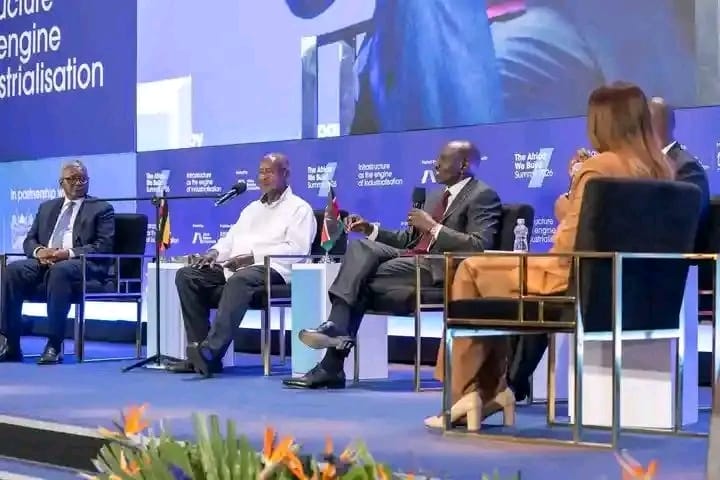
The timing is deliberate. In May 2024, Presidents William Ruto and Yoweri Museveni revived the long-dormant project. Technical and ministerial talks followed. By December 2024, partner states under the Northern Corridor framework reaffirmed their commitment. In September 2026, Museveni broke ground on the Mpigi storage terminal—explicitly designed to receive product from the extended pipeline and to serve as a strategic reserve and distribution hub. Uganda currently consumes roughly 240 million litres of petroleum products monthly; the new facility will more than double national storage capacity and provide approximately a month’s buffer against disruptions.
The Economic Logic: Lower Costs, Higher Resilience
Road transport of fuel is expensive, accident-prone, congested, and environmentally costly. Pipeline delivery cuts logistics expenses, reduces spill risk, and stabilizes supply. For Uganda—which still routes the vast majority of its refined imports through Mombasa and Kenya’s pipeline network before the final truck leg—the extension closes a costly gap. For Kenya, it helps retain transit volumes and competitive advantage at a moment when Uganda has begun independent importation arrangements (notably with Vitol) and Tanzania is developing alternative corridors via Tanga and Dar es Salaam.
If the Lamu refinery materializes at the scale proposed—700,000 bpd, far exceeding current East African refined demand of roughly 450,000 bpd—it could transform the economics further. Products from Lamu could flow inland through an expanded network, reducing reliance on Middle Eastern and other imported refined cargoes while lowering the landed cost of fuel across the region. Kenya’s parallel talks on a Turkana–Lamu crude pipeline aim to feed domestic—and potentially regional—crude into that facility. The products pipeline then becomes the downstream distribution artery.
This is classic midstream–downstream complementarity. Crude export pipelines generate foreign exchange and upstream rents; products pipelines and storage create domestic price stability, industrial competitiveness, and regional trade. The latter may matter more to ordinary households and manufacturers in the medium term.
Geopolitics and Execution Risks
The project is not without tension. East Africa’s energy landscape remains competitive. Tanzania and Uganda are advancing a Tanga energy hub concept involving storage, potential refining, and logistics, leveraging EACOP. Uganda is also pushing its own smaller Hoima refinery. Kenya is betting on Lamu as a regional refining center. Parallel corridors are rational hedging by landlocked states, but they risk fragmenting infrastructure investment and diluting scale economies.
Financing remains the central uncertainty. Earlier World Bank interest in the Eldoret–Kampala section did not fully materialize. Current talks involve state oil companies, potential private partners, and borrowing proposals—including Uganda’s linkage of pipeline extension and storage to larger facilities with Vitol. Full cost estimates and construction schedules for the cross-border products line have not been publicly locked down. Decades of stop-start history on this very project counsel caution: feasibility studies from the 1990s, tripartite agreements in 2013, World Bank pledges in 2014, and repeated political endorsements have not yet produced pipe in the ground beyond Eldoret.
Crude supply for Lamu is another open question. Kenya’s own production remains modest. Uganda’s volumes are committed to EACOP. South Sudan faces its own transit challenges. Relying heavily on seaborne crude imports would undercut the “regional processing” narrative and expose the refinery to the same global price volatility it is meant to buffer against.
Environmental and social safeguards will also matter. Pipeline construction across borders requires coordinated land acquisition, community engagement, and spill-prevention standards. Storage expansion in Mpigi must meet modern safety norms. These are manageable with proper design—but they are not automatic.
A Test of Regional Integration
At its best, the Eldoret–Kampala products pipeline—and the broader network it implies—embodies the Northern Corridor vision of shared infrastructure serving shared markets. It treats refined products as a regional public good rather than a zero-sum transit commodity. Combined with strategic storage, it strengthens resilience against port disruptions, geopolitical shocks, and seasonal logistics bottlenecks.
At its worst, it becomes another under-executed announcement in a region littered with ambitious energy memoranda that never reach financial close. The difference will turn on three practical tests: whether Kenya and Uganda can agree on and fund a clear, bankable project structure within the next 12–18 months; whether the Mpigi terminal and pipeline extension are synchronized rather than sequential afterthoughts; and whether the Lamu complex is sized and supplied realistically rather than as a prestige asset.
East Africa does not lack oil ambitions. It has lacked consistent delivery on the less glamorous but more immediately valuable infrastructure that moves refined products to the people and industries that need them. The current push on the Eldoret–Kampala line and Mpigi storage is a chance to correct that imbalance. If governments treat it as a serious commercial and technical project rather than a diplomatic talking point, the region will gain something more durable than another crude export route: cheaper, more reliable fuel. That outcome would be worth far more than the headlines of a decade ago.
Andrew Mwangura is a maritime and energy analyst based in Mombasa.