


The Indian Ocean in 2026 is witnessing an unsettling return. Somali piracy is no longer the threat that international naval power supposedly suppressed to near extinction—it is back, and it is more organized, more aggressive, and more unpredictable than at any time in the past decade.
According to International Maritime Organization data, at least 15 piracy incidents have been recorded so far in 2026—the highest number since 2013. More alarming still, six commercial vessels have been hijacked since April 21, with over 90 seafarers taken captive. In August alone, two ships fell into pirate hands within four days. Somali piracy has once again become one of the most pressing security threats to global shipping.
From Coastal Ambushes to High-Seas Hunting
The defining characteristic of this latest wave is the dramatic expansion of its operational radius and a clear escalation in tactics.
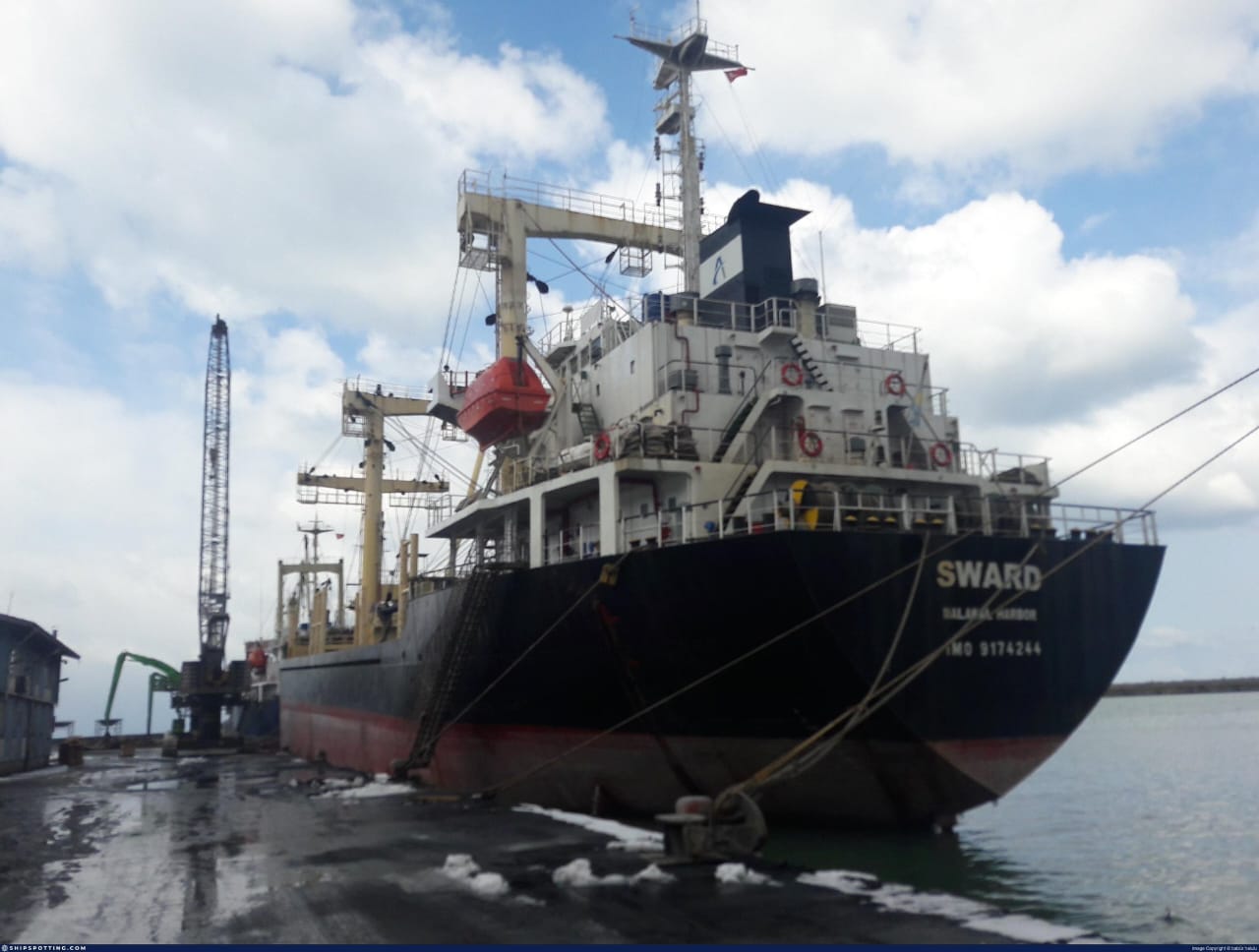
On April 21, the Palau-flagged tanker HONOUR 25 was hijacked by approximately 30 armed pirates off northern Somalia, with 17 crew members taken hostage. The vessel remains under pirate control. Five days later, the St. Kitts and Nevis-flagged cargo ship SWARD was seized en route to Mombasa, with 15 Syrian crew members taken hostage. On May 2, the Togo-flagged tanker EUREKA was hijacked while anchored off Qana port in Yemen’s Shabwa province. On July 17, the Tanzanian-flagged tanker ASANA was hijacked approximately 65 nautical miles southwest of Al Mukalla, Yemen, with at least 19 crew members from India, Syria, Yemen, and Egypt on board. On August 17, the Cameroon-flagged cargo vessel LUTUF was boarded near Mareeyo in Puntland’s Eyl district. Three days later, the Eritrean-flagged oil products tanker SIBU 1—previously sanctioned by the U.S. Treasury for its alleged role in Iran’s “shadow fleet”—was hijacked approximately 136 nautical miles east of Al Mukalla, Yemen, with 20 crew members taken captive.
These hijacking locations are no longer confined to the narrow waters off Somalia’s coast. They extend to the Yemeni coastline, deep into the Gulf of Aden, and further still along Indian Ocean shipping lanes. The seizure of SIBU 1 occurred more than 250 kilometers from the Somali coast, demonstrating that pirates now possess the capacity for sustained operations far from their bases.
The Return of the “Mother Ship” Tactic and the Unlikely Role of the Shadow Fleet
The most alarming tactical evolution is the pirates’ revival of the “mother ship” tactic—the hallmark of their peak years around 2011.
According to Puntland security officials speaking to Agence France-Presse, the August hijacking of LUTUF was launched using the SWARD—seized in April—as a mother ship. The pirates used the captured merchant vessel as a mobile base, launching attack skiffs from it to dramatically extend their hunting range. SWARD had previously been used to hijack two Iranian fishing vessels and demand ransoms.
More ironically still, the hijacked SIBU 1 was itself a sanctioned “shadow fleet” vessel—identified by the U.S. Treasury last year as allegedly involved in Iran’s sanctions-evasion oil network. A ghost ship seized by pirates constitutes the most absurd and dangerous narrative of the 2026 Indian Ocean: while the international community focuses on tracking sanctions evasion, pirates are targeting—or potentially utilizing—these vessels operating in regulatory blind spots.
The Ransom Economy and Its Dirty Entanglement with Geopolitics
The release of LUTUF exposed an unavoidable fracture in counter-piracy efforts.
Somalia’s Federal Ministry of Defense announced that the Turkish Navy and Somali National Armed Forces launched a joint operation on August 29, destroying four pirate skiffs, killing 14 pirates, and successfully freeing the vessel. However, Puntland authorities immediately issued a statement categorically denying this account, accusing the Somali Federal Government and the Turkish government of actually securing the vessel’s release by paying a ransom.
Puntland’s Ministry of Security claimed to have intercepted telephone communications between senior federal officials and the pirates, alleging these officials served as intermediaries for ransom payments. While Puntland provided no independent evidence, multiple local security sources told Agence France-Presse that LUTUF’s release involved a $2.5 million ransom. SWARD’s release on September 11 was similarly reported to have involved a ransom payment.
This controversy strikes at the heart of the counter-piracy dilemma: ransom payments secure hostages’ release in the short term but create stronger incentives for future kidnappings in the long term. Puntland’s warning—that paying ransoms “seriously threatens collective counter-piracy efforts and undermines respect for international humanitarian law and anti-piracy laws”—is not without merit. When a semi-autonomous regional government publicly accuses the federal government and its foreign allies of funding pirates, the foundations of the counter-piracy coalition are already shaking.
The Forgotten Root Causes: Fisheries Collapse and the Livelihood Vacuum
While discussing tactics and geopolitics, one must not overlook the socioeconomic soil in which piracy has revived.
Multiple Puntland elders and pirates’ family members candidly told Agence France-Presse that illegal foreign trawlers’ plundering of Somali fisheries has destroyed traditional livelihoods in coastal communities. One pirate’s uncle said: “I don’t support what my nephew is doing… but I can’t support it while seeing that his livelihood as a fisherman no longer exists, and it’s these difficult circumstances that pushed him to attack at sea.” Another pirate’s cousin said: “When a person’s only means of survival is threatened, some will do things that may be criminal.”
These voices do not defend piracy; they reveal a brutal reality: when the legal economy is destroyed, the illegal economy fills the vacuum. International naval power can intercept skiffs at sea but cannot rebuild fishing communities’ livelihoods ashore. As long as this fundamental problem remains unresolved, piracy’s “human resources” will not run dry.
The Limits of International Response and the Value of New Technological Tools
The current international counter-piracy architecture—centered on the EU’s Operation Atalanta, supplemented by national naval deployments and “Best Management Practices” for vessel self-defense—successfully suppressed Somali piracy after 2011. But the pirates of 2026 are no longer the ragtag bands of that era. More than 120 pirates are active along the Somali coast, capable of coordinating multi-target attacks.
The EU recently authorized Operation Atalanta to board and inspect vessels suspected of belonging to Russia’s “shadow fleet” to enforce sanctions. This expanded mandate reflects the multifaceted nature of Indian Ocean security challenges: piracy, sanctions evasion, illegal fishing, and arms smuggling are intertwined, making single-mission naval deployments increasingly inadequate.
In this complex environment, advanced maritime domain awareness technology is becoming an indispensable tool. SynMax’s “Theia” platform ingests more than 40 million square kilometers of satellite imagery daily, fusing electro-optical and synthetic aperture radar data to automatically detect, identify, and track tens of thousands of vessels, regardless of whether they transmit AIS signals. During the hijackings of SWARD and SIBU 1, the Theia platform maintained continuous visual custody of the vessels involved, tracking their distribution and movements along the Puntland coastline. When traditional intelligence sources fail due to AIS shutdowns, this satellite imagery-based independent tracking capability provides a critical window into understanding pirate network operations.
Yet technology can provide situational awareness; it cannot replace political will and ashore solutions.
Conclusion: A Moment Requiring Rethinking
The 2026 Somali piracy crisis is essentially a convergence of multiple failures: political fractures between federal and Puntland authorities weakening counter-piracy coordination; international attention diverted by the Yemen war and Red Sea shipping security; the continued economic marginalization of coastal communities supplying piracy’s manpower; and the gray zones of the “shadow fleet” adding new dimensions of complexity to pirate operations.
If the international community merely repeats the 2011 playbook—deploying more warships, strengthening convoys, promoting armed security—while ignoring the rift between Puntland and Mogadishu, neglecting the rebuilding of fishing communities’ livelihoods, and overlooking the fact that ransom payments are systematically eroding deterrence, then 2026 may only be the beginning of a new long-term crisis.
The ultimate solution to piracy lies not at sea, but ashore. In Puntland’s fishing villages, at the negotiating table between Mogadishu and Garowe, and in the political choice of whether the international community is willing to integrate counter-piracy into a broader strategy of governance reconstruction and economic development.
Patrols at sea can buy time. But winning lasting peace requires a different kind of courage—the courage to confront the structural injustices that make piracy the “only choice” for some.
Andrew Mwangura is a maritime security analyst and editor at Maritime Business Review, Mombasa, Kenya.