


The global energy landscape is defined by concentration. A handful of nations dominate production across oil, gas, coal, nuclear, and increasingly, renewables. Dr. Masoud ABD Mousavi’s recent comparison of these powerhouses against Africa’s collective position is useful not because it flatters or condemns any continent, but because it forces a harder question: where does commercial opportunity actually intersect with industrial need?
The United States and China illustrate two distinct models of energy advantage. The US remains a broad-spectrum producer, accounting for roughly one-fifth of global oil output, a quarter of natural gas, nearly 30% of nuclear electricity generation, and over a third of biofuel production. China, by contrast, has scaled coal to more than half of world production while simultaneously commanding the largest shares of hydropower, solar, and wind generation. Saudi Arabia and Russia retain leading positions in oil; Russia and Iran remain major gas producers. These positions reflect decades of capital formation, infrastructure, technology, and deliberate national strategy—not accidents of geology alone.
Africa enters this picture as a paradox. The continent holds substantial oil and gas resources, exceptional solar irradiance, meaningful hydro potential, and growing wind resources in specific corridors. Yet treating 54 countries as a single production bloc is an analytical convenience that immediately reveals the gap: significant resource endowment coexists with chronic electricity shortages, weak transmission systems, and constrained industrial capacity. Roughly 560–600 million people in sub-Saharan Africa still lack electricity access—the large majority of the global total. Power systems in many countries remain unreliable, with frequent outages that raise costs for businesses and suppress productivity.
This is not a story of resource scarcity. It is a story of conversion failure. Africa’s energy opportunity is not to replicate the US model of diversified fuel dominance or China’s dual coal-plus-renewables scale. It is to solve the narrower, more commercially relevant problem of delivering reliable, affordable power at the points where industrial demand is emerging or constrained.
The Investment Lens is Industrial, Not Purely Environmental
For investors, the relevant metric is not Africa’s share of global generation today, but the markets where incremental reliable megawatts unlock manufacturing, processing, mining value addition, cold chains, data centers, and regional trade. South Africa, Egypt, Morocco, Nigeria, Kenya, and Ethiopia already show differentiated trajectories. North Africa and South Africa together account for a disproportionate share of the continent’s installed capacity and energy investment relative to their populations. Sub-Saharan Africa, home to most of the people, receives less capital and still struggles with access and reliability.
Solar is the clearest near-term commercial lever. Module costs have fallen dramatically, and in many African markets, utility-scale and commercial-and-industrial solar now undercut diesel and even some thermal alternatives on a levelized cost basis. Distributed solar—especially behind-the-meter for mines, factories, and commercial loads—has grown rapidly, often outside official statistics, driven by Chinese panel exports and private offtake economics. Auction tariffs in markets such as Egypt, Morocco, and South Africa have reached competitive levels. Yet transmission bottlenecks remain acute; megawatts without wires do not solve industrial constraints. Grid investment, storage, and regional interconnections are the binding constraints in several high-potential markets.
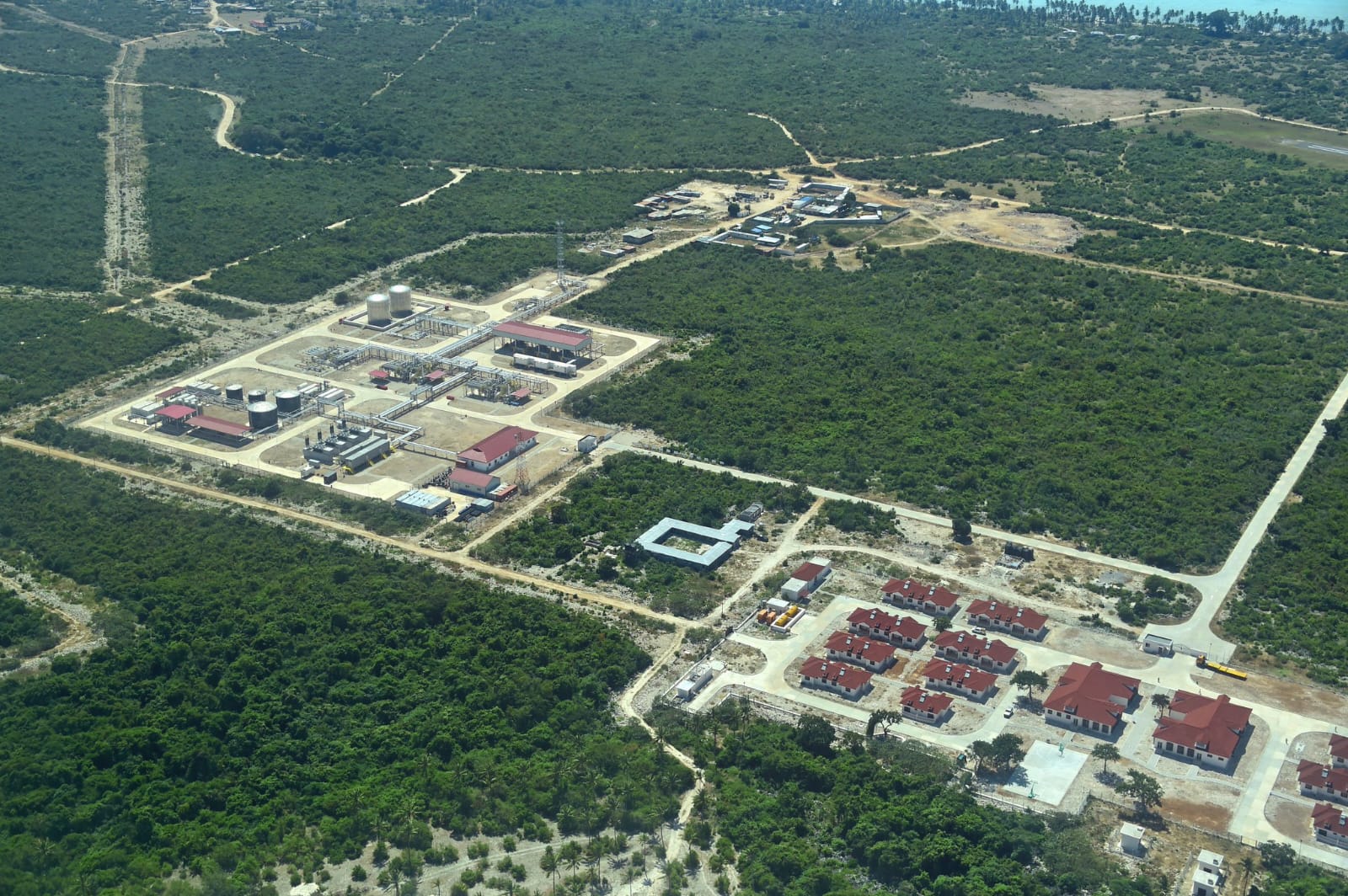
Oil and gas retain strategic importance for fiscal revenues, domestic fuel supply, and, in some cases, power generation. New or expanding producers—Senegal, Namibia, Uganda, Mozambique—will matter for regional balances and LNG. The more interesting shift, however, is downstream: refining, petrochemicals, and local value addition rather than pure export of crude. Projects such as Nigeria’s Dangote refinery illustrate the direction of travel. The same logic applies to critical minerals: Africa supplies a large share of global cobalt, manganese, and platinum-group metals. Powering processing and manufacturing on the continent rather than exporting raw ores multiplies economic impact—but only if reliable electricity is available at a competitive cost.
Risks and Realism
Capital is not flowing at the scale required. Clean-energy investment in Africa has risen but remains far below what universal access and industrial growth would demand. Public and development-finance institution funding has declined in relative terms in some categories; private capital is selective and sensitive to currency, offtake, and political risk. Many state utilities operate at a loss. Policy and regulatory frameworks vary widely; some markets have improved auction design, wheeling rules, and private-sector participation, while others remain opaque or unpredictable.
There is also a risk of over-romanticizing “leapfrogging.” Renewables will form a growing share of new capacity—projections suggest they could approach or exceed 40% of the power mix in some outlooks by 2030—but gas, hydro, and in certain cases coal or nuclear will continue to play roles for system stability and industrial baseload in the medium term. The practical path is hybrid and sequenced: solar and wind where they are cheapest and fastest, paired with storage, gas peakers, improved grids, and demand-side efficiency.
What Success Would Look Like
Success is not measured by Africa’s collective ranking in global production tables. It is measured by whether specific countries convert resource advantages and unmet demand into bankable projects that raise industrial output, deepen regional value chains, and create commercially attractive returns. Investors should look for markets that combine credible offtake (industrial or export), improving regulatory frameworks, transmission progress, and realistic risk allocation. Developers and financiers who treat Africa as 54 distinct systems rather than one undifferentiated opportunity will find clearer paths.
The comparison with the US and China is instructive precisely because it shows what sustained capital, infrastructure, and policy coherence can achieve. Africa does not need to match their absolute scale to transform its own industrial trajectory. It needs reliable electrons where they unlock productive capacity. That is the investment thesis that matters—and the one that still has room to run.