


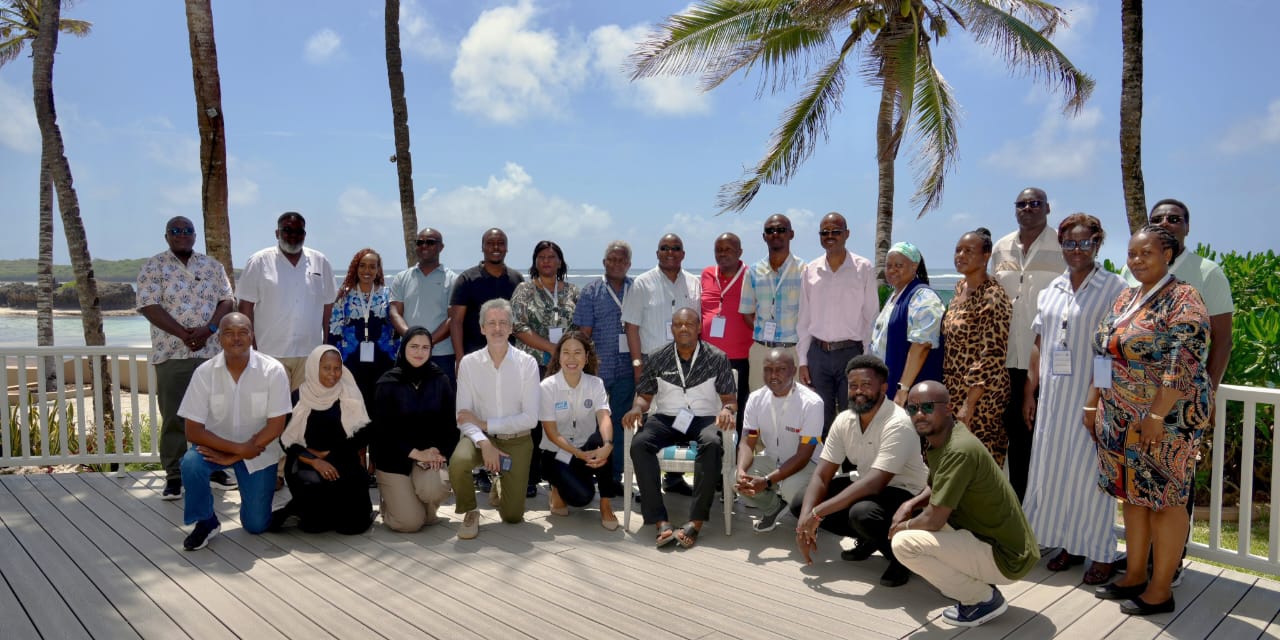
In mid-October 2026, at Hemingways in Watamu, the Kenya Ports Authority (KPA) marked a milestone that may prove more consequential for Kenya’s long-term competitiveness than any new berth or gantry crane. Eighteen senior managers completed the Training of Trainers phase of the UN Trade and Development (UNCTAD) TrainForTrade Modern Port Management Programme. They are now certified coaches, equipped to cascade an internationally recognised curriculum to a wider cohort whose two-year cycle begins on 19 October 2026.
This is not ceremonial capacity building. It is a deliberate bet that the decisive constraint on African ports is no longer just physical infrastructure, but the quality of the people who run them.
Ports as Nodes of National Ambition
Kenya’s ports, especially Mombasa, function as the economic lungs of a landlocked hinterland that includes Uganda, Rwanda, South Sudan, eastern Democratic Republic of Congo, and parts of Tanzania. Cargo volumes are rising; the Port of Mombasa handled a record 45.45 million metric tonnes in 2025. Parallel investments—Berth 19B (56% complete and expected to add 300,000 TEUs), the Dongo Kundu Special Economic Zone, and the Port of Lamu—signal a clear intent to expand capacity and reduce congestion.
Yet infrastructure alone does not create a competitive logistics hub. Global shipping lines, freight forwarders, and manufacturers choose ports based on dwell times, predictability, cost, digital interfaces, and environmental performance. Those outcomes are produced by managers who understand trade facilitation, commercial strategy, human-resource systems, sustainability metrics, and the operational intricacies of a modern port community. UNCTAD’s programme was designed precisely to close that gap in developing-country ports.
The curriculum covers eight modules spanning international trade and transport, the organisation and functioning of a port system, future challenges, management tools, economic and commercial management, administrative and legal frameworks, and technical and human-resources development. Participants produce case studies and dissertations grounded in their own operational realities, then defend them before international juries. The model has been refined over more than two decades across English-, French-, and Spanish-speaking networks and has already reached thousands of port professionals in roughly 60 countries.
By first creating a local cadre of certified trainers, KPA has chosen the sustainable route: knowledge that stays and multiplies inside the organisation rather than remaining dependent on external consultants.
Timing and Strategic Context
The timing is deliberate. Global supply chains remain volatile. Geopolitical tensions, climate-related disruptions, the energy transition, and the rapid digitalisation of logistics are rewriting the rules of competitiveness. Ports that cannot adapt risk becoming expensive bottlenecks rather than engines of growth. Captain William Ruto, KPA’s chief executive, framed the investment correctly when he described continuous skills development as essential if the authority is to remain effective amid shifting trade patterns, technological change, and rising customer expectations.
UNCTAD’s Mark Assaf underscored the broader stakes: “Strong ports are built by skilled people.” The programme is intended not merely to train individuals but to strengthen institutional capacity, encourage public-private collaboration within the port community, and ultimately improve trade facilitation and economic development.
Kenya is positioning itself within the English-speaking network of TrainForTrade, alongside ports in Ghana, Namibia, Nigeria, Tanzania, and others. Local instructors will eventually be able to deliver modules not only inside KPA but potentially to neighbouring port communities, turning Kenya into a regional knowledge node rather than a perpetual importer of expertise.
The Harder Questions
Optimism must be tempered by realism. Certification is only the first step. The real test is whether the newly trained coaches are given the institutional space, resources, and authority to translate classroom knowledge into changed practices on the quay, in the planning office, and at the gate. Case studies that gather dust, or recommendations that collide with bureaucratic inertia, will achieve little.
There is also the risk of elite capture—training a narrow layer of senior managers while the bulk of operational staff remain untouched. KPA’s stated intention to cascade learning to a broader cohort is therefore critical. Success will require deliberate mechanisms for knowledge transfer, performance incentives that reward the application of new methods, and metrics that track improvements in dwell time, truck turnaround, cargo integrity, and customer satisfaction.
Sustainability considerations add another layer. Modern port management increasingly includes environmental performance, green logistics, and climate resilience. Training that ignores these dimensions will leave Kenya’s ports lagging as European and Asian cargo owners impose stricter carbon and compliance requirements.
Finally, the programme must be insulated from the political and managerial churn that has historically affected Kenyan parastatals. Continuous leadership commitment, transparent selection of subsequent cohorts, and independent evaluation of outcomes will determine whether this remains a one-off event or becomes an enduring institutional capability.
A Wider African Lesson
Africa’s blue economy is frequently invoked as a frontier of opportunity. Yet the difference between potential and performance will be decided less by the volume of concrete poured than by the competence of the people who manage the interfaces between ships, trucks, rails, customs, and industry. Ports that treat human capital as an afterthought will continue to underperform even after expensive expansion programmes. Those that treat it as core infrastructure will compound their advantages over time.
Kenya’s decision to invest in UNCTAD-certified trainers is therefore more than a human-resources exercise. It is a statement about the kind of logistics power the country intends to become: one that competes not only on location and berth length, but on the intelligence, adaptability, and professionalism of its port community.
The eighteen new coaches now carry a dual responsibility—to their colleagues inside KPA and to the wider East African trading system that depends on Mombasa and Lamu functioning at a global standard. If they succeed in embedding modern practices, the returns will be measured in faster cargo movement, lower trade costs, stronger regional integration, and a more resilient national economy. If they fail, the investment will join the long list of well-intentioned capacity-building initiatives that never quite reached the operational floor.
The concrete is rising. The more important construction—of skilled, confident, problem-solving port managers—has only just begun.