


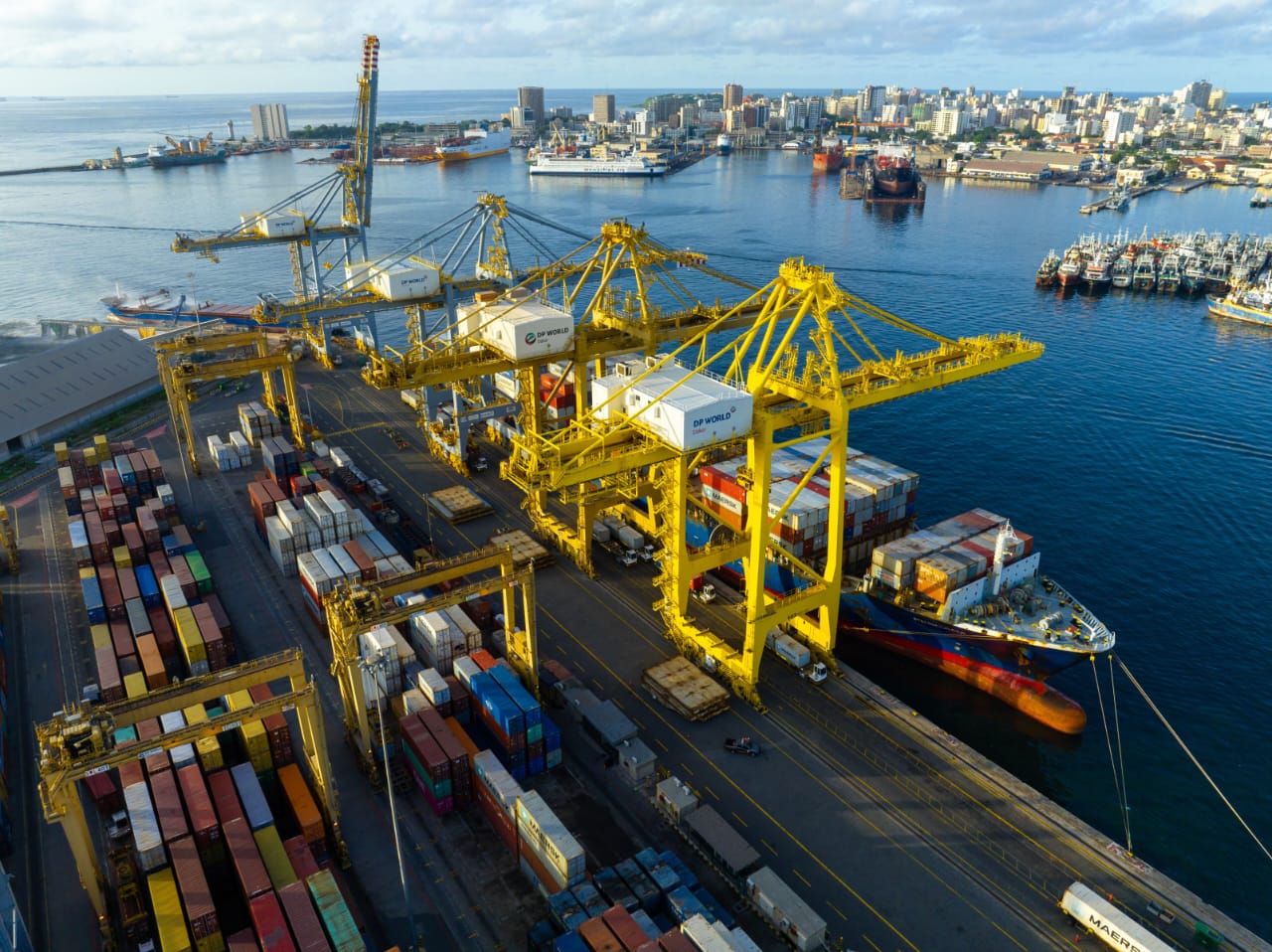
On December 9, 2025, the Port Autonome de Dakar signed a 25-year concession with an international consortium—Conti-Lines Group, Port of Antwerp-Bruges International, Ership and Senegal’s AIG Marine & Terminal—for a multipurpose terminal at Mole 4. The project, named Jambaar, carries an announced investment of about €85 million—roughly 55–56 billion FCFA for the core phase, with broader estimates reaching higher totals in some reports. It targets breakbulk and agri-bulk cargo, with modern quay cranes, automated conveyors, expanded storage and a first-half 2026 operational goal. A second phase envisions maritime corridors toward Kaolack and Ziguinchor to push connectivity deeper inland.
This is not flashy container mega-expansion. It is a deliberate, specialised move in a region where ports are locked in fierce competition for Sahel transit traffic and West African trade growth. The broader point stands: Dakar has the ambition. The real test is whether operational discipline matches the infrastructure.
Why Mole 4 Matters Now
The Port of Dakar remains one of Sub-Saharan Africa’s most efficient facilities by World Bank container metrics, thanks in large part to DP World’s long-term modernisation. Yet it is physically constrained—urban, congested and handling nearly all of Senegal’s imports. Roughly 99 percent of goods enter through Dakar; about 65 percent stay in the capital while only 35 percent move inland or to sub-regional markets. Daily truck volumes in the thousands clog roads, raise costs, pollute and slow delivery to the hinterland, including key Sahel corridors to Mali.
Jambaar addresses a specific gap. While the forthcoming deep-water Port of Ndayane—DP World’s $1.2 billion project, with dredging already completed ahead of schedule and commercial operations targeted for 2028—is designed primarily for containers and larger vessels, Mole 4 focuses on non-containerised cargo: grains, agricultural bulk, steel and general breakbulk. This complementarity is strategic. It keeps Dakar relevant during the transition to Ndayane rather than letting the historic port atrophy. Modernisation of an underutilised facility that already handles a meaningful share of traffic—around 20 percent by some accounts—offers quicker capacity gains than waiting for the new deep-water hub.
The inland dimension is equally important. Plans for river-maritime links and barge operations aim to shift cargo away from roads toward Kaolack and other intermediate hubs. This decongests the capital, protects road infrastructure, lowers logistics costs for inland and Sahel destinations, and supports Senegal’s broader economic-hub vision under the Senegal 2050 framework. In a region where landside bottlenecks often determine effective port capacity more than quay length or crane numbers, this multimodal ambition is the project’s most consequential feature.
The Competitive Landscape
West African ports are in an intense race. Tema in Ghana has surged in container volumes, frequently leading the region. Lomé in Togo dominates transshipment with deep water and strong carrier partnerships. Abidjan leads overall tonnage, buoyed by Côte d’Ivoire’s domestic economy and Sahel transit recovery. Dakar retains a structural advantage on the Mali corridor through geography and bilateral arrangements, but that edge is not automatic. Aggressive pricing, better hinterland links and reliability elsewhere have already diverted some traffic.
Jambaar’s bet is that excellence in breakbulk and agri-bulk, combined with better inland distribution, can lock in and expand Dakar’s share of non-container flows while Ndayane fights the container battle. European partners bring proven expertise: Conti-Lines in shipping, Ership with extensive terminal operations across multiple continents, and Port of Antwerp-Bruges International with deep knowledge of multipurpose and bulk handling. Local equity participation—highlighted in Senegalese reporting as a significant stake via AIG/Maor Group—is presented as an anchor for national content and sovereignty.
Ambition Meets Execution Risk
Infrastructure is the easy part relative to performance. Practitioners with years of West African terminal experience correctly identify the critical gap: the distance between new assets and sustained operational excellence. Ramp-up phases decide outcomes—training local teams to international standards, aligning partners and contractors, establishing reliable processes, and adapting global playbooks to local realities such as customs, labour, supply chains and political transitions. Senegal has already navigated multiple PAD leadership changes and a major political shift during the project’s multi-year gestation; continuity of execution will matter.
Other risks are structural. Transparency around exact capital shares and beneficial ownership has drawn questions in local commentary. Hinterland infrastructure—roads, rail and river navigability—must keep pace, or the corridors remain theoretical. Competition will not stand still: rivals continue expanding capacity and refining landside operations. Climate resilience, environmental standards for bulk handling and urban integration in a dense capital add further layers. Private financing is a strength—no heavy public subsidy burden is emphasised—yet it also means commercial returns must materialise for the consortium to sustain investment and performance.
A Model Worth Watching
If executed well, Jambaar offers a template for pragmatic African port development: specialise rather than chase every segment, pair European technical capacity with local ownership stakes, prioritise multimodal integration over pure waterside expansion, and treat the historic port and the new deep-water facility as complementary rather than sequential replacements. Success would strengthen Senegal’s claim as a logistics platform for the western Sahel, reduce internal costs that act as a tax on growth, and demonstrate that mid-sized, focused investments can deliver outsized regional impact.
West Africa is not waiting for permission to grow. Trade volumes, urbanisation, energy developments and the persistent needs of landlocked neighbours guarantee rising demand. The ports that convert ambition into disciplined, reliable operations will capture the value. Dakar has placed a calculated, specialised bet at Mole 4. The coming 18–24 months of ramp-up and corridor development will reveal whether the operational culture matches the infrastructure promise. That is where the real story of Jambaar—and of West Africa’s evolving logistics map—will be written.