


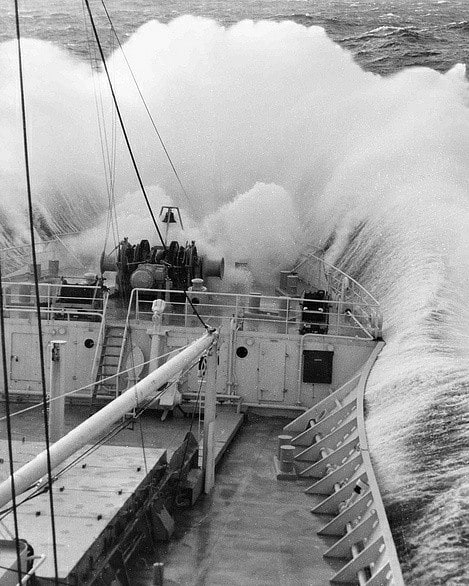
On 23 October 2026, the Kenya Maritime Authority issued a public notice that should unsettle every coastal community from Lamu to Kwale. Anticipated East-South-Easterly to South-South-Westerly winds of 4–24 knots, strong gusts, rough seas, high waves, heavy rainfall, and reduced visibility are forecast to persist along the Kenyan coast through December. The advisory follows an earlier notice of 21 September and arrives just as the short rains season intensifies under the influence of a positive Indian Ocean Dipole and broader climate signals.
This is not a routine seasonal alert. It is a four-month forecast of elevated maritime risk that collides with the livelihoods of thousands of artisanal fishers, boat operators, passengers, and coastal residents. The notice is clear, responsible, and necessary. Yet its very length—and the conditions it describes—exposes deeper structural vulnerabilities in Kenya’s relationship with the ocean.
Seasonal Reality, Not Anomaly
Kenya’s coast lives by the monsoon calendar. The southeast kusi brings stronger winds and chop from roughly May to September or October; the northeast kaskazi arrives later with calmer conditions. The transitional months of September to December, overlapping the short rains, routinely produce more variable and often hazardous sea states. Wave heights can reach 2–3 metres in exposed waters, visibility drops in heavy rain, and small open boats become precarious.
What distinguishes 2026 is the official framing of an extended period of risk rather than episodic bad-weather days. Recent marine forecasts have already shown winds of 2–12 m/s and waves climbing toward 3 metres in places. Concurrent reports from Kilifi of sharply reduced catches since the kusi intensified, and the recent stranding of Tanzanian fishing vessels washed into Kenyan waters by rough seas, illustrate that the hazard is already operational.
Lives and Livelihoods on the Line
Artisanal fishing remains a primary economic activity for many coastal households. When small boats cannot safely leave the nearshore, or when catches collapse under persistent wind and swell, income evaporates. Traders downstream feel the shortage immediately. Tourism operators face cancelled boat trips and anxious guests. Passenger vessels and ferry services must operate under tighter constraints. The cumulative effect is not merely inconvenience; it is lost earnings, food insecurity, and heightened pressure on already thin household budgets.
The safety advisory itself is sound: stay ashore in adverse conditions; secure vessels properly; wear life jackets; postpone non-essential trips; monitor official updates; and report emergencies to the Regional Maritime Rescue Coordination Centre on 0737719414 or 0721368313. These are not suggestions. They are the difference between routine operations and preventable loss of life. Every year, Kenyan waters claim lives through overloaded boats, absent personal flotation devices, and decisions taken under economic pressure rather than meteorological prudence.
Strengths and Limitations of the Notice
KMA deserves credit for issuing a public, multi-month advisory rather than waiting for individual storm systems. The language is direct. It addresses boat owners, operators, passengers, fisherfolk, and coastal communities in turn. It correctly points the public toward continuous monitoring of Kenya Meteorological Department and KMA information.
Yet a four-month umbrella warning carries inherent limitations. Weather is not uniform across 600 kilometres of coastline or across successive weeks. Localised, higher-frequency marine forecasts, beach and harbour-level messaging, and real-time dissemination through Beach Management Units (BMUs), radio, and mobile platforms matter more than a single seasonal document. Enforcement capacity remains uneven: life-jacket compliance, vessel condition standards, and overloading restrictions are only as effective as the presence of inspectors and the willingness of operators to prioritise safety over daily income.
Equally important is the absence of parallel economic support measures. Telling a fisher whose family depends on the next catch to stay ashore is correct safety advice; without temporary alternative livelihood options, savings schemes, or targeted relief, the same fisher may still take calculated risks. Preparedness must include both the meteorological and the socio-economic dimensions.
Toward a More Resilient Blue Economy
Kenya has invested political capital in the Blue Economy. That ambition is hollow if coastal communities remain one prolonged rough-sea season away from hardship and if small-vessel safety culture remains incomplete. Practical steps include:
· Strengthening the linkage between KMD marine forecasts and last-mile delivery through Beach Management Units and local radio.
· Accelerating vessel inspection and life-jacket enforcement, especially on passenger and fishing craft.
· Expanding safe-haven infrastructure and early-warning systems for low-lying coastal settlements vulnerable to surging waves at high tide.
· Developing seasonal livelihood diversification programmes so that “postpone non-essential activities” does not translate into empty tables.
· Treating climate variability—already visible in monsoon intensity and rainfall patterns—as a core planning parameter rather than an occasional disruption.
The notice signed by Director General CPA Omae Nyarandi is a responsible institutional act. It places the burden of caution where it belongs: on those who go to sea and those who regulate them. But public notices alone do not save lives or stabilise incomes. They are the starting point for a deeper conversation about how Kenya manages risk in the waters that feed, employ, and define its coastal communities.
Until the systems that support safer vessels, better information, and viable alternatives keep pace with the ocean’s seasonal moods, every extended advisory will remain both a warning and a reminder of unfinished work. The sea will not wait for perfect policy. Neither should Kenya.