


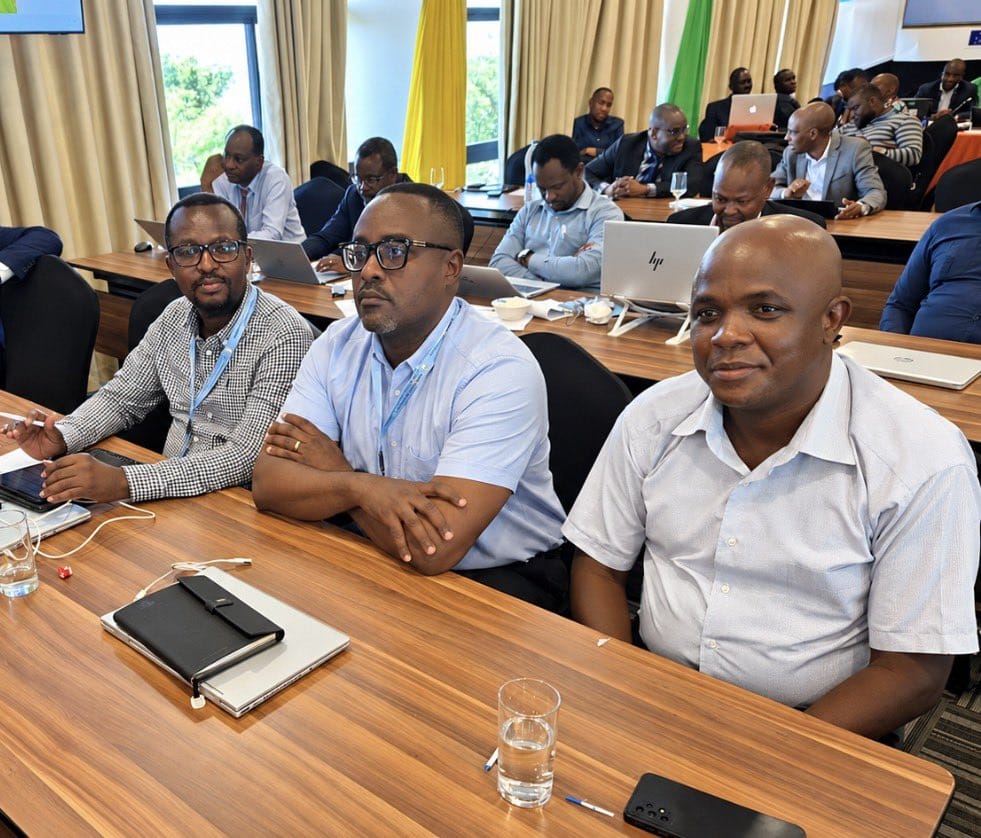
The 24th Ordinary Meeting of the Sectoral Council of Ministers (SECOM) on the Lake Victoria Basin, held in Kisumu, was more than a routine diplomatic exercise. It served as a practical test of whether East African Community (EAC) partner states can translate shared vulnerability into coordinated action. Kenya’s delegation was notably robust, led by Dr. Caroline W. Karugu, Principal Secretary for East African Community, ASALs and Regional Development. She was joined by Aden Millah, Principal Secretary for Shipping and Maritime Affairs; Henry Mwasaru, Kenya Maritime Authority (KMA) Nyanza Regional Manager; and Edwin Were, Project Manager for the Kenya Lake Victoria Maritime Communication and Transport Project (KLVMCTP), alongside senior officials from partner states.
The agenda was familiar yet urgent. Delegates reviewed progress on previous Council directives, ongoing regional projects, resource mobilisation, and the construction of the Lake Victoria Basin Commission (LVBC) headquarters. Deliberations centred on maritime security, regional infrastructure, environmental sustainability, treaty compliance, and institutional coordination. These are not abstract policy headings; they are central to whether Lake Victoria remains a viable economic, ecological, and social asset for the more than 40 million people who depend on it.
A Shared Resource Under Pressure
Lake Victoria is Africa’s largest freshwater lake and the world’s second-largest by surface area. It underpins fisheries that feed and employ millions, supports inland water transport that can ease pressure on congested roads, and anchors the livelihoods of communities across Kenya, Uganda, Tanzania, and the wider basin. Yet the lake is under sustained assault. Pollution from untreated effluent, agricultural runoff, and industrial waste has degraded water quality. Climate variability has altered water levels and weather patterns. Overfishing, invasive species, and weak enforcement have depleted fish stocks, while unsafe vessels and inadequate search-and-rescue capacity continue to claim lives.
These challenges are inherently transnational. Pollution does not respect borders; a poorly regulated ferry departing one shore can endanger passengers from another; and habitat loss in one catchment affects fish migration across the lake. Unilateral national measures, however well-intentioned, are insufficient. The Protocol for Sustainable Development of the Lake Victoria Basin and the institutions built around it exist precisely because the alternative is a tragedy of the commons.
Maritime Safety and Security as a Foundation
KMA’s participation signals Kenya’s recognition that maritime safety and security form the operational backbone of any sustainable use of the lake. Inland water transport remains under-developed relative to its potential. Reviving reliable, safe ferry and cargo services can lower logistics costs, open island communities to markets, and provide alternatives to road freight. Projects such as the KLVMCTP aim to improve communications, navigation aids, rescue capacity, and skills development. However, these investments will only deliver if they are coordinated with partners on the other shores and backed by consistent enforcement of vessel standards, crew competence, and safety regulations.
Maritime security extends beyond accidents. Illegal fishing, smuggling, and the potential for broader insecurity require joint patrols, information-sharing, and harmonised legal frameworks. The presence of shipping and maritime principal secretaries alongside their environment and EAC affairs counterparts underscores a critical point: safety, security, and environmental management cannot be siloed.
Infrastructure, Institutions, and the Funding Reality
The meeting’s attention to the LVBC headquarters construction is both symbolically and practically important. A permanent, purpose-built regional institution strengthens continuity and visibility. Yet bricks and mortar alone do not guarantee delivery. Persistent complaints about delayed partner-state contributions, lengthy approval processes, and staffing constraints reveal a deeper institutional weakness. Resource mobilisation remains uneven. Development partners have provided critical support—German KfW and EU funding for sanitation and pollution-control projects in Kisumu, Kampala, and Mwanza are cases in point—but external finance cannot substitute for reliable national commitments.
Infrastructure development must prioritise both “hard” assets (piers, rescue centres, navigation systems) and “soft” systems (harmonised standards, data-sharing platforms, joint monitoring). Environmental sustainability requires parallel investment in catchment management, wastewater treatment, and sustainable agriculture. Treaty compliance and stronger institutional coordination are the connective tissue that turns discrete projects into a coherent regional strategy.
Kenya’s Role and the Blue Economy Imperative
Kenya’s dual leadership—through the EAC Affairs docket and the shipping and maritime portfolio—positions it to push for practical outcomes. Hosting the meeting in Kisumu, the lake’s principal Kenyan port city, reinforces the point that the basin’s challenges are felt most acutely at the local level. KMA’s stated commitment to promoting maritime safety, security, and sustainable water transport through enhanced regional cooperation is the correct framing. The test is whether that commitment is matched by sustained budgetary allocation, regulatory enforcement, and active engagement in joint programmes.
The broader context is Kenya’s and the EAC’s blue economy ambitions. Lake Victoria is not merely an environmental concern; it is a strategic economic asset. Safe, efficient inland waterways can complement the Northern Corridor and support regional trade. Fisheries, if sustainably managed, remain a major source of protein and income. Tourism and related services depend on a healthy lake. Neglecting the basin undermines these opportunities and risks social and ecological costs that will be borne by the poorest communities first.
From Declarations to Delivery
Meetings of this nature often produce communiqués rich in aspiration and thin on enforceable timelines. The value of the 24th SECOM will be measured by what follows: timely remittance of contributions, accelerated project approvals, measurable reductions in pollution loads, fewer maritime incidents, and tangible improvements in the livelihoods of fishing and lakeside communities. Partner states must treat the LVBC and its governing structures as instruments of collective self-interest rather than optional forums.
Climate change will intensify the pressures already evident. Rising or fluctuating water levels, more extreme weather, and shifting ecological baselines demand adaptive, science-based management. The strategic plans, gender mainstreaming frameworks, and state-of-the-basin assessments recently discussed provide useful tools, but only if they are resourced and implemented.
Lake Victoria’s future will not be secured by any single country acting alone. The Kisumu meeting reaffirmed that reality. What is required now is the political will to match rhetoric with consistent finance, rigorous enforcement, and genuine institutional cooperation. For Kenya, and for KMA in particular, the task is clear: translate the language of regional commitment into safer vessels, cleaner waters, and more resilient communities around the lake. The alternative—continued degradation of a shared lifeline—is neither acceptable nor sustainable.