


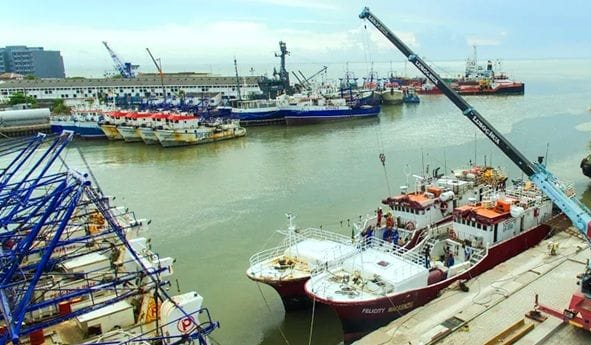
The Beira Fishing Port’s nine-month catch of 5,049 tonnes—69% of its 7,350-tonne annual target—looks like a success story on paper. But that figure conceals a far more troubling truth: Mozambique’s most modern fishing hub is being throttled not by the sea, but by the shore. Fuel shortages and operational decay have turned the port into a bottleneck, forcing vessels to languish at the quays while the nation pays the price in lost protein, lost income, and lost momentum.
The immediate culprit is fuel. Since May 2026, when the Energy Regulatory Authority approved an abrupt price revision, diesel has surged by roughly 46% to 166.25 meticais per litre, while petrol rose 12%. The shock, driven by Middle East tensions rippling through international energy markets, has hit the fishing fleet with brutal force. At Beira, vessel dockings fell 5% in the first nine months of the year, while the time boats spent idling at the quay rose 4%—a direct hit to fish handling and port service revenue. The port director, António Remédio, remains cautiously optimistic that the target can still be met, but only “provided no new constraints arise and fuel supply difficulties are overcome”. That is a fragile hope resting on a broken system.
A sector too vital to fail—and too fragile to thrive
The stakes could hardly be higher. Fisheries contribute only about 2% of Mozambique’s GDP, but they supply nearly half of the country’s daily protein intake. For a population where roughly 81% live on less than $3 a day, fish is not a luxury—it is the difference between nourishment and hunger. The artisanal sub-sector alone sustains nearly 400,000 people directly and accounts for around 90% of national fish production. Yet fewer than 5% of the country’s 42,723 registered artisanal boats are motorised, and those motorised vessels—the ones that bring in the largest catches and stock the markets—are precisely the ones most exposed to fuel price shocks. Fuel typically absorbs 40% to 60% of a motorised fishing trip’s operating costs, meaning a single price hike can wipe out a family’s monthly margin.
The result is a cruel paradox. Fresh fish prices in urban markets rose 11.7% in May, but fishers themselves captured little of that increase. A chain of beach buyers, wholesalers, transporters, and retailers absorbs the margin, while the producer—with perishable goods and no bargaining power—sells quickly and cheaply. Consumers pay more; intermediaries protect their spread; the fisher bears the risk. This is not a market failure in the abstract. It is a livelihood failure in real time.
Beyond fuel: the port that cannot keep pace
Fuel is the proximate crisis, but Beira’s deeper malady is infrastructural. The port was rehabilitated in 2019 with Chinese investment, gaining eight berths and a 5,000-square-metre cold store. Yet the basin suffers from chronic siltation, shallow draft at low tide, and the lingering effects of inadequate maintenance. These limitations were flagged decades ago during earlier rehabilitation studies, and they persist. A port that cannot reliably accommodate its own fleet—let alone attract industrial vessels—cannot function as an engine of blue-economy growth. When vessels spend longer at quay and less time at sea, the entire value chain contracts: less catch, fewer port fees, less processing, fewer jobs.
What must change
First, fuel policy for the fishing sector cannot be treated as a passive derivative of global oil markets and general subsidy regimes. The OMR study rightly warns of an “inflationary paradox” in which fishers are squeezed while prices rise. Targeted fuel support—whether through a dedicated quota for licensed fishing vessels, a rebate mechanism tied to landings, or investment in fuel-efficient engines—would stabilise operations without distorting the broader subsidy bill. The alternative is to watch the motorised fleet shrink, taking national protein supply down with it.
Second, Beira’s operational constraints require a maintenance and dredging plan that is funded, scheduled, and enforced—not revisited only after a crisis. The port’s 377-metre shoreline and eight berths are assets worth protecting. Siltation is predictable; neglect is a choice.
Third, the artisanal sector needs aggregation and bargaining power, not just sympathy. Cold-chain investment at landing sites, cooperative marketing structures, and transparent price information would help fishers capture more of the retail margin. The 11.7% price rise that never reached the boat is a symptom of structural inequality in the value chain, not an inevitability.
Finally, Mozambique must treat fisheries as strategic infrastructure for food security, not merely as a 2% GDP line item. The sector’s social return—protein, employment, coastal livelihoods—dwarfs its direct fiscal contribution. Budget allocations, energy policy, and port management should reflect that asymmetry.
The Beira fishing port’s 5,049 tonnes are not just a statistic. They represent meals, incomes, and the daily labour of thousands who go to sea so that others may eat. A harvest held hostage by fuel queues and silted berths is a policy failure, not a market outcome. The sea is willing. The shore must become ready.