


When Jomo Kenyatta took the reins of independent Kenya, the young nation faced urgent choices. Sessional Paper No. 10 of 1965, African Socialism and its Application to Planning in Kenya, became the founding economic blueprint. It rejected rigid socialism and capitalism alike, championed pragmatic growth, Africanization, and investment where returns would be fastest. Yet in its quiet omissions and skewed priorities, the paper helped set a pattern of underdevelopment that has haunted Kenya’s coastal communities for six decades—and continues to shape the unfinished story of the country’s blue economy.
Foundations Laid, Horizons Narrowed
Kenyatta’s government did not ignore the sea entirely. In December 1964, the President inaugurated the Kenya Navy, completing the national defence architecture and asserting sovereignty over territorial waters. Three years later, Parliament passed the Merchant Shipping Act of 1967, creating the first post-independence legal framework for ship registration, ownership, safety, and navigation. The Port of Mombasa remained the vital artery of East African trade, supported by policies that welcomed foreign investment and export growth.
These were real achievements. They secured the coastline and kept the gateway open. What they did not do was reimagine the ocean as a primary engine of national prosperity. Maritime activity was treated as infrastructure for land-based trade rather than a sector in its own right. Specialized maritime education remained embryonic. Deep-sea fishing, systematic exploitation of the exclusive economic zone (a concept not yet crystallized in international law), and offshore resources received almost no policy attention. The 1967 Act itself was functional but limited; it would take until 2009 for a modern, comprehensive Merchant Shipping Act to replace it.
The High-Potential Trap
Sessional Paper No. 10’s most consequential decision was its explicit preference for “high-potential areas.” Resources—capital, infrastructure, extension services, education—were to be concentrated where agricultural productivity and returns were highest, primarily the fertile highlands of Central Province and parts of the Rift Valley. The logic was growth-first: rapid accumulation would eventually trickle outward.
For the Coast, this was a structural verdict of secondary status. Coastal lands were often classified as lower potential for the cash-crop model the paper favoured. Fisheries, mangrove ecosystems, marine transport beyond the core port, and the broader ocean economy did not fit neatly into the high-potential calculus. The result was predictable underinvestment.
Coastal communities paid the price in multiple, reinforcing ways. Infrastructure lagged. Roads, electricity, water, and secondary ports outside Mombasa received less priority. Education expansion, while national, was uneven; specialized maritime and technical training that could have prepared coastal youth for seafaring, marine engineering, or logistics careers developed slowly and remained concentrated or under-resourced. Land grievances—rooted in colonial alienation and post-independence settlement patterns—festered with insufficient redress, feeding a sense of political and economic exclusion that still colours Coast politics.
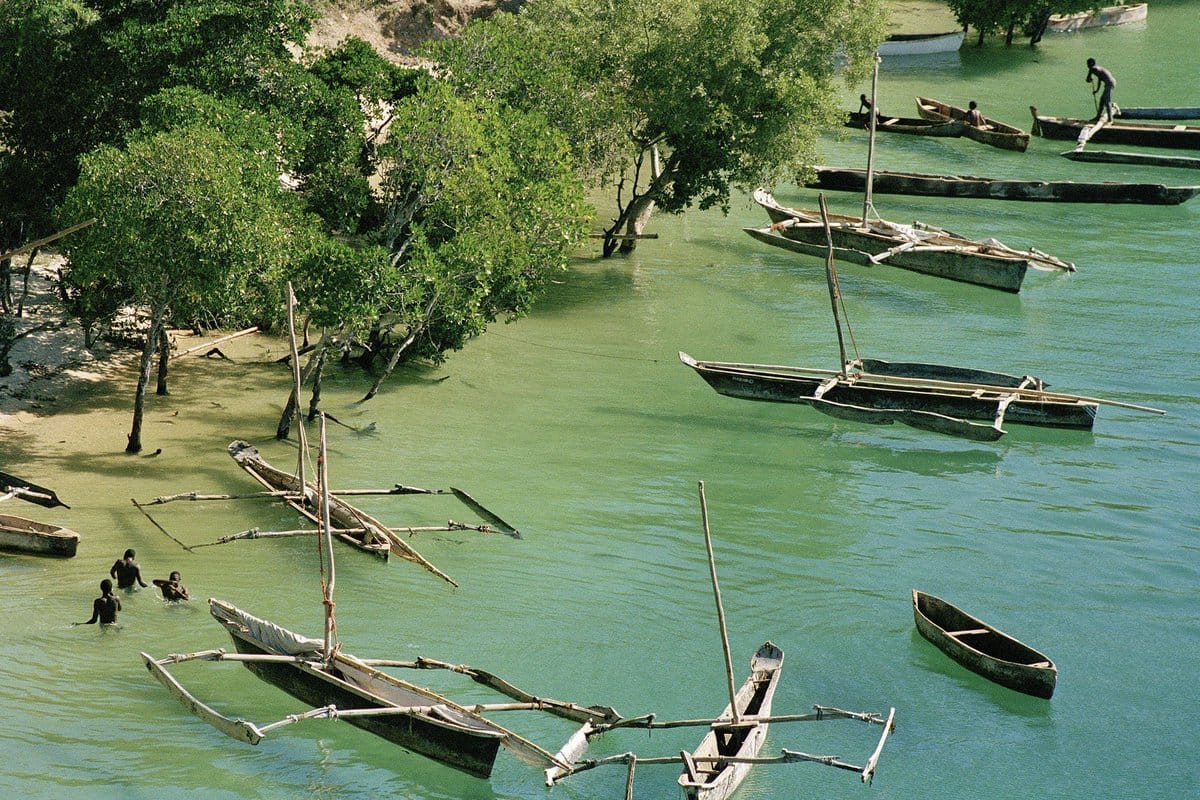
Artisanal fishers continued to operate with limited technology, capital, or market power, while the deeper waters of what would later become Kenya’s EEZ remained largely the domain of foreign fleets. Tourism grew, but benefits were unevenly distributed and often captured by external capital. The Port of Mombasa thrived as a regional hub, yet the surrounding communities frequently experienced the costs of congestion, pollution, and limited local value addition more than the gains.
This was not mere neglect; it was the logical outcome of a planning philosophy that equated national progress with highland agricultural intensification. The paper’s silence on the blue economy was not accidental. In 1965 the conceptual language barely existed, UNCLOS was still years away, and the immediate political imperative was consolidating the new state and Africanizing the existing economy. Yet silence, when embedded in the foundational policy document, becomes policy.
Legacy and the Long Shadow
The consequences compounded. Generations of coastal youth grew up with fewer pathways into the very industries that bordered their homes. Regional inequality hardened. Political narratives of marginalization found fertile ground. When later governments began speaking of the blue economy—EEZ fisheries, maritime education through Bandari Maritime Academy, port expansion, coast-guard capacity, and ocean governance—they were, in part, trying to correct a developmental path set in 1965.
None of this erases Kenyatta’s achievements in nation-building or the genuine constraints of the early independence years. Resources were scarce. Political cohesion was fragile. The high-potential strategy did deliver rapid growth in certain sectors. But growth that systematically disadvantages entire regions and communities is incomplete growth. Coastal Kenya’s relative lag in human development indicators, persistent land questions, and delayed capture of maritime value are not historical accidents. They are the long echo of a paper that looked inland first.
Looking Forward
Kenya today possesses the legal instruments, institutional frameworks, and political language to reverse that pattern. The challenge is to ensure that blue-economy investments—seafarer training, deep-sea capacity, sustainable fisheries, port-linked industrialization, and marine spatial planning—deliver tangible benefits to the communities that live beside the ocean rather than simply extracting value through it. Equity must be designed in, not assumed to follow.
Sessional Paper No. 10 helped define the Kenya that was possible in 1965. It also revealed the Kenya that was left for later. Closing the blue silence is not only about economics. It is about completing the national project so that the Coast is no longer the periphery of the country’s developmental imagination.
The sea was never the problem. The silence about it was.