


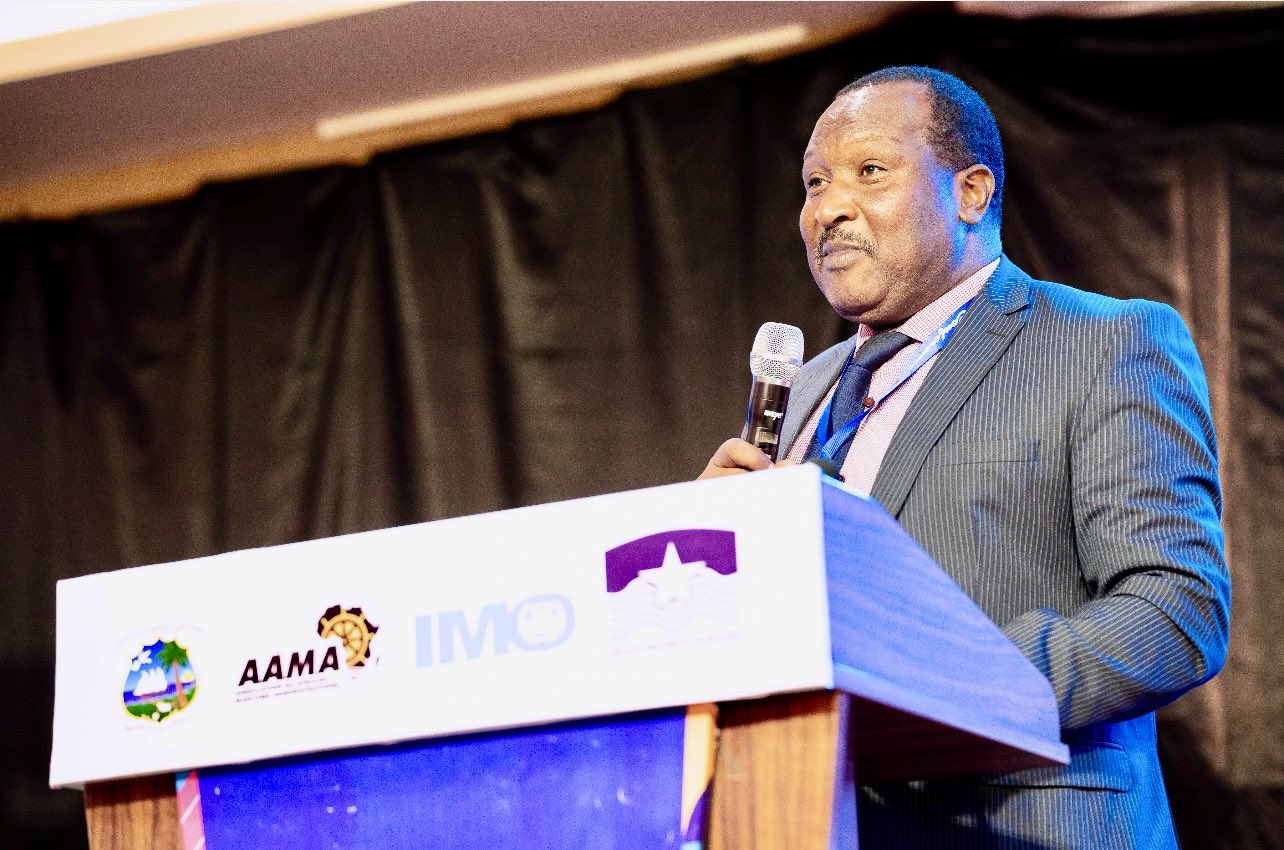
On December 11 at Uhuru Gardens, the Kenya Maritime Excellence Awards will pose a pointed question: Can the National Infrastructure Fund finance the ports, cold chains, training institutions, shipyards, and industries needed to convert Kenya’s vast water resources from an under-exploited asset into a genuine engine of industrialisation, jobs, and growth?
The question is timely. Kenya’s Blue Economy Strategy 2025–2030 is clear-eyed about both the opportunity and the shortfall. Fisheries currently generate about KSh 30.4 billion a year; illegal, unreported and unregulated fishing costs the country an estimated KSh 90 billion annually; maritime trade exceeds US$3 billion. The sector supports more than four million people across the value chain yet contributes only around 0.7 percent of GDP from fisheries and aquaculture, with the broader blue economy still far below its potential. Targets include raising aquaculture production toward 450,000 metric tonnes, expanding fish ports at Lamu, Liwatoni-Mombasa and Shimoni, building cold-chain infrastructure, scaling maritime training, and developing renewable blue energy and eco-tourism.
The National Infrastructure Fund, established under the 2026 Act and capitalised with roughly KSh 340–350 billion from the privatisation of Kenya Pipeline Company and partial sale of Safaricom shares, is designed precisely for catalytic, commercially viable national infrastructure. Its mandate covers seaports, railways, airports, energy, water and irrigation systems. The fund has begun deploying seed capital into domestic government bonds, aiming to generate about KSh 42 billion a year while injecting liquidity into the banking system. Over a decade it seeks to mobilise KSh 3.6 trillion (earlier ambitions reached KSh 5 trillion) through returns, co-investment and debt, with strict limits: no single project more than 20 percent of the fund, no single sector more than 40 percent. Projects must demonstrate commercial viability and target returns around 7 percent equity or higher.
On paper, the alignment is strong. Blue Economy needs—modern fish landing sites with ice plants and cold storage, expanded container and multi-purpose berths, inland water transport on Lake Victoria, maritime academies, ship-repair facilities, and supporting logistics corridors—sit squarely within the Fund’s transport, logistics and related infrastructure remit. Coastal counties have already floated a Sh156 billion blue economy plan and explored Blue-Green Bonds; the national strategy emphasises innovative financing including blue bonds and carbon credits. The Fund’s de-risking role—preparing projects, taking equity stakes, structuring special-purpose vehicles—could crowd in pension funds, development finance institutions and private capital that have so far been hesitant because of perceived volatility and regulatory uncertainty.
Yet several structural realities temper optimism.
First, commercial viability is not automatic. Many of the highest-impact Blue Economy investments—community fish landing sites, cold chains serving artisanal fishers, training institutions, or surveillance systems against IUU fishing—generate social and economic returns that are diffuse and long-term rather than generating immediate cash flows. Toll roads, airport expansions or power plants fit the Fund’s model more cleanly. Without deliberate blending of concessional capital, guarantees or viability-gap funding, pure commercial criteria risk sidelining precisely the infrastructure that would most benefit coastal and lakeside communities.
Second, scale and sequencing matter. Kenya has already invested in specific projects: Shimoni Fish Port, multiple landing sites, the Kabonyo Kanyagwal Fisheries Centre of Excellence, and grants to Beach Management Units. These are necessary but insufficient. Deep-sea fishing capacity remains thin; Kenya has largely abandoned ambitions for a state-owned national shipping line because of high operating costs, leaving the private sector to capture most of the freight revenue. Port modernisation and hinterland connectivity (Standard Gauge Railway extensions, last-mile roads) will determine whether new maritime capacity translates into lower logistics costs and industrial clustering. The Fund cannot do everything; it must prioritise projects with clear revenue streams or strong co-financing while government and development partners handle pure public goods.
Third, governance and skills gaps persist. Fragmented mandates between national and county governments, overlapping regulations, weak data systems, and limited maritime human capital (women still represent only about 1.2 percent of seafarers) have long constrained progress. The Fund’s success will depend on rigorous project preparation, transparent procurement, and coordination with the State Department for Blue Economy and Maritime Affairs, Kenya Ports Authority, Kenya Maritime Authority and county governments. Without parallel investment in skills—seafarer training, aquaculture technicians, maritime logistics professionals—new infrastructure will underperform.
Fourth, the fiscal and macroeconomic context is tight. Debt service already absorbs a large share of revenue. The Fund’s bond-buying strategy helps free bank liquidity and generates income without immediate new sovereign borrowing, but its long-term mobilising power depends on delivering bankable projects that attract genuine private co-investment. Legal uncertainties around some privatisation proceeds and the need to maintain commercial discipline will be tested as political pressures for visible projects intensify.
The path forward is therefore neither pure market fundamentalism nor old-style state dirigisme. The National Infrastructure Fund should treat Blue Economy infrastructure as a priority sector within its 40 percent ceiling, focusing first on revenue-generating or high-multiplier assets: expanded multi-user fish ports and cold chains that can charge user fees, ship-repair and bunkering facilities, inland water transport links, and logistics platforms that integrate with special economic zones. It should deliberately structure blended vehicles that combine Fund equity, climate or blue finance, and private capital for lower-return but high-impact community infrastructure. Parallel policy work—maritime investment policy, de-risking instruments, simplified licensing, and stronger monitoring of foreign fishing fleets—must proceed in lockstep.
Kenya’s Exclusive Economic Zone of roughly 230,000 square kilometres, 640 kilometres of coastline, and inland lakes represent a strategic asset few African countries match. Turning that asset into industrialisation, employment and sustained growth requires more than awards ceremonies and strategy documents. It requires patient capital deployed against rigorously prepared projects, complementary skills and governance reforms, and a willingness to measure success not by kilometres of berth built but by tonnes landed, jobs created, logistics costs reduced, and illegal fishing curtailed.
The December 11 conversation at the Maritime Excellence Awards is therefore not academic. It is a test of whether Kenya’s newest financing instrument can be steered toward one of the country’s most promising—and still largely untapped—frontiers. If the National Infrastructure Fund rises to that test, the Blue Economy can move from rhetorical opportunity to structural economic driver. If it does not, the gap between potential and performance will only widen.