


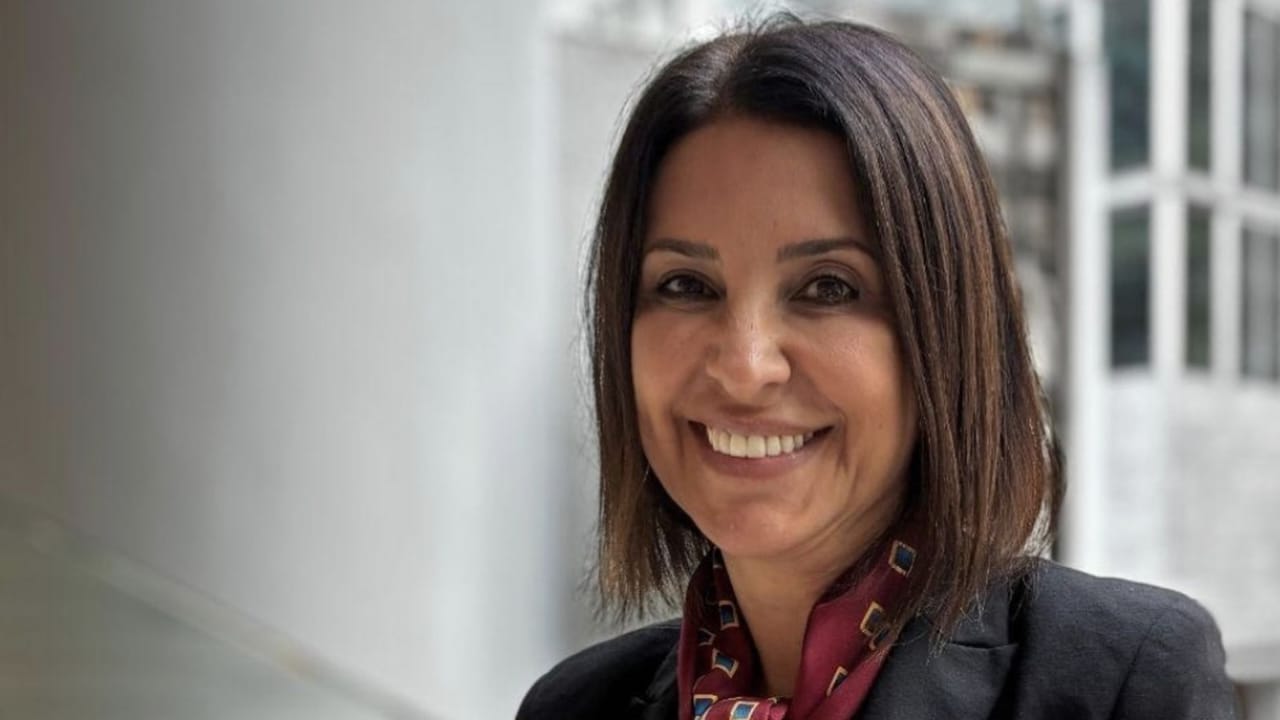
In late October 2026, at the Institute of Chartered Shipbrokers’ (ICS) Controlling Council meeting in Cape Town, history was made in a quiet but consequential way. Natalia Margioli FICS assumed the presidency of the Institute, becoming both the first woman and the first Greek to hold the office in the organisation’s 115-year existence. Outgoing President Punit Oza FICS handed over the role, and Jeffrey Blum FICS was elected Vice President. The warm congratulations from the East Africa Branch capture the sentiment felt across the Institute’s international network: this is more than a change of personnel. It is a marker of evolution in one of commercial shipping’s oldest professional bodies.
Founded in 1911 and granted a Royal Charter in 1920, the London-headquartered ICS remains the principal professional body for shipbrokers, agents, and commercial shipping practitioners worldwide. With roughly 27 branches and over 4,000 members and Fellows, it sets educational standards, examines competence, and upholds professional ethics in a sector that moves the overwhelming majority of global trade. For more than a century, its leadership had been exclusively male. Margioli’s election therefore carries symbolic weight, yet the substance of her background suggests the appointment rests on more than symbolism alone.
Margioli has spent more than two decades at the intersection of maritime education and practice. She founded and has led the Hellenic Management Centre in Piraeus since 1999. In 2005, she established the ICS Greek Branch and its teaching centre, building one of the Institute’s most active national networks in a country that remains a dominant force in global shipowning. She previously served as ICS Vice President from 2024. Her stated priorities—strengthening maritime education, enhancing the practical value of membership, tightening cooperation among international branches, and deepening engagement with the industry—align closely with the challenges the profession now faces.
Those challenges are not abstract. Shipping is confronting artificial intelligence tools that can accelerate analysis and documentation, a tightening web of environmental and safety regulation, and the persistent need to attract and retain younger talent. Margioli has emphasised that professionals must become confident with new technology while preserving the commercial judgement and experience that still determine outcomes in volatile markets. Education, in this framing, is not merely credentialing; it is the mechanism that keeps professional standards relevant as the industry’s operating environment shifts.
The Greek dimension adds further significance. Greece’s shipowning community has long punched above its weight in tonnage and influence. Elevating a Greek educational leader to the global presidency of the shipbrokers’ institute underscores the interdependence between national clusters and international professional institutions. It also signals that the Institute’s centre of gravity is not exclusively London-centric; expertise and leadership can, and increasingly do, arise from active branches elsewhere. For regions such as East Africa—where ports, trade corridors, and emerging shipping services are expanding—the presence of a president with deep experience in building a national branch and educational infrastructure is practically relevant. Professional standards, examination pathways, and networking opportunities that travel with a strong ICS can support local capacity building.
Women remain under-represented in senior commercial shipping roles. Progress has been uneven and often slow. A first female ICS president does not, by itself, transform demographic realities. It does, however, remove an institutional glass ceiling that had endured for more than a century and provides a visible reference point for younger professionals, female and male, considering careers in shipbroking, agency, and related commercial functions. Leadership diversity is most valuable when it expands the pool of experience and perspective available to an organisation; Margioli’s dual identity as an educator and a Greek maritime professional supplies both.
The East Africa Branch’s message of congratulations is therefore well placed. It recognises not only a personal achievement but also a broader institutional moment: an organisation that has sustained professional standards across world wars, technological revolutions, and successive waves of globalisation is updating its leadership profile while reaffirming its core mission. Success for the new president will be measured less by the historic “firsts” than by whether maritime education is strengthened, membership remains compelling, the branch network coheres more tightly, and the Institute continues to speak with authority to an industry under pressure to adapt.
Natalia Margioli FICS steps into the role with a clear record of institution-building and a mandate that matches the sector’s needs. The Institute, its members, and the wider commercial shipping community have reason to watch the next two years with interest. History has been marked; the more important work of sustaining professional excellence now continues under new leadership.