


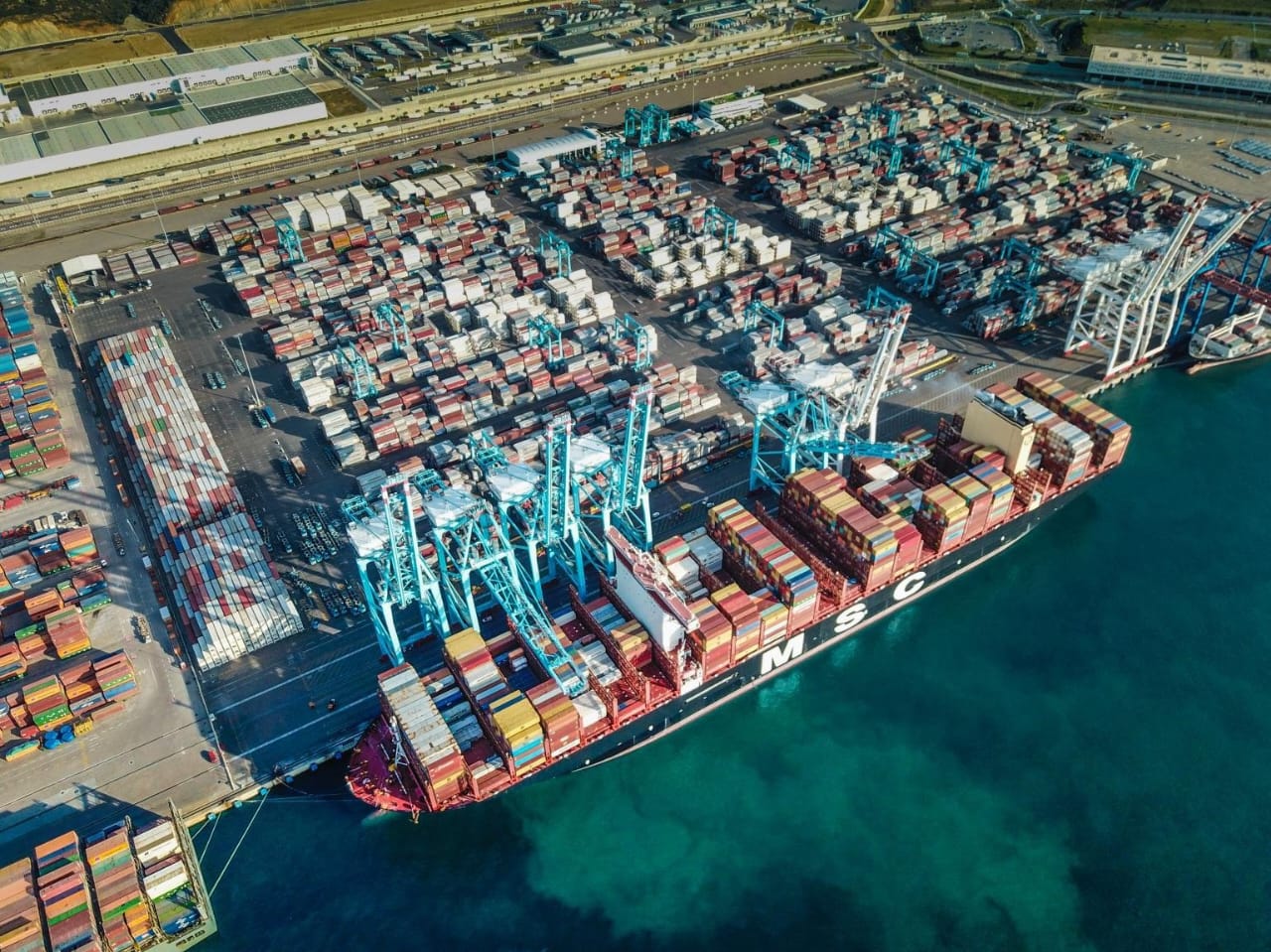
Every year, the Container Port Performance Index (CPPI) measures how long ships wait and work in port. The 2025 edition, prepared by the World Bank and S&P Global Market Intelligence, makes uncomfortable reading for Africa. Sub-Saharan Africa averages a score of about –72, against roughly +19 for the Middle East, North Africa, Afghanistan, and Pakistan. Ships spend more time at anchor and at berth on the continent than almost anywhere else in the index.
The numbers are not destiny. Some African ports rank among the best in the world; others have moved sharply up the table. The question for African governments, port authorities, and investors is why some ports slip—and what the others did to climb.
The Best in the World, and the Best in Africa
At the top of the 2025 index, Chinese and Gulf ports dominate. Fuzhou, Dalian, Salalah, Mawan, and Chiwan lead the world, all with consistently short vessel turnaround times.
Tanger Med in Morocco is the only African port in the global top ten, ranking sixth with a score of 134.0 and 85 percent of time spent at berth. Across the continent, the leaders are clear. Port Said in Egypt follows closely in fifteenth place worldwide, with a score of 117.0 and 85 percent at berth. Djibouti ranks third in Africa and 53rd globally, with a score of 62.6 and 70 percent at berth. Damietta and El Sokhna, both in Egypt, complete the African top five, with scores of 22.8 and 17.1 respectively, and berth shares of 79 percent and 82 percent.
Tanger Med and Port Said demonstrate that African gateways can compete with the world’s best when capacity, berth planning, and operations align. The rest of the continent has a longer road to travel.
Why Our Ports Slip
The report identifies several structural causes, familiar to anyone who has worked on the continent’s gateways.
The first is trade structure. Many African ports are import-dominated, so containers arrive in bursts and stay in yards for uncertain periods. Export-oriented ports can preposition boxes in the order a ship needs them. Import-heavy ports cannot, so yard planning becomes guesswork.
The second is under-investment. Too few berths and cranes, shallow channels that restrict ship size, and yards running near full capacity leave little operational slack. When volume surges or a schedule shifts, the queue forms immediately. Ports in lower-income economies generally have less buffer to absorb shocks.
The third is landside weakness. A port is only as fast as the road, rail, and clearance system behind it. When trucks, warehouses, and customs cannot keep pace, containers pile up and vessels wait for berths.
The fourth is simultaneous shocks. Geopolitical rerouting—from the Red Sea crisis to the 2026 disruption in the Strait of Hormuz—pushes ships off schedule and then delivers them in clusters. The report calls these “burst congestion” events. Ports with little operational slack absorb them badly, and relief ports that take diverted ships can be overwhelmed.
Finally, there is local fragility. Conakry’s share of time spent at berth fell from around 73 percent in 2024 to just over 37 percent in 2025, meaning vessels spent most of their port time waiting rather than working. Cape Town has suffered weather disruption and equipment reliability problems that have turned ship times into a high-variance gamble.
How to Climb
The report’s best performers point to a practical agenda.
Start with private operators and clear concessions. Dar es Salaam’s entry of private terminal operators cut waiting at anchor from several weeks to a few days. Durban’s recovery followed new investment and a 25-year concession to modernise Pier 2. Private capital does not replace public responsibility, but it can bring equipment, discipline, and speed that public budgets struggle to fund.
Next, plan berthing, not just cargo. Fixed berthing windows, predictive berthing, and dynamic yard allocation reduce the idle time the index punishes. Djibouti’s berth share rose from around 60 percent to over 70 percent, showing what operational coordination can achieve even under heavy regional stress.
Then digitise the whole chain. Integrated terminal operating systems and port community systems allow shipping lines, terminals, truckers, and customs to share real-time information. The report’s central insight is that ports sharing reliable data on arrivals, berth status, and landside flows reduce the amplification of shocks. A truck booking, a customs clearance, and a berth allocation should communicate with one another before the ship arrives.
Invest in landside capacity alongside the quay. A port that doubles its cranes but cannot clear its yard has not solved its problem. Dwell-time rules, rail and road links, and one-stop clearance need the same attention as berth construction.
Finally, measure the right things. The berth-share metric is especially useful for revealing whether a delay sits at anchor, in the approach, or alongside the berth. Port authorities that track their own percentiles and recovery speeds can distinguish a persistent problem from a short overload.
The Bottom Line
The CPPI does not condemn Africa’s ports. It shows that they are slow for reasons that can be named and, in many cases, changed. Shallow berths, import-heavy flows, and weak landside links are structural and take years to fix. Idle time, poor berth coordination, and missing data are operational and can be fixed sooner. The ports that have climbed the index did not wait for perfect conditions. They brought in private discipline, planned their berths, shared their data, and measured what mattered.
Africa’s gateways will not win on geography alone. They will win on how well they run the hours a ship spends in port.
About the Author
Harry Arigi is a Maritime Consultant and MIHR. He comments on Regional Trade, Maritime Logistics, Safety, and Development Policy.