


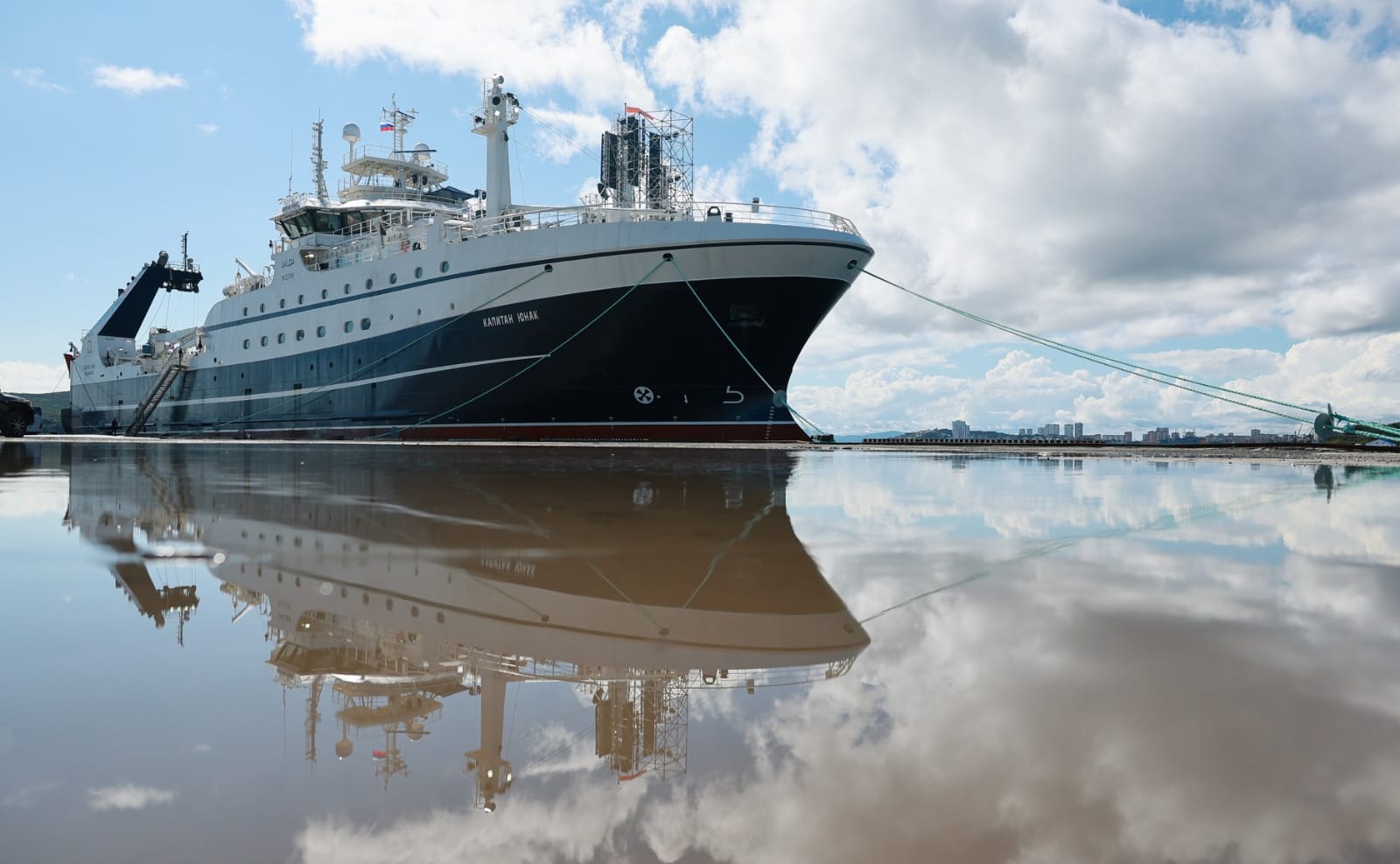
In the second half of 2026, China—already the dominant player in Africa’s fishing industry—continued to expand its presence across the continent, seeking to displace foreign competitors as fully as possible.
That expansion is now encountering a different kind of competitor. Unlike the European Union, which has pushed unsuccessfully to revise nine existing Sustainable Fisheries Partnership Agreements with African countries, Russia has adopted a targeted and systematic approach. Moscow is building a sustainable commercial fishing framework in Africa grounded in scientific data, linking oceanographic research projects that benefit individual African states to the allocation of fishing quotas for Russian fleets.
The clearest evidence comes from the “Greater African Expedition,” conducted under the auspices of Russia’s Federal Agency for Fisheries (Rosrybolovstvo) and VNIRO between August 2024 and February 2026. Using data collected during that expedition, Russia has already begun expanding its fishing operations in several African countries:
· Morocco: In Atlantic waters off Morocco, annual catches are expected to rise from approximately 60,000 tonnes to 90,000–100,000 tonnes.
· Sierra Leone: Russia will receive an annual quota of 40,000 tonnes of aquatic biological resources and access for 20 fishing vessels.
· Mozambique: Russia has signed a bilateral agreement to conduct fisheries research in Mozambican waters.
Over the medium term, this could become a genuine competitive challenge for Beijing in Africa. To preserve its dominant position in the region’s fishing industry, China is expected to use the full range of economic and political tools at its disposal to counter Russia’s growing presence.
One likely response is to accelerate the construction of fishing ports and related infrastructure in several of Africa’s most promising coastal states, further strengthening China’s economic and political influence. Projects include:
· Ghana: construction of 12 fishing ports, with investment exceeding US$200 million.
· Mozambique: reconstruction of Beira Port infrastructure, with investment of approximately US$120 million.
· Sierra Leone: development of a port in the Whale Bay area, with investment of around US$55 million.
· Tanzania: development of Kilwa Masoko Port, with investment of approximately US$111 million.
The competition unfolding in African fisheries is therefore not only about access to fish stocks. It is also about research capacity, port infrastructure, data, and long-term political leverage. For African coastal states, the challenge will be to ensure that this rivalry translates into transparent contracts, stronger local capacity, and durable benefits—rather than a contest in which they are merely spectators.